
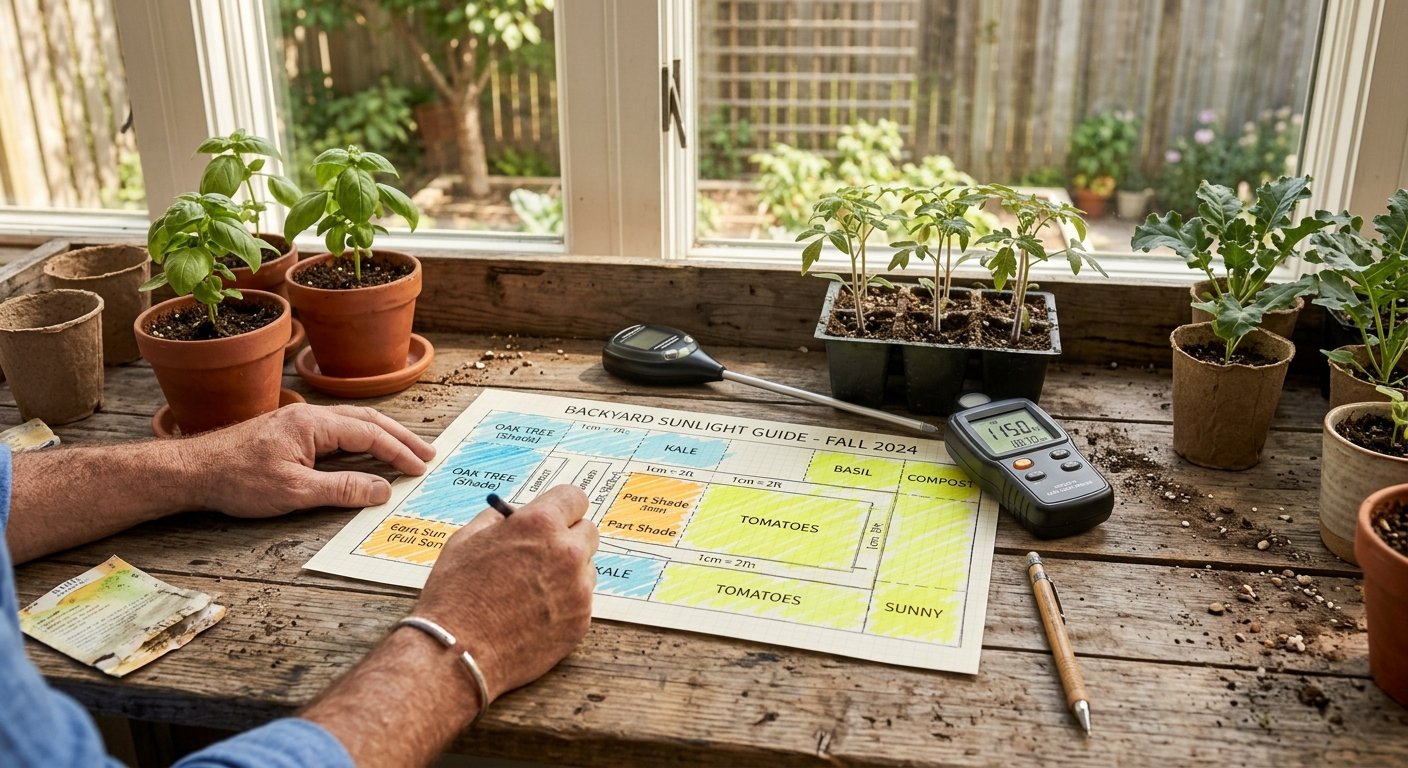
Creating a comprehensive garden sunlight mapping guide is one of the most effective steps you can take to ensure your plants thrive. Misjudging how much direct light your garden space receives often leads to leggy stems, poor flowering, weak fruiting, and wasted effort.
Because trees, fencing, and house eaves cast shifting shadows throughout the day and across seasons, relying on casual visual guesses is rarely accurate. Sunlight mapping provides exact data on light duration, allowing you to match sun-loving crops like tomatoes and peppers with high-light zones while reserving dappled areas for shade-tolerant greens.
Key Takeaways
- Hourly Tracking Matters: Record light exposure every 1 to 2 hours from 8:00 AM to 6:00 PM for an accurate daily light total.
- Know Light Categories: Differentiate between Full Sun (6+ hours), Part Sun/Shade (3 to 6 hours), and Full Shade (under 3 hours).
- Account for Seasonal Changes: Re-map light patterns in both spring and mid-summer to adjust for changing solar angles and leaf canopy cover.
- Identify Microclimates: Spot reflected heat and light off brick walls or light-colored fences that intensify growing conditions.
- Position Crops Strategically: Place tall plants on the north side of your garden beds to keep them from shading shorter crops.
Why Creating a Garden Sunlight Mapping Guide Is Essential
Relying on a structured garden sunlight mapping guide eliminates guesswork when choosing planting sites for vegetables, herbs, and ornamental plants.
Sunlight fuels photosynthesis, driving healthy foliage growth, strong root development, and fruit production. When plants do not receive their required light threshold, they grow weak, become susceptible to fungal diseases, and yield poorly.

Step-by-Step Instructions: How to Map Garden Sunlight
Mapping light across your yard requires minimal equipment and just one clear sunny day.
Step 1: Draw a Basic Yard Grid
Sketch a simple overhead outline of your growing areas, including raised beds, patio containers, fences, nearby trees, and structures.
Step 2: Conduct Hourly Light Audits
Set a timer and observe your space every 1 to 2 hours starting at 8:00 AM:
- Mark areas receiving direct overhead sunlight with an “S” or yellow highlight.
- Mark areas in deep shadow with a “D” or gray shade.
- Mark areas receiving dappled, filtered sun through tree leaves with a “P”.
Step 3: Calculate Total Daily Sunlight Hours
At the end of the day, sum up the total direct sunlight hours for each section of your garden to categorize them accurately.
Classifying Light Zones for Optimal Crop Placement
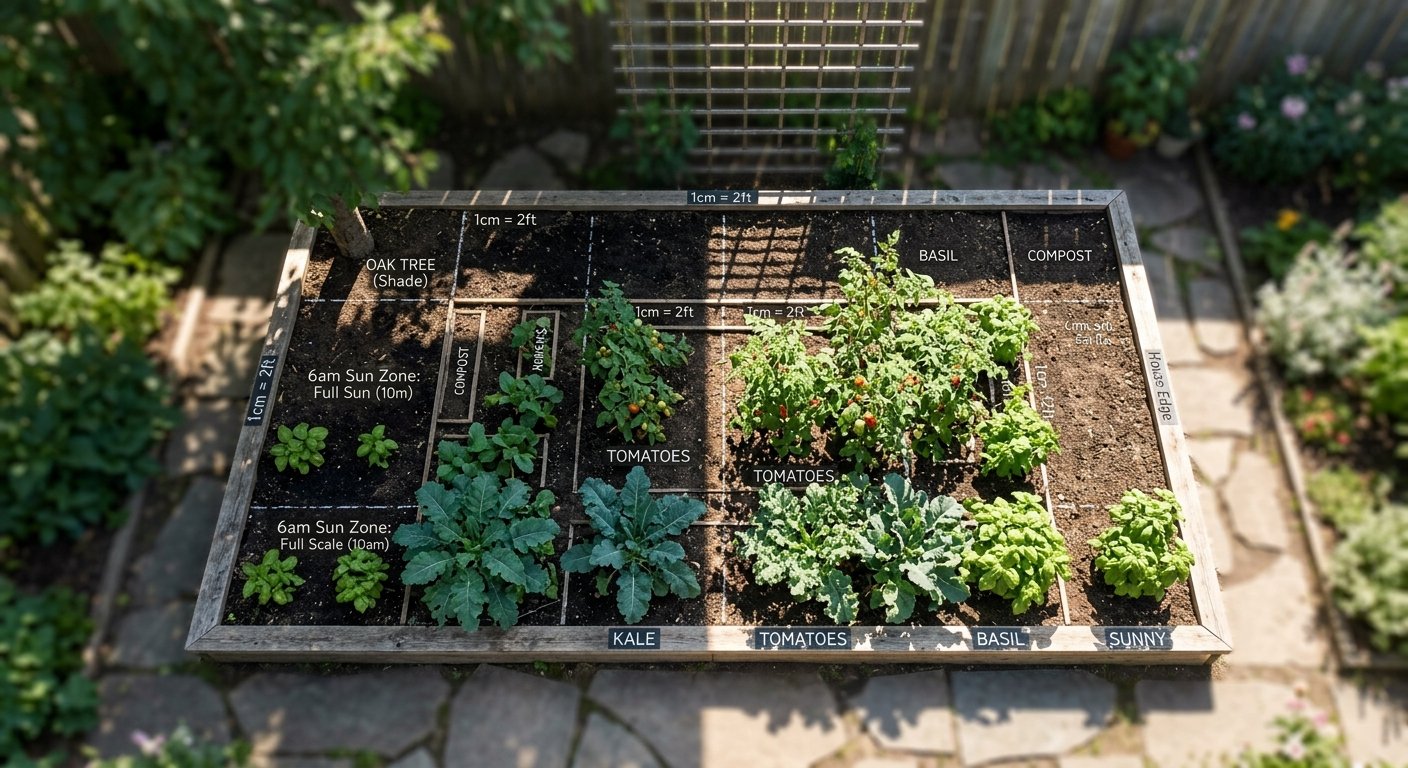
Once your map is complete, categorize your growing zones to match specific crop requirements:
- Full Sun (6 to 8+ Hours): Ideal for heavy-fruiting crops such as tomatoes, peppers, eggplants, squash, and cucumbers.
- Partial Sun / Partial Shade (3 to 6 Hours): Perfect for root crops (carrots, radishes, beets) and culinary herbs like parsley, cilantro, and mint.
- Full Shade (Under 3 Hours Direct Sunlight): Reserved for delicate leafy greens like spinach, lettuces, kale, and shade-loving ornamentals like hostas.
Advanced Factors to Keep in Mind
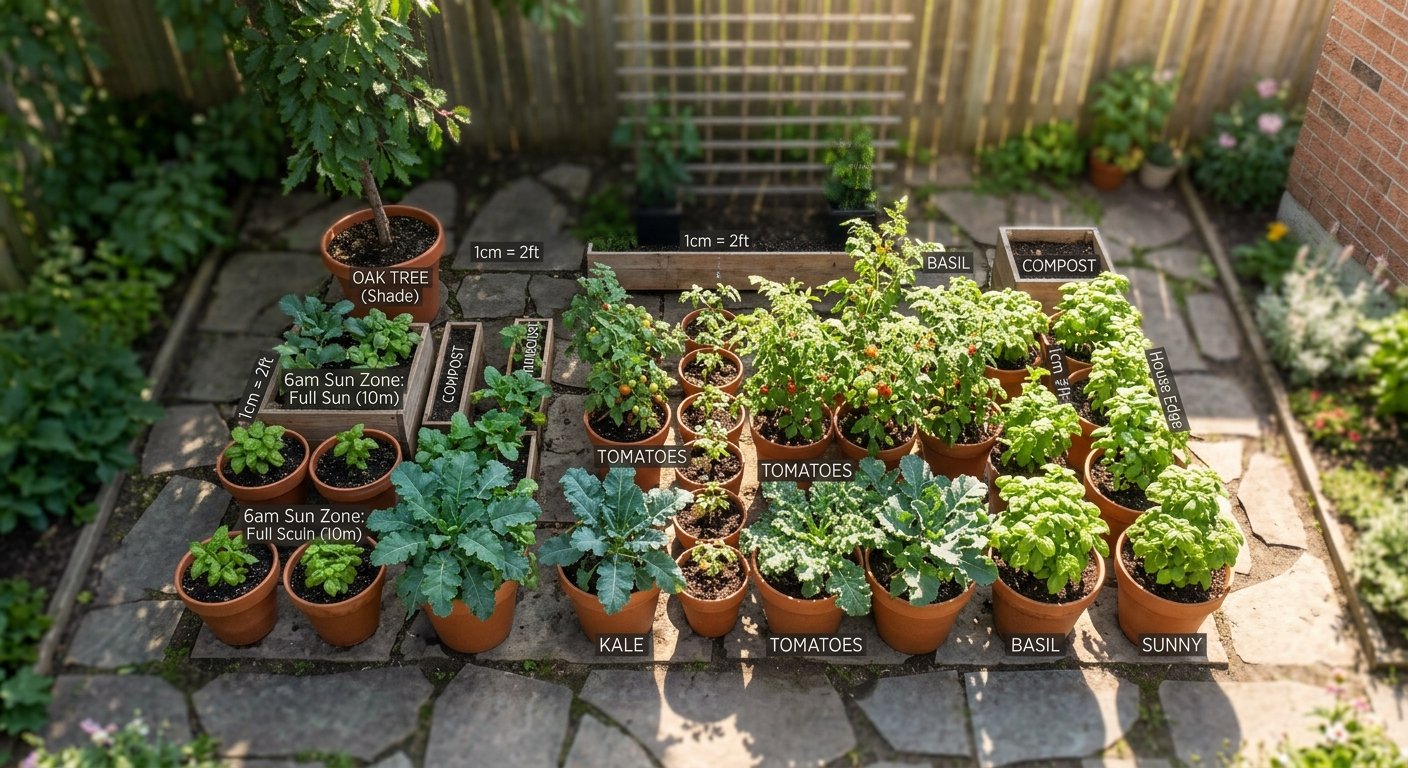
- Spring vs. Summer Angles: The sun sits lower on the horizon in spring than in summer. A site that receives full sun in June might be shaded in early April before deciduous trees fully leaf out.
- Reflected Heat & Light: South-facing brick walls absorb and reflect solar heat, creating warmer microclimates ideal for heat-loving Mediterranean herbs.
- Digital Light Meters: For precise readings, consider using a digital solar radiation meter to measure Photosynthetically Active Radiation (PAR) alongside your physical map.
Conclusion
Following a systematic garden sunlight mapping guide allows you to make informed decisions about where every plant belongs. By accurately tracking light hours, accounting for seasonal shifts, and matching crops to their ideal light thresholds, you lay the foundation for a productive, disease-resistant garden season.
Frequently Asked Questions
What is the difference between full sun and partial sun in a garden sunlight mapping guide?
Full sun means a spot receives at least 6 hours of direct, unfiltered sunlight daily. Partial sun refers to areas receiving between 3 and 6 hours of direct sun, often benefiting from protection during peak afternoon heat.
How often should I update my garden sunlight mapping guide?
Update your map at least twice a year—once in early spring as trees leaf out and again in mid-summer when the sun reaches its peak zenith.
Can leafy greens grow in full shade areas identified on my sunlight map?
Yes. Leafy greens like lettuce, spinach, Swiss chard, and kale tolerate partial to deep shade surprisingly well, often benefiting from shade during hot summer months to prevent bolting.
1 thought on “Sunlight: Garden Sunlight Mapping Guide”