Choosing the correct pot dimension is one of the most vital decisions in container gardening, which is why following a reliable best plant container sizes guide saves both plants and money. A pot that is too small restricts root growth, leads to root-bound plants, and dries out within hours. Conversely, an oversized container holds excessive soil moisture around delicate roots, frequently leading to root rot.
Matching plant root systems to appropriate pot volumes ensures steady moisture retention, optimal nutrient uptake, and sturdy plant growth. Whether you are growing indoor foliage, balcony tomatoes, or backyard patio herbs, this comprehensive guide helps you select the exact container volume and depth for every plant category.
Key Takeaways
- Match Pot Size to Root Depth: Deep-rooted plants like tomatoes need 12 to 18 inches of soil depth, while shallow-rooted crops like lettuce need only 6 to 8 inches.
- Avoid Over-Potting: When repotting houseplants, upgrade pot diameter by only 2 to 3 inches at a time to prevent waterlogged soil.
- Volume Dictates Watering Frequency: Smaller pots (4 to 6 inches) evaporate moisture quickly and require frequent watering; larger pots (5-gallon+) provide a moisture buffer.
- Prioritize Drainage First: Ensure every container features adequate bottom drainage holes, regardless of material or size.
- Factor in Material Differences: Terracotta dries out rapidly due to porous clay, while plastic, resin, and glazed ceramic retain soil moisture longer.
Why Using a Best Plant Container Sizes Guide Matters
Relying on a practical best plant container sizes guide removes the guesswork from selecting garden containers and potted plant vessels.
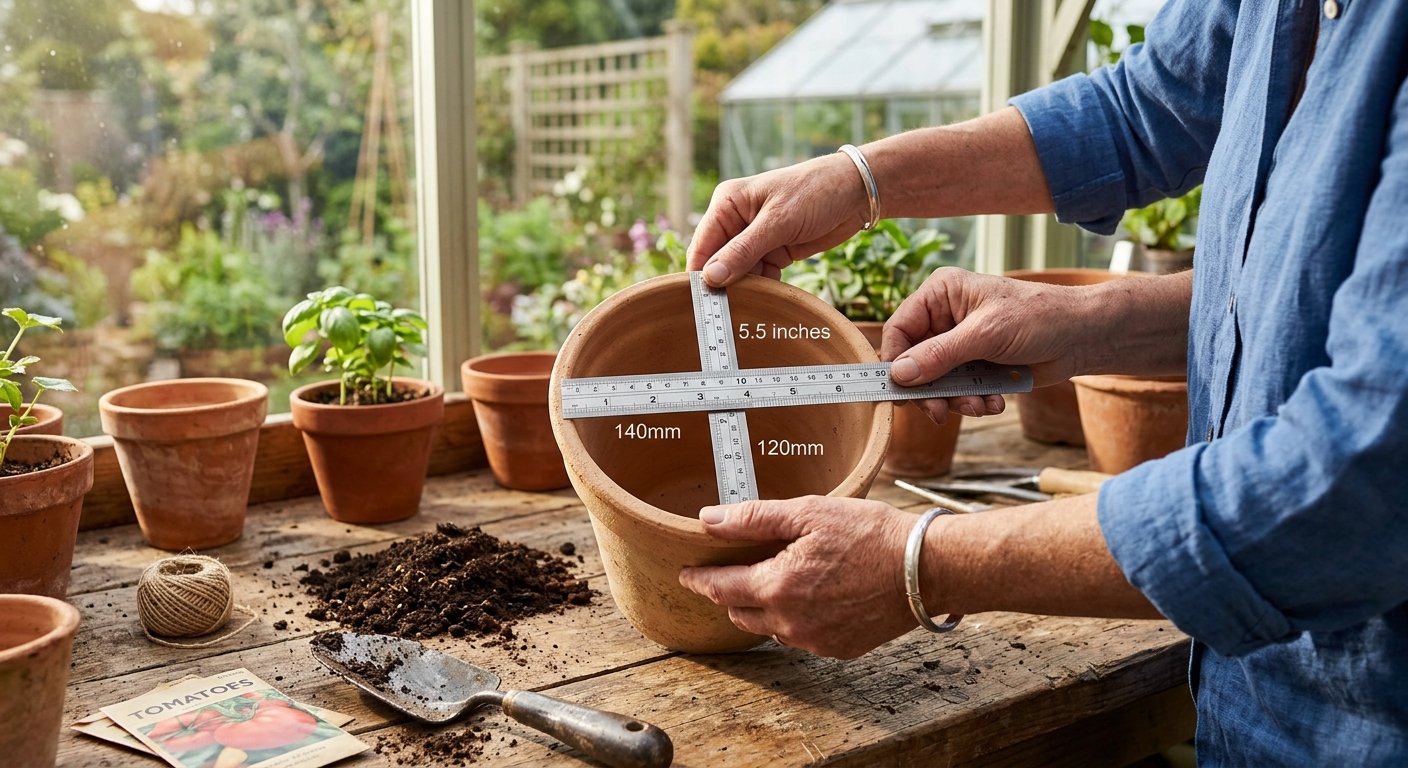
When a plant outgrows its container, its roots begin to circle tightly around the inside wall of the pot. This root binding starves the plant of oxygen, prevents efficient water absorption, and causes stunted leaf growth. Selecting the right size upfront gives root systems room to expand while maintaining balanced moisture levels.
Standard Container Sizes and Plant Matching Chart
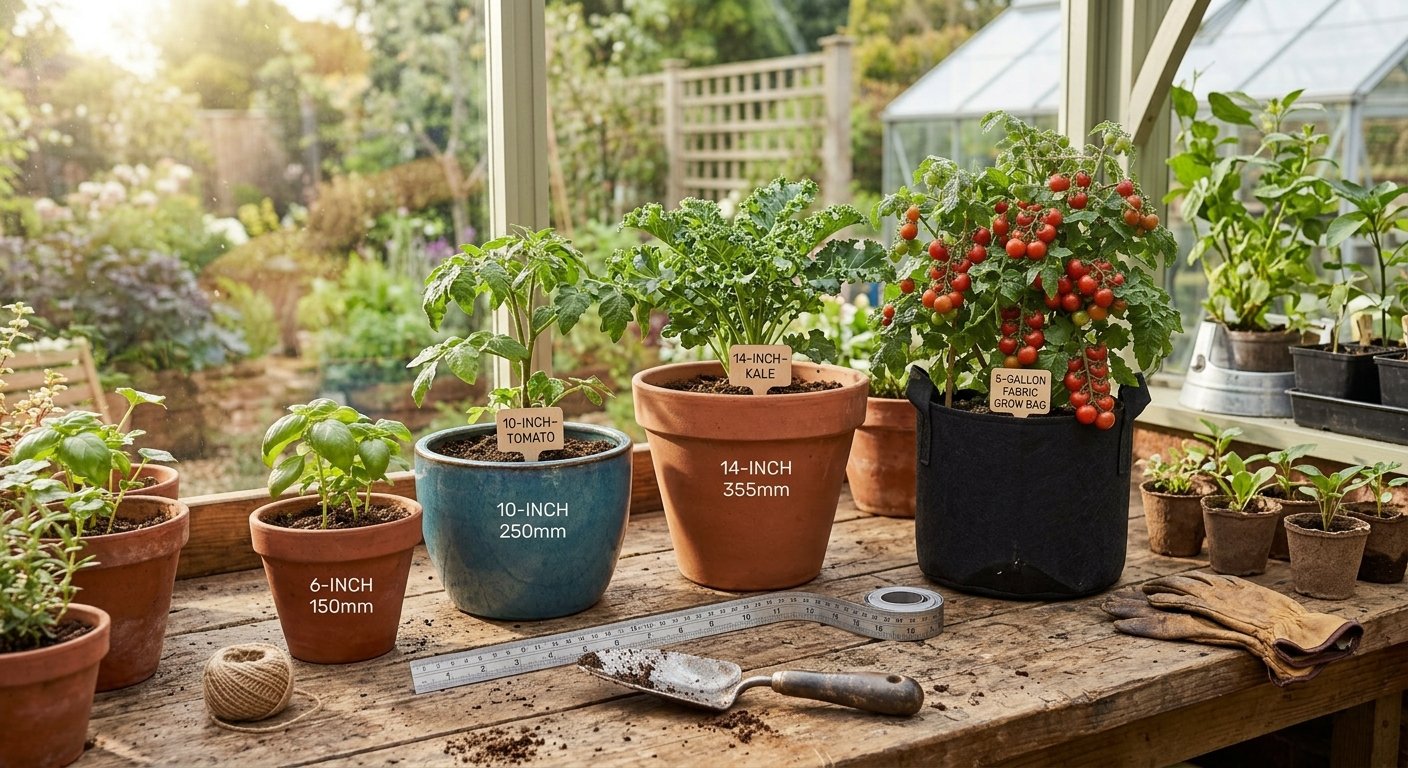
Selecting the right container size depends on plant growth habits, maturity size, and root volume.
1. Small Containers (4 to 8 Inches / 1 to 2 Quarts)
- Ideal Plants: Culinary herbs (thyme, oregano, chives), small succulents, pothos cuttings, radishes, and micro-dwarf flowers.
- Best Use: Windowsill herb gardens, small desk plants, and starter seedlings.
2. Medium Containers (10 to 12 Inches / 2 to 3 Gallons)
- Ideal Plants: Basil, mint, leafy salad greens, bush beans, peppers, strawberries, snake plants, and monsteras.
- Best Use: Patio displays, balcony salad gardens, and mid-sized houseplants.
3. Large Containers (14 to 18 Inches / 5 to 7 Gallons)
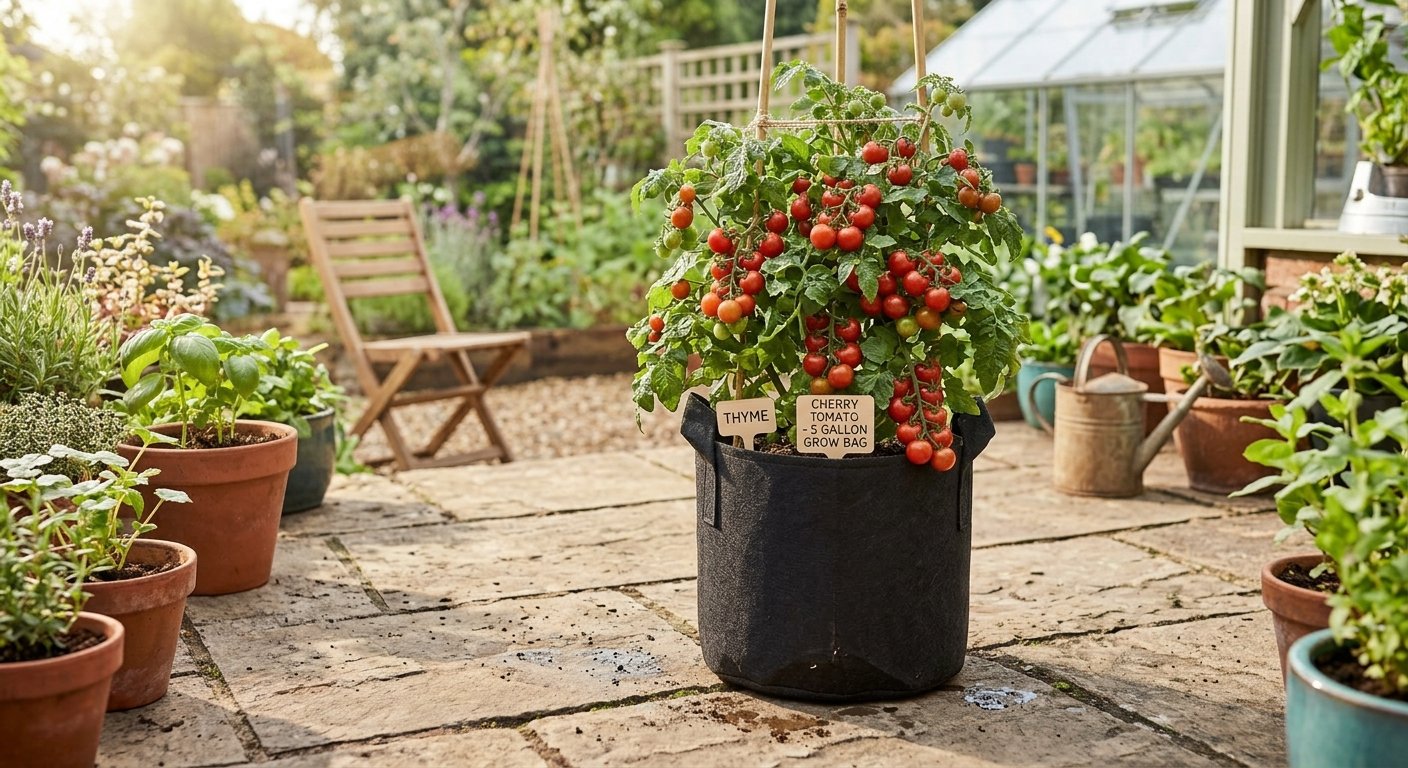
- Ideal Plants: Indeterminate tomatoes, eggplants, cucumbers on small trellises, dwarf citrus trees, and large ficus plants.
- Best Use: High-yield container vegetable gardens and focal-point patio containers.
4. Extra-Large Containers (20+ Inches / 10 to 15+ Gallons)
- Ideal Plants: Full-sized fruit trees, blueberry bushes, large ornamental shrubs, and multi-plant companion containers.
- Best Use: Permanent outdoor container landscaping.
Key Container Features Beyond Dimensions
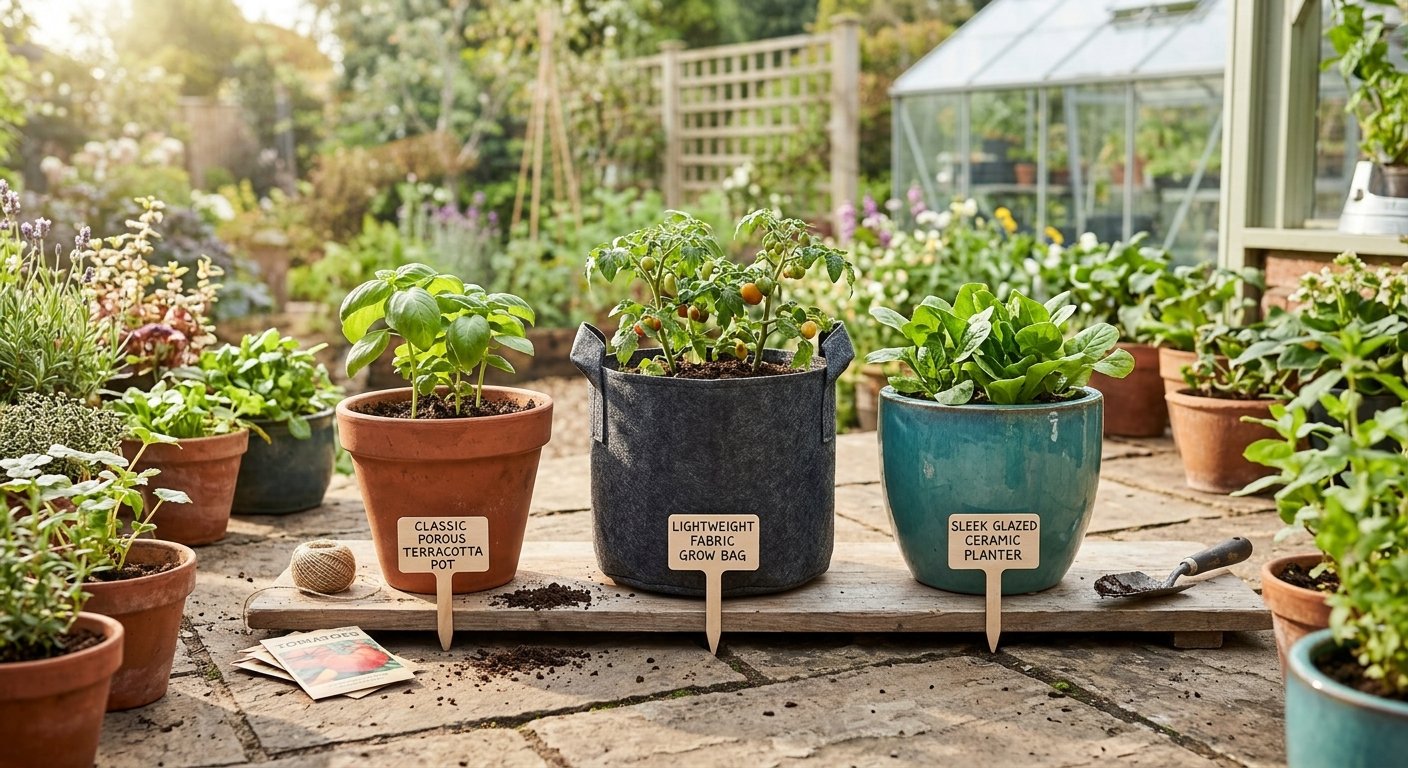
Selecting container sizes requires evaluating structural features alongside volume:
- Drainage Capacity: Always verify that containers feature bottom drainage holes to let excess water escape freely.
- Container Material Performance: Fabric grow bags air-prune roots and prevent root circling, whereas plastic containers retain water longer during hot summer heat waves.
- Pot Depth vs. Width: Root vegetables (carrots, parsnips) need deep containers rather than wide ones, while sprawling ground covers prefer wide, shallow bowl planters.
Conclusion
Using this best plant container sizes guide keeps your potted plants healthy, productive, and resilient against drought and root rot. By matching root depth requirements with proper container volume and ensuring adequate drainage, you establish the perfect foundation for container gardening success.
Frequently Asked Questions
What container size is best for growing tomatoes?
Patio or bush tomato varieties grow well in 5-gallon containers (12 to 14 inches wide). Larger indeterminate vining tomatoes require at least a 7 to 10-gallon container (16 to 18 inches deep) for stability and root expansion.
How do I know if my plant needs a bigger container size?
Common signs include roots growing out through drainage holes, water running straight through without soaking in, stunted foliage growth, top-heavy tipping, or soil drying out within a single day.
Can a plant container be too big?
Yes. Placing a small plant into a massive container leaves large areas of unrooted soil that stay wet for too long after watering, which starves roots of oxygen and causes root rot. Upgrade pot sizes gradually by 2 to 3 inches in diameter.
1 thought on “Containers: Best Plant Container Sizes Guide”