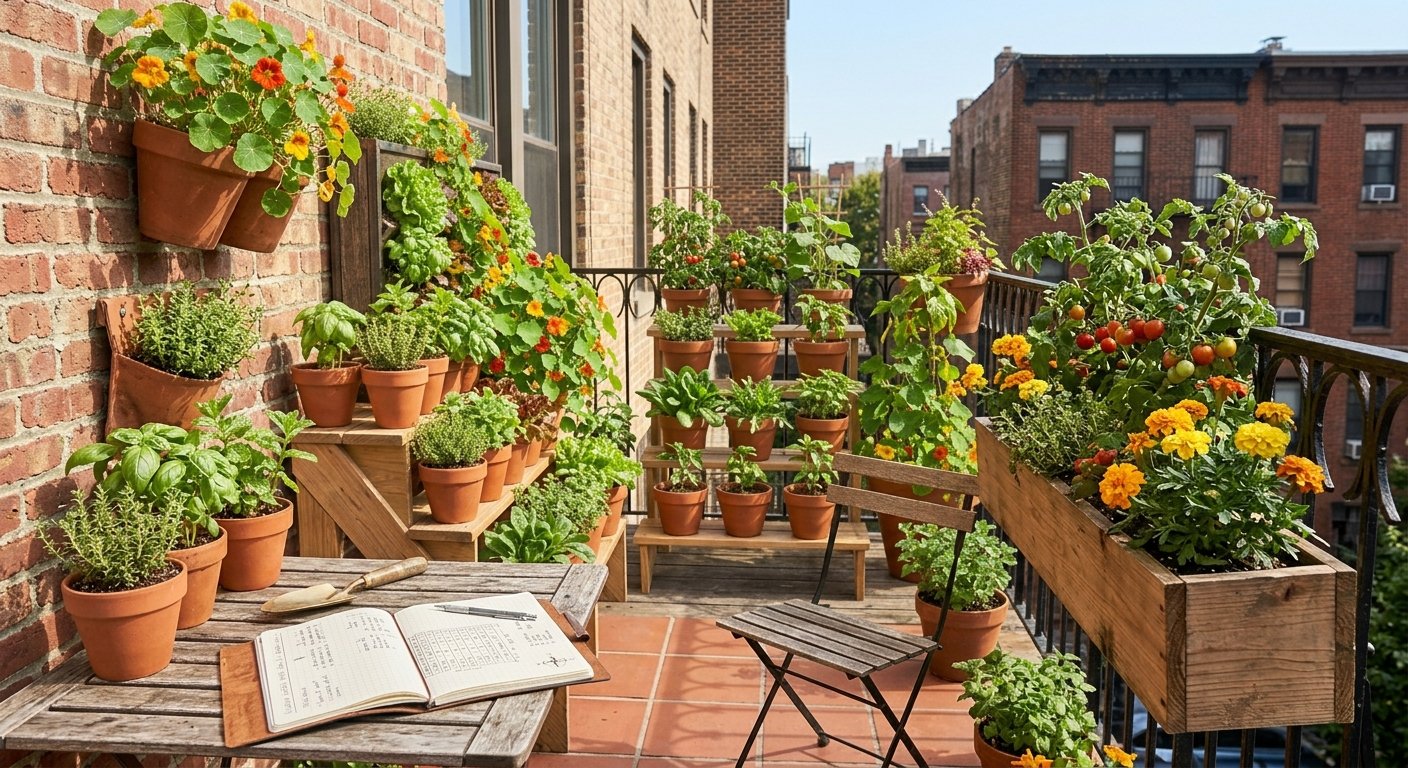
Effective small space garden planning proves that you do not need a sprawling backyard to grow fresh herbs, vegetables, and beautiful flowers. Limited square footage simply demands smarter design choices, efficient layout strategies, and vertical space utilization.
Whether you are designing a balcony garden, a compact patio setup, or a small urban courtyard, careful planning helps you maximize sunlight, optimize root volume, and prevent overcrowded foliage. This guide provides actionable steps to select container sizes, utilize vertical structures, and choose high-yielding plant varieties tailored to tight spaces.
Key Takeaways
- Think Vertically: Utilize wall planters, hanging baskets, and trellises to expand your growing area upward without sacrificing floor space.
- Prioritize High-Yield Crops: Select indeterminate tomatoes, cut-and-come-again greens, and dwarf cultivars engineered specifically for containers.
- Match Container to Root Depth: Ensure pots have adequate depth and bottom drainage to prevent root binding and water stagnation.
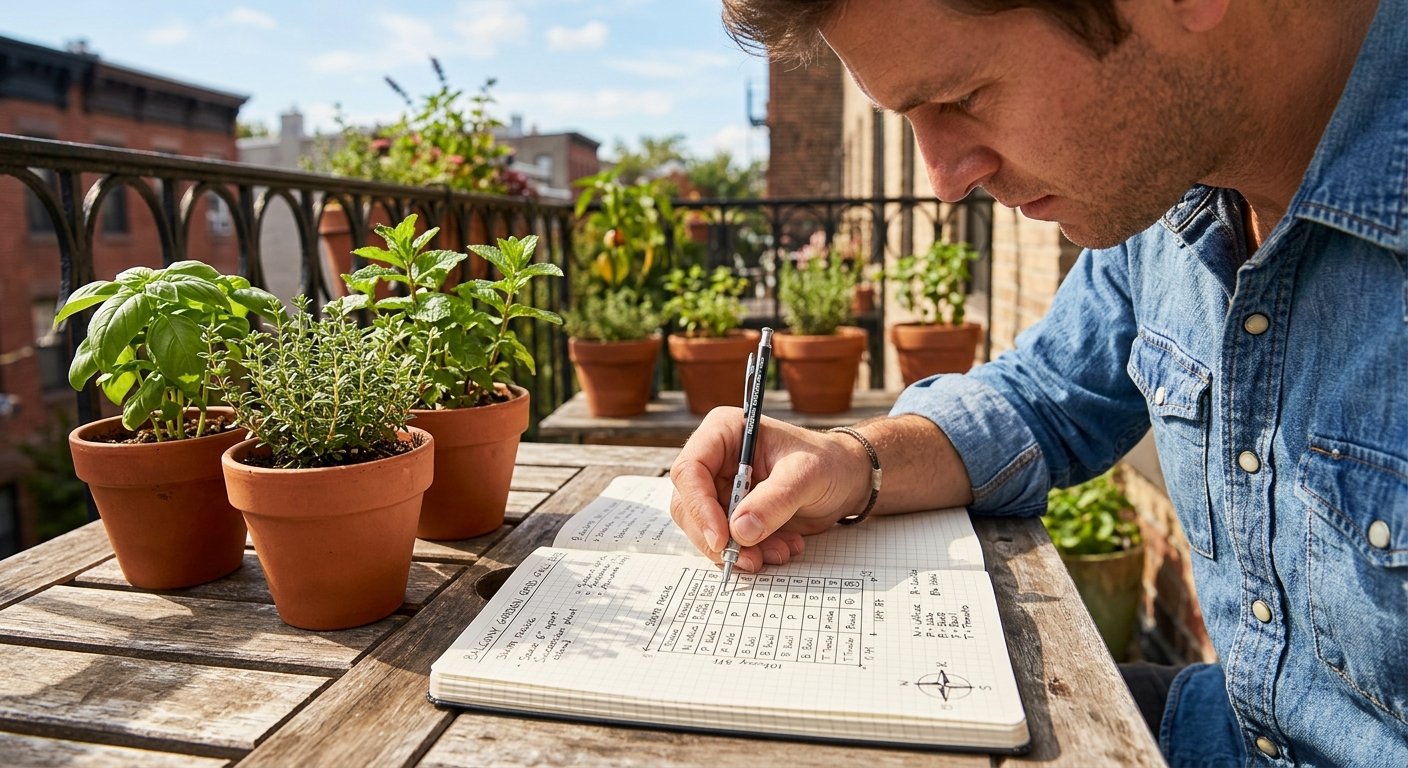
- Map Sunlight Exposure: Track daily direct sunlight on your balcony or patio before picking shade-tolerant versus sun-loving plants.
- Incorporate Companion Planting: Pair compact herbs and flowers together in single containers to deter pests and save soil volume.
Why Small Space Garden Planning Is Essential
Executing a deliberate small space garden planning strategy prevents common urban gardening mistakes like overcrowding, poor drainage, and uneven light access.
In limited footprints, every inch of space matters. Planning ahead allows you to select multi-functional containers, group plants with shared watering needs, and keep pathways clear for easy maintenance.
Core Strategies for Small Space Garden Planning
Transforming tiny outdoor areas into thriving micro-gardens relies on three primary techniques.
1. Vertical Gardening Systems
When horizontal floor area is limited, build upward:
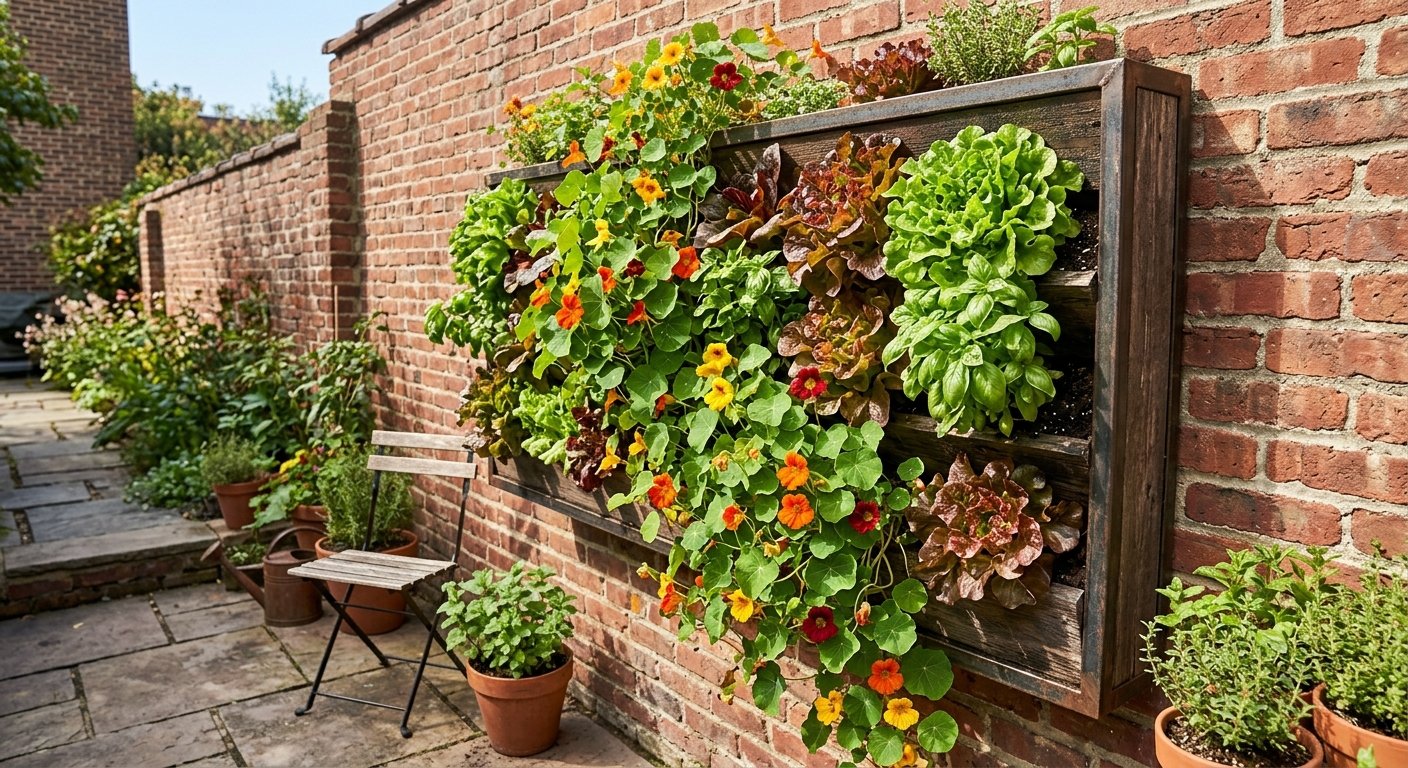
- Wall-Mounted Pocket Planters: Ideal for shallow-rooted crops like lettuce, spinach, and strawberries.
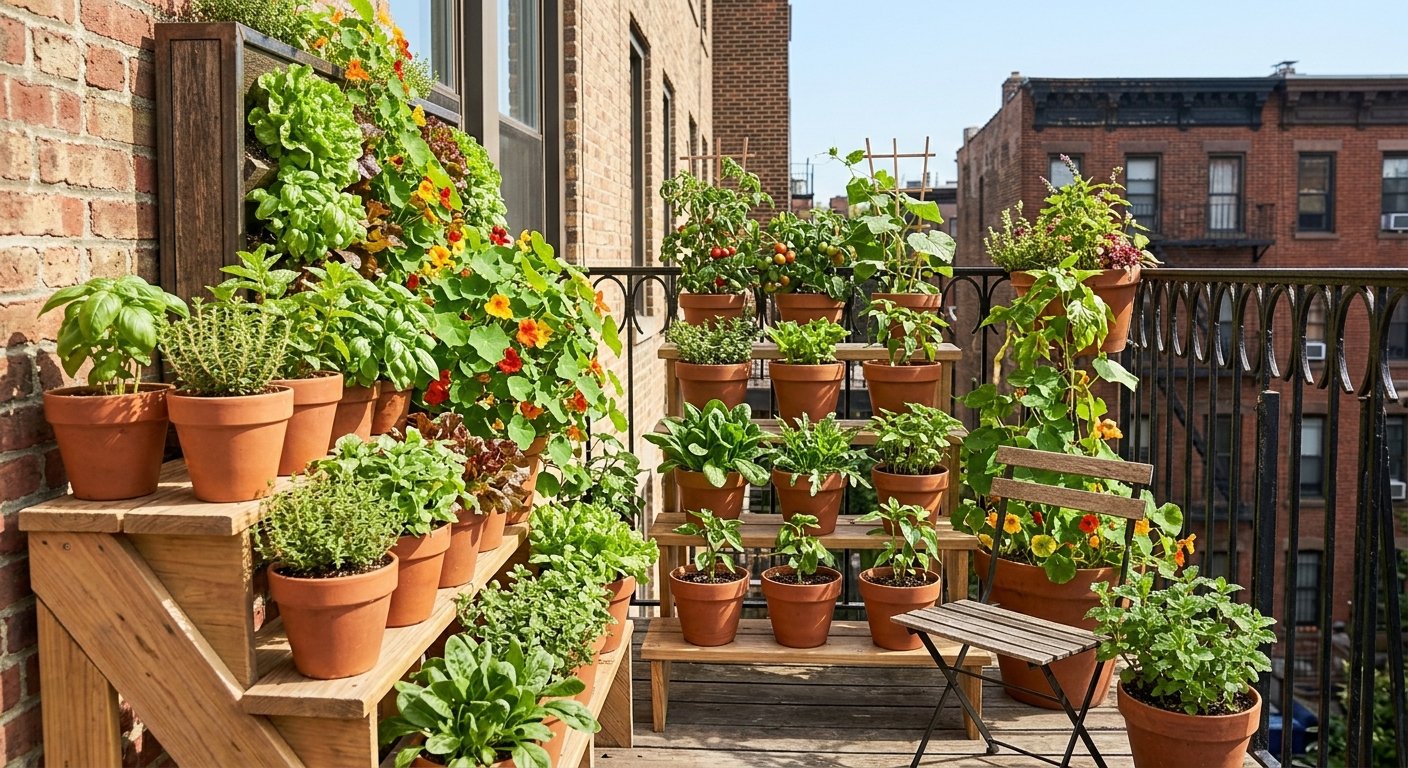
- Tiered Plant Stands: Stagger potted herbs to ensure each plant receives unshaded sunlight.
- Railing Boxes & Trellises: Hook containers over balcony railings and train climbing crops like peas or pole beans along vertical mesh.
2. Smart Container Selection
Always choose functional containers over pure aesthetics. Ensure every pot features drainage holes and sufficient root depth:
- Herbs & Radishes: 6 to 8 inches of soil depth.
- Peppers & Bush Beans: 10 to 12 inches of soil depth.
- Tomatoes & Squash: 14 to 18 inches of soil depth.
Selecting Crops and Maximizing Harvests
Not all crop varieties thrive in cramped quarters. Tailoring your seed selection is crucial for success:
- Patio and Micro-Dwarf Varieties: Look for seed packets labeled “patio,” “dwarf,” or “compact” (e.g., Tiny Tim tomatoes or Spacemaster cucumbers).
- Continuous Harvest Greens: Plant cut-and-come-again leafy greens like kale, swiss chard, and loose-leaf lettuce rather than head-forming varieties.
- Multi-Tiered Companion Pots: Plant deep-rooted dwarf tomatoes in the center of a large container, ringed by shallow-rooted basil and French marigolds along the edges.
Environmental and Maintenance Considerations
- Wind Protection: Balconies and rooftop gardens experience higher wind speeds, which dry out potting media rapidly. Use sturdy, heavy-bottomed pots or windbreaks.
- Watering Access: Ensure your layout allows easy access to a hose or watering can without risking water dripping onto lower balconies.
- Soil Weight Limits: For elevated decks and balconies, use lightweight potting mixes enriched with perlite rather than heavy topsoil.
Conclusion
Successful small space garden planning allows urban gardeners to cultivate rich, productive gardens regardless of square footage limitations. By utilizing vertical structures, selecting compact dwarf cultivars, and matching pots to root depth, you can transform any sunny balcony or small patio into an abundant green retreat.
Frequently Asked Questions
What vegetables grow best in a small space garden layout?
Leafy greens (lettuce, spinach, kale), bush beans, dwarf tomatoes, radishes, peppers, and culinary herbs grow exceptionally well in small space gardens and containers.
How much sun does a balcony garden need?
Most fruiting crops (tomatoes, peppers, cucumbers) require 6 to 8 hours of direct sunlight daily. Leafy greens and culinary herbs can thrive on 4 to 5 hours of partial sun.
How do I prevent containers from drying out too fast in small spaces?
Use high-quality potting soil mixed with compost, apply a thin layer of organic mulch over topsoil to retain moisture, and consider self-watering planters for windy or sun-exposed locations.
1 thought on “Space: Small Space Garden Planning”