
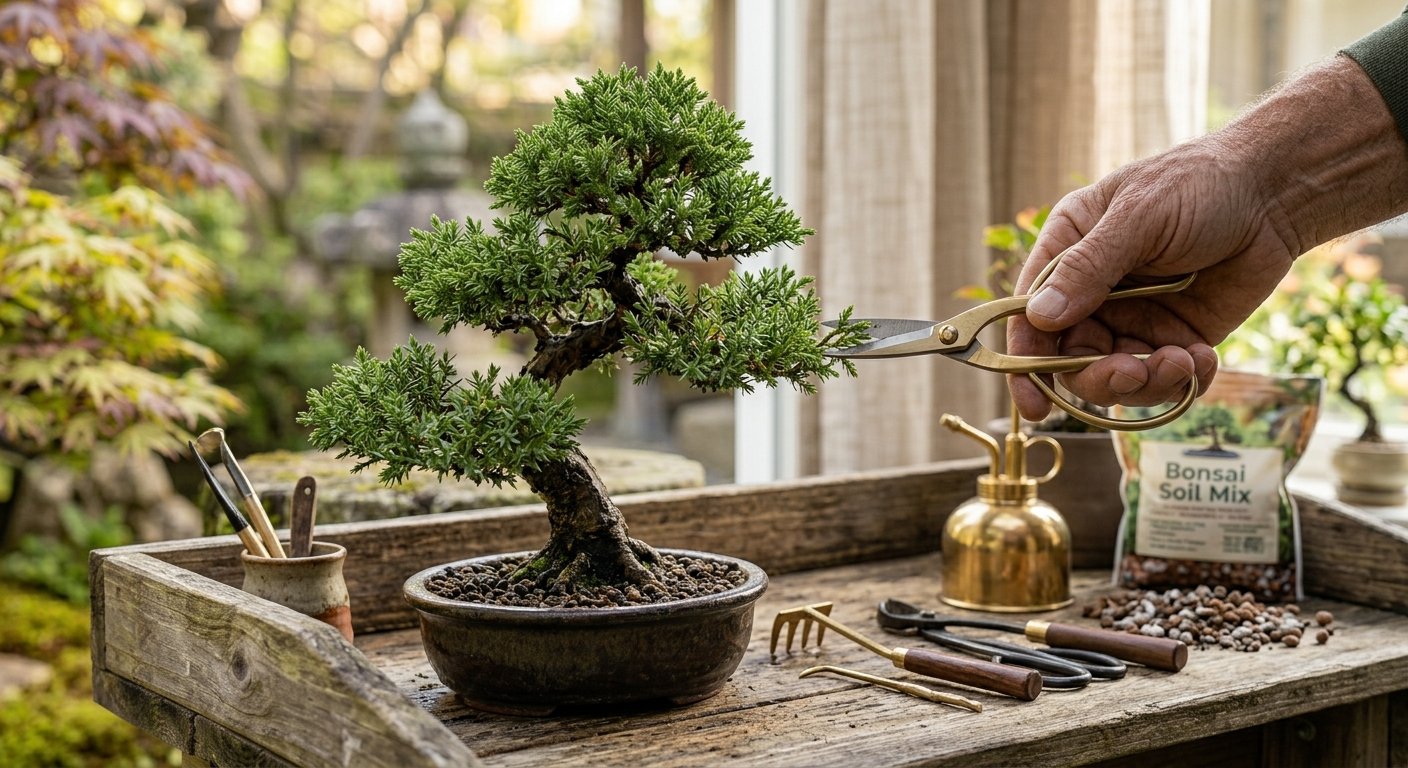
Following a clear bonsai tree care guide for beginners transforms the ancient art of miniature tree cultivation into an enjoyable and rewarding hobby. Contrary to popular belief, bonsai trees are not genetically dwarfed plants; they are standard tree species kept small through precise root pruning, branch shaping, and specialized container management.
Whether you are caring for an indoor ficus or growing an outdoor juniper, understanding the unique environmental needs of potted miniature trees is essential for long-term health. This comprehensive guide breaks down foundational techniques—from mastering moisture control to applying structural wiring—to help your bonsai thrive for years to come.
Key Takeaways
- Water by Moisture, Not Schedule: Check soil moisture daily and water deeply only when the top layer of soil begins to feel slightly dry to the touch.
- Match Species to Location: Keep outdoor species (like junipers and maples) outside year-round; reserve indoor locations for tropical species like Ficus retusa.
- Use Well-Draining Soil: Plant bonsai in specialized inorganic substrates like akadama, pumice, and lava rock to encourage root aeration and prevent compaction.
- Prune for Shape and Health: Perform structural pruning in early spring to maintain scale, and pinch back new shoots during the growing season to boost foliage density.
- Repot Every 2–3 Years: Prune young tree roots and refresh degraded soil every few years in early spring before active bud break begins.
Why Following a Bonsai Tree Care Guide for Beginners Matters
Relying on a structured bonsai tree care guide for beginners prevents common mistakes like overwatering, light deprivation, and root rot.
Because bonsai live in small, shallow ceramic pots with limited soil volume, their root systems dry out faster and have less tolerance for environmental extremes than full-sized garden trees. Balancing hydration, ambient light, and organic feeding preserves branch structure and builds plant resilience.
Essential Watering Techniques and Soil Selection
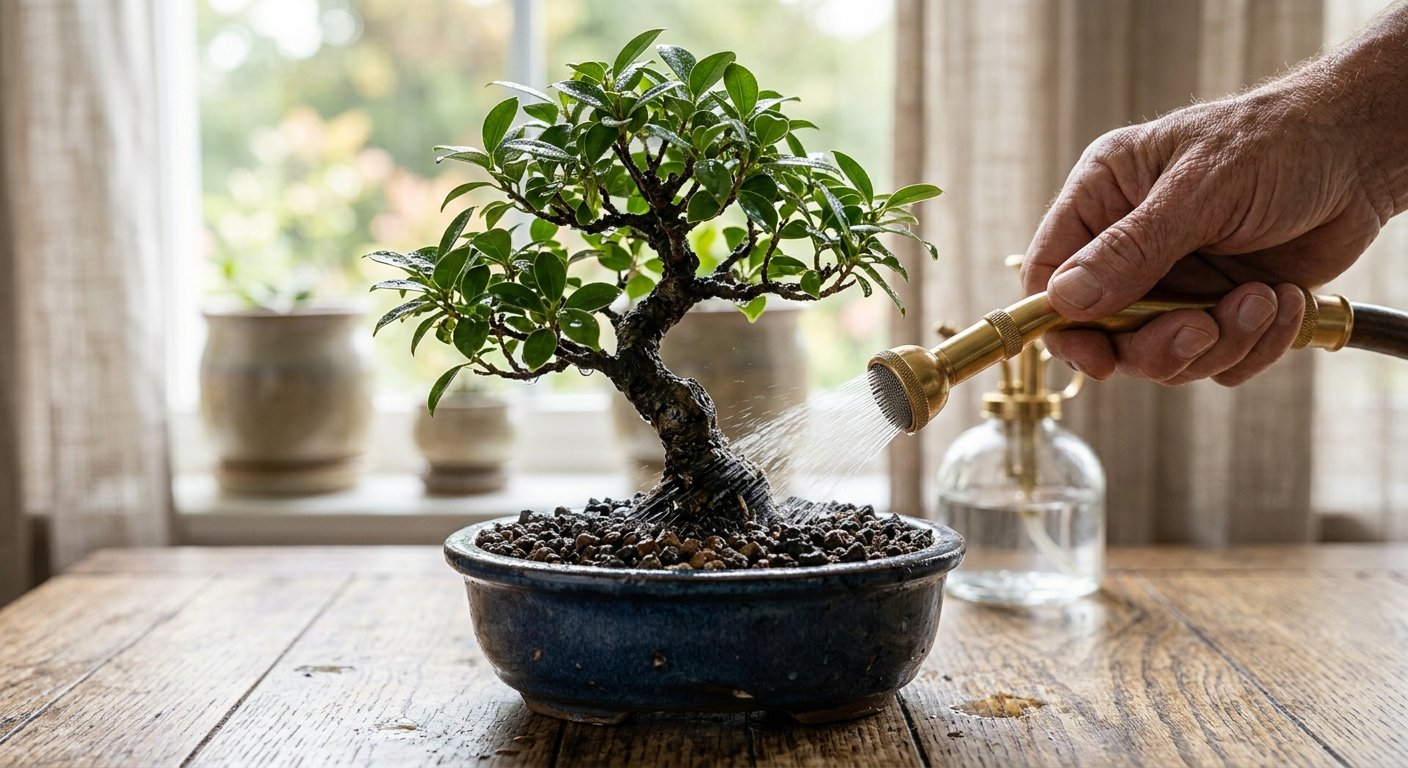
Hydration is the single most critical factor in keeping a miniature tree alive:
1. The Touch Test vs. Routine Schedules
Never water your bonsai on a rigid calendar schedule. Instead, insert your finger half an inch into the soil mix. If the substrate feels dry, water thoroughly until excess liquid drains freely from the pot’s bottom drainage holes.
2. Choosing the Right Soil Substrate
Standard potting soil retains too much moisture and suffocates delicate root systems. Opt for a well-draining bonsai mix typically composed of:
- Akadama: Hard-baked Japanese clay that retains moisture while breaking down slowly.
- Pumice: Volcanic rock that absorbs water and provides structural root aeration.
- Lava Rock: Coarse mineral stone that improves drainage and prevents soil compaction.
Pruning, Maintenance, and Wiring
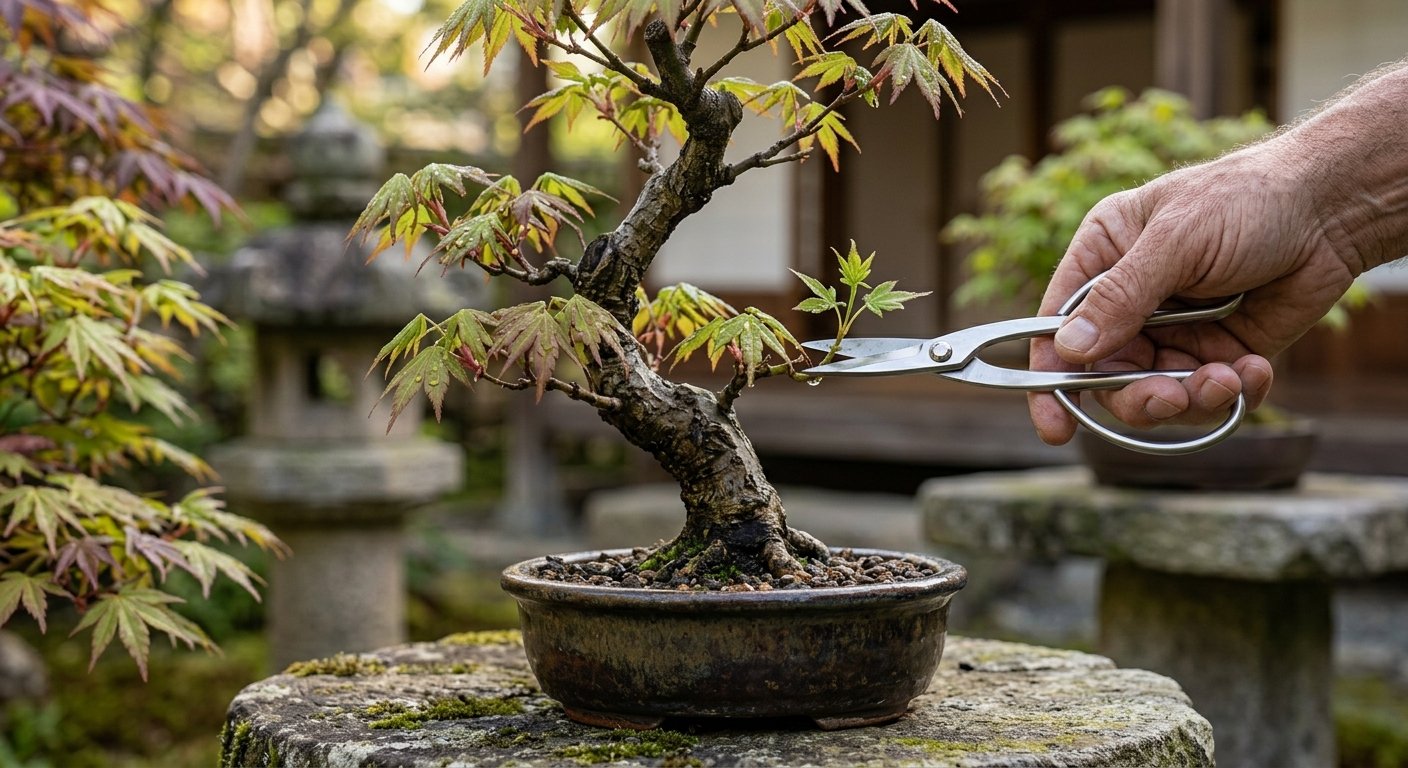
Pruning maintains the miniature proportions and artistic form of your tree:
- Maintenance Pruning: Trim back long shoots and pinch soft growth throughout spring and summer to direct energy inward, promoting dense foliage growth.
- Structural Pruning: Remove large branches in late winter or early spring to establish the tree’s primary shape and style (e.g., informal upright, windswept, or cascade).
- Branch Wiring: Apply anodized aluminum or copper wire around branches to gently train them into desired positions. Remove wire before it bites into expanding bark.
Repotting and Feeding Requirements
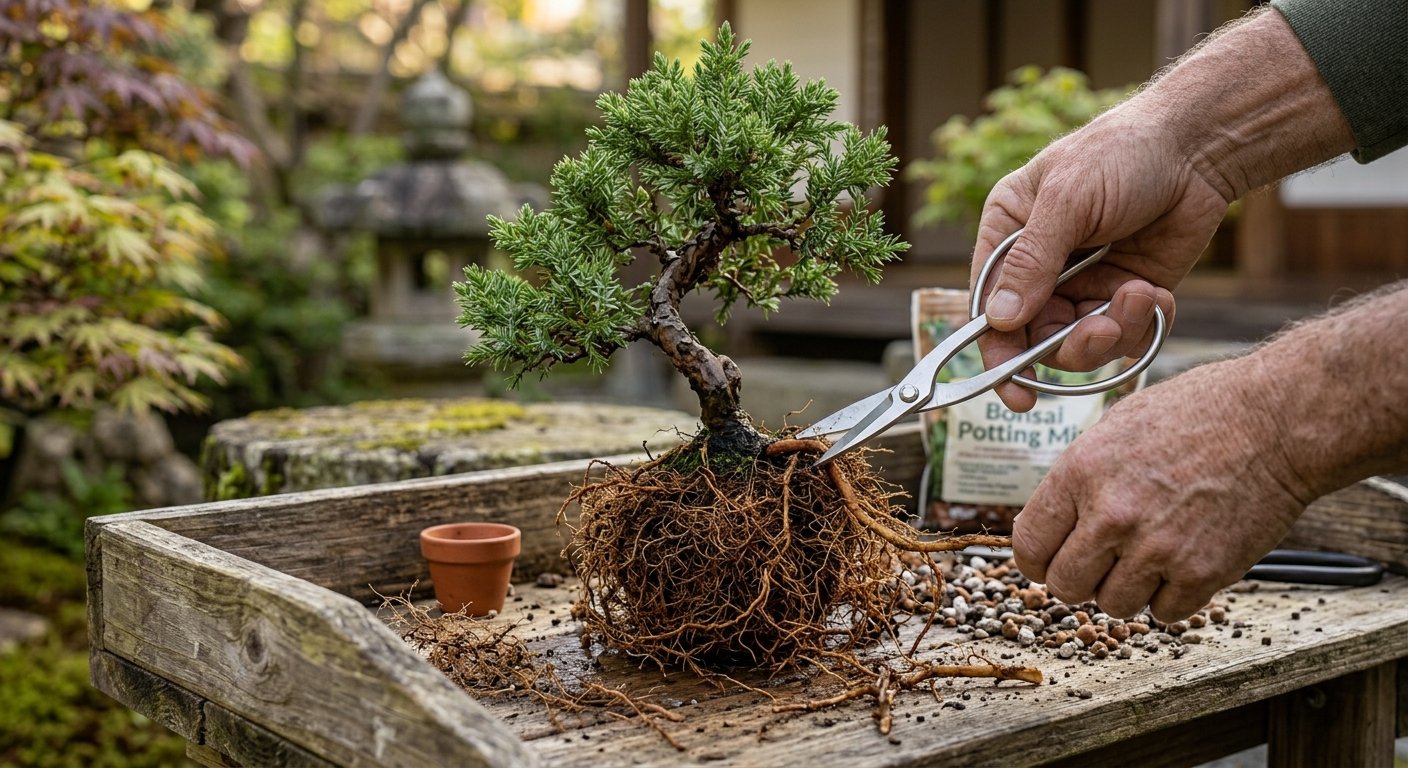
- Repotting Frequency: Young, fast-growing bonsai need repotting every 2 years, while mature specimens can remain in the same pot for 3 to 5 years. Always trim up to one-third of the root ball during repotting.
- Seasonal Fertilization: Feed active trees bi-weekly during spring and summer using a balanced organic liquid fertilizer to replenish lost nutrients in small pots.
Conclusion
Adopting the principles in this bonsai tree care guide for beginners provides your miniature tree with the foundation it needs to flourish. By monitoring soil moisture carefully, placing your tree in its ideal environment, and applying routine pruning, you turn basic plant maintenance into a rewarding lifelong craft.
Frequently Asked Questions
Can I keep my bonsai tree inside the house?
It depends entirely on the tree species. Tropical species like Ficus, Carmona (Fukien Tea), and Jade thrive indoors near bright windows. Temperate species like Juniper, Pine, and Maple require outdoor seasonal temperature changes to enter winter dormancy and will die if kept indoors permanently.
How often should I water using this bonsai tree care guide for beginners?
Water whenever the top layer of soil feels slightly dry to the touch. Check your tree daily, but only apply water when the soil substrate requires it—frequency varies based on pot size, tree species, and ambient weather conditions.
Why are the leaves on my bonsai tree turning yellow and falling off?
Yellowing foliage is most commonly caused by overwatering, insufficient light, or sudden changes in environment. Ensure your pot drains properly, adjust your watering habits, and place the tree in a location with adequate bright sunlight.
1 thought on “Bonsai: Bonsai Tree Care Guide for Beginners”