
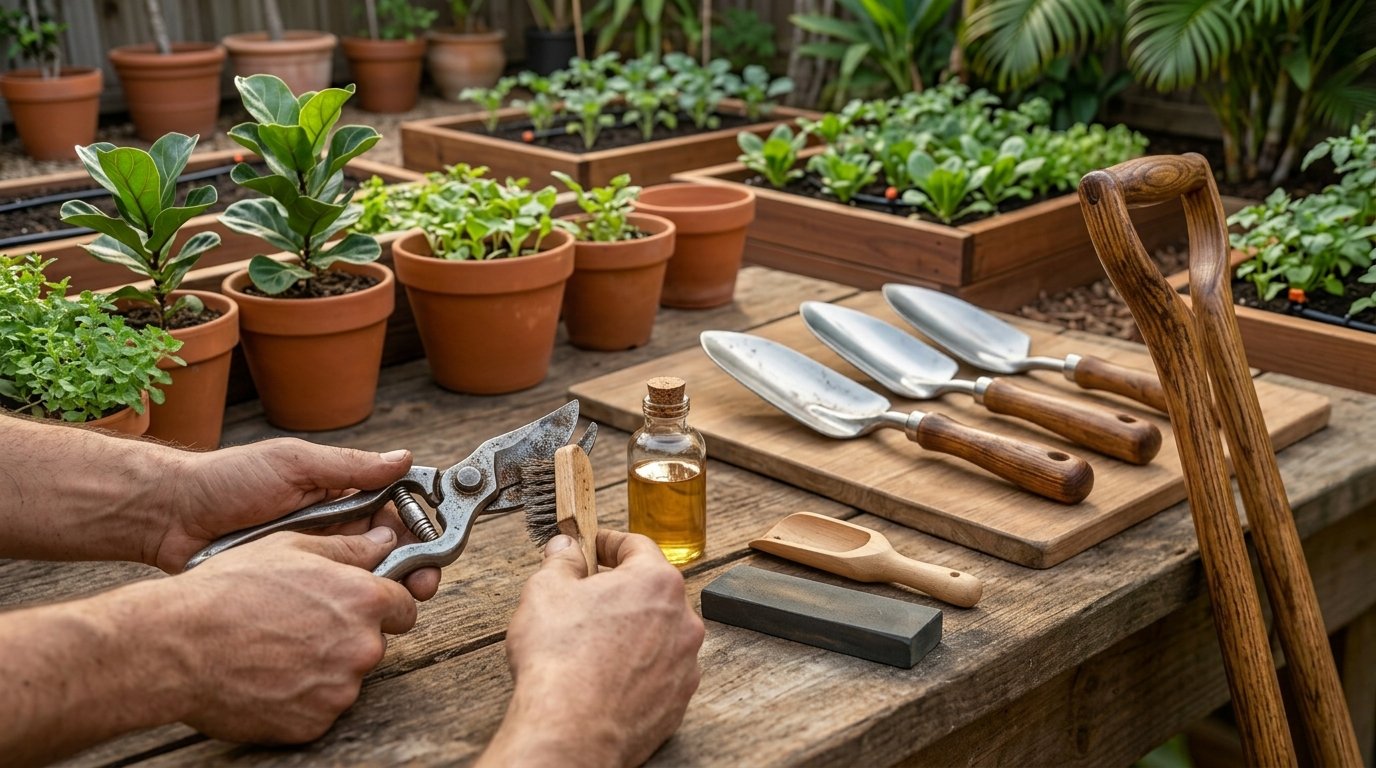
Proper gardening tool cleaning and maintenance is the secret to extending the lifespan of your lawn and garden equipment while protecting your plants from cross-contaminated diseases. Dirty, dull, or rusted tools require extra physical force to operate, leading to premature hand fatigue and ragged plant cuts that invite fungal pathogens into your garden.
By establishing a quick post-use cleaning routine alongside seasonal maintenance, you keep hand trowels, pruning shears, spades, and hoes performing like new. This step-by-step guide walks you through removing caked-on dirt, removing rust, sharpening cutting edges, and winterizing your tool collection.
Key Takeaways
- Clean After Every Use: Rinse off soil and sap immediately to prevent moisture build-up and rust formation on metal heads.
- Sanitize to Prevent Disease Spread: Disinfect pruner blades between plants using 70% isopropyl alcohol to stop bacterial and fungal pathogens.
- Maintain Sharp Edges: Use a whetstone or mill file to sharpen bypass pruners and shovels at their original bevel angle for clean cuts.
- Condition Wood Handles: Sand rough wooden handles smooth and coat them with boiled linseed oil to prevent splintering and dry rot.
- Store Gear Dry: Hang tools in a well-ventilated shed or store hand tools in a bucket filled with sand and mineral oil to prevent oxidation.
Why Gardening Tool Cleaning and Maintenance Is Essential
Developing a consistent gardening tool cleaning and maintenance routine directly impacts your garden’s overall productivity and health.
Uncleaned pruning shears transfer blights, cankers, and viral infections from diseased branches straight into healthy plant tissue. Furthermore, dull blades crush plant stems rather than making clean, surgical slices, which slows down plant recovery time and leaves open wounds vulnerable to garden pests.
Daily and Weekly Maintenance Steps
Keeping tools in peak condition does not require hours of work if done consistently after each use:
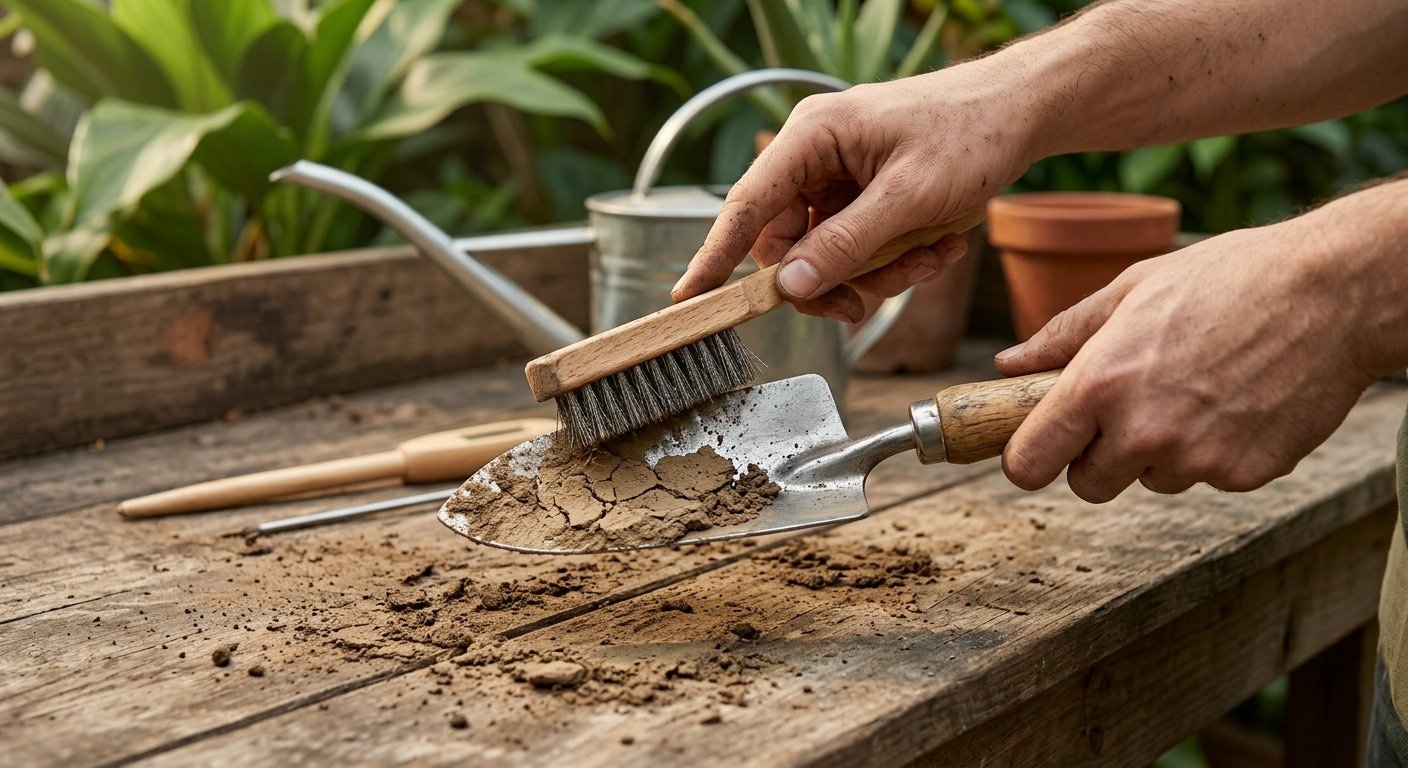
1. Soil and Sap Removal
Scrape off excess mud with a putty knife or wire brush. Wash remaining grit using warm water and dish soap. For sticky sap buildup on bypass pruners, wipe the blades with solvent or mineral spirits.
2. Disinfecting Cutting Blades
Wipe down shears, loppers, and soil knives with 70% isopropyl alcohol or a 10% bleach solution after pruning diseased foliage to maintain plant hygiene.
How to Restore, Sharpen, and Oil Garden Tools
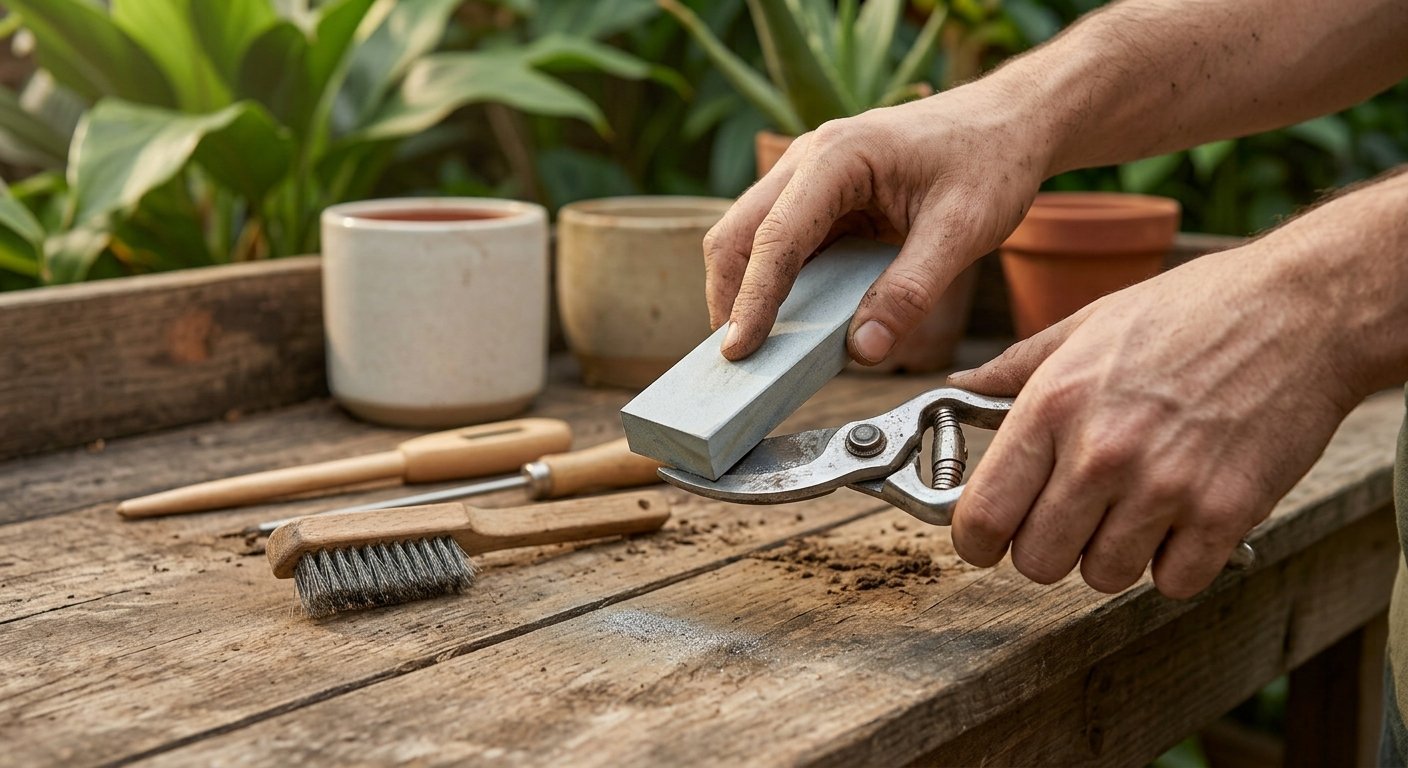
When tools show signs of dullness or surface rust, take these restoration steps:
Rust Removal and Prevention
- Rub light surface rust away using fine #0000 steel wool or a wire wheel attachment.
- For heavy rust, soak metal parts overnight in a 1:1 mixture of white vinegar and water, then scrub clean and dry thoroughly.
Sharpening Blades and Digging Edges
- Pruners and Loppers: Pass a medium-grit diamond file or whetstone smoothly along the factory-beveled side of the blade.
- Shovels and Hoes: Use a medium mill bastard file to sharpen the cutting edge at a 45-degree angle to slice effortlessly through compacted soil and weed roots.
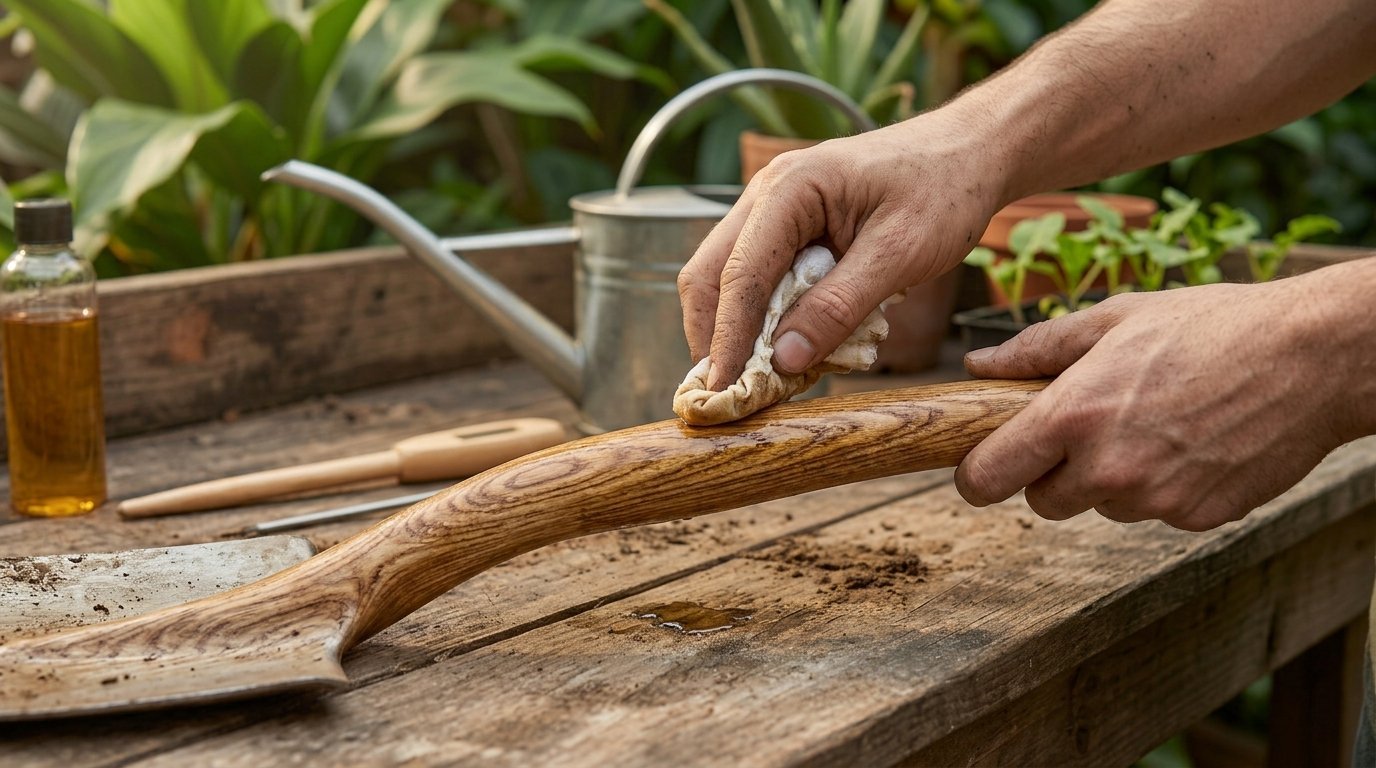
Handle Care and Winter Storage Tips
- Wooden Handles: Sand down rough spots with 120-grit sandpaper. Rub boiled linseed oil onto the wood to seal out moisture and prevent cracking.
- Off-Season Storage: Store hand tools head-down in a bucket filled with clean coarse sand mixed with 1/2 cup of mineral oil. This coat shields steel from humid air during cold winter months.
Conclusion
Making gardening tool cleaning and maintenance a regular habit protects your financial investment in quality garden gear and safeguards your plants against disease. With clean, razor-sharp tools ready to go, every digging, pruning, and weeding chore becomes faster, easier, and more rewarding.
Frequently Asked Questions
What is the best oil for gardening tool cleaning and maintenance?
Boiled linseed oil is best for conditioning wooden handles. For metal blades and joints, lightweight mineral oil or 3-in-One multi-purpose oil prevents rust without damaging plant tissue during future use.
Can I use WD-40 for gardening tool cleaning and maintenance?
WD-40 works well as a solvent to clean sap and dissolve light rust, but it is not a long-term lubricant. Follow up WD-40 application with a coat of mineral oil or motor oil for lasting rust protection.
How often should I sharpen my garden pruners?
Sharpen bypass pruners after every 8 to 10 hours of active heavy use, or whenever you notice the blades crushing or chewing through plant stems rather than slicing cleanly.
1 thought on “Upkeep: Gardening Tool Cleaning and Maintenance”