
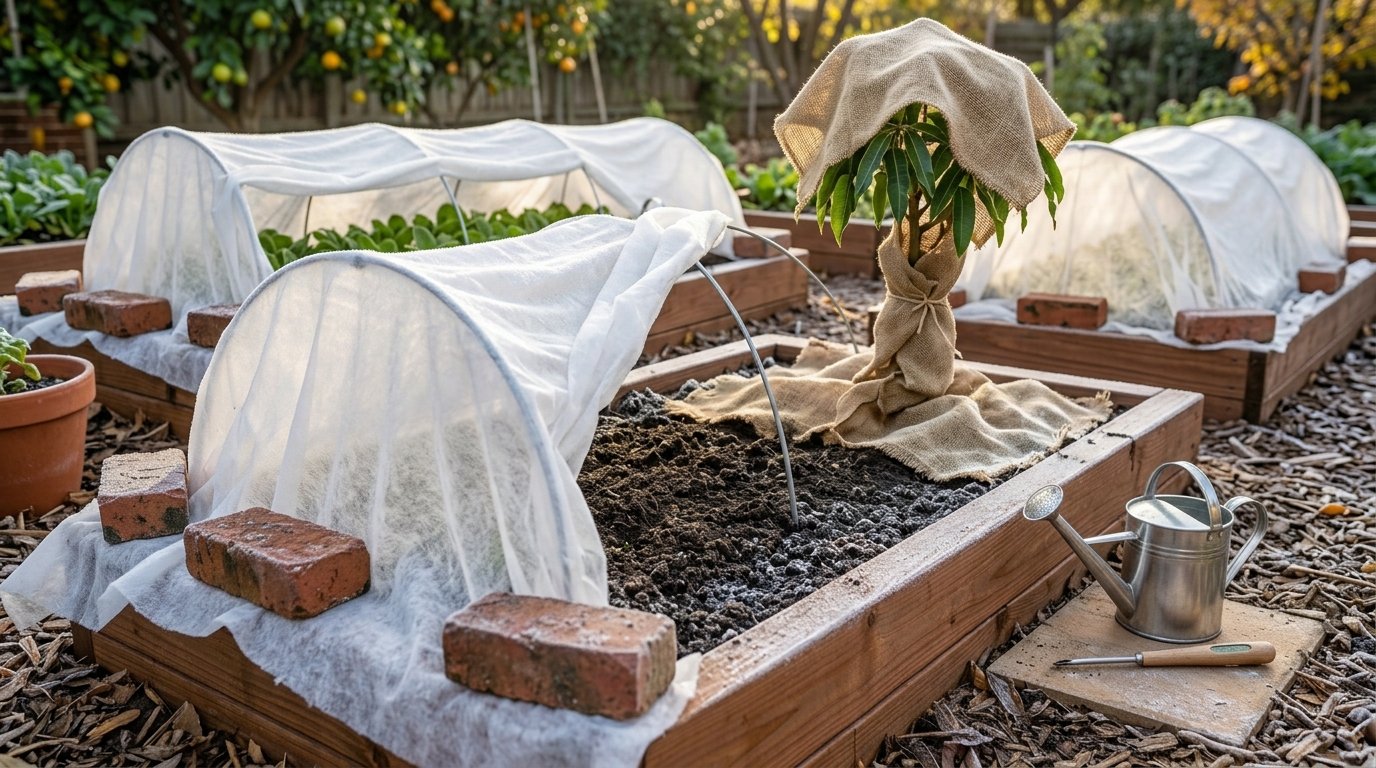
When winter temperatures drop unexpectedly, knowing effective plant frost protection methods for winter is the key to preventing severe cell damage, leaf burn, or complete plant loss. Frost forms when moisture in the air freezes on surfaces, creating ice crystals that rupture fragile plant tissue and prevent moisture uptake.
Whether you are shielding tender perennials, protecting winter vegetable crops, or keeping young shrubs safe through hard freezes, applying proven insulation strategies ensures your outdoor garden survives freezing temperatures intact. This guide outlines actionable techniques—from breathable physical covers to soil moisture management—to protect your landscape against cold weather damage.
Key Takeaways
- Cover Before Frost Falls: Drape protective frost cloth or burlap over plants in the late afternoon before ground heat escapes into the cold night air.
- Anchor Covers to the Ground: Secure physical barriers all the way to the soil line using bricks or landscape staples to trap radiating Earth heat around plant roots.
- Hydrate Soil Pre-Freeze: Water soil deeply before a freeze hits; moist soil retains and radiates significantly more thermal heat than dry ground.
- Layer Organic Mulch: Apply a 3- to 4-inch layer of straw, bark, or leaf mulch over plant root zones to insulate crowns from deep ground freezing.
- Avoid Touching Foliage: Use stakes or hoops to keep plastic or heavy fabric from touching leaves directly, preventing cold transfer burn.
Why Understanding Plant Frost Protection Methods for Winter Is Critical
Implementing structured plant frost protection methods for winter shields plant cellular integrity during sudden freeze events.
When plant tissue freezes rapidly, water expands inside plant cells, tearing cell walls from within. Once temperatures warm up, damaged stems and leaves turn black, wilt, and decay. Using physical insulation keeps ambient temperatures around tender foliage just above critical damage thresholds.
Physical Covers and Thermal Traps
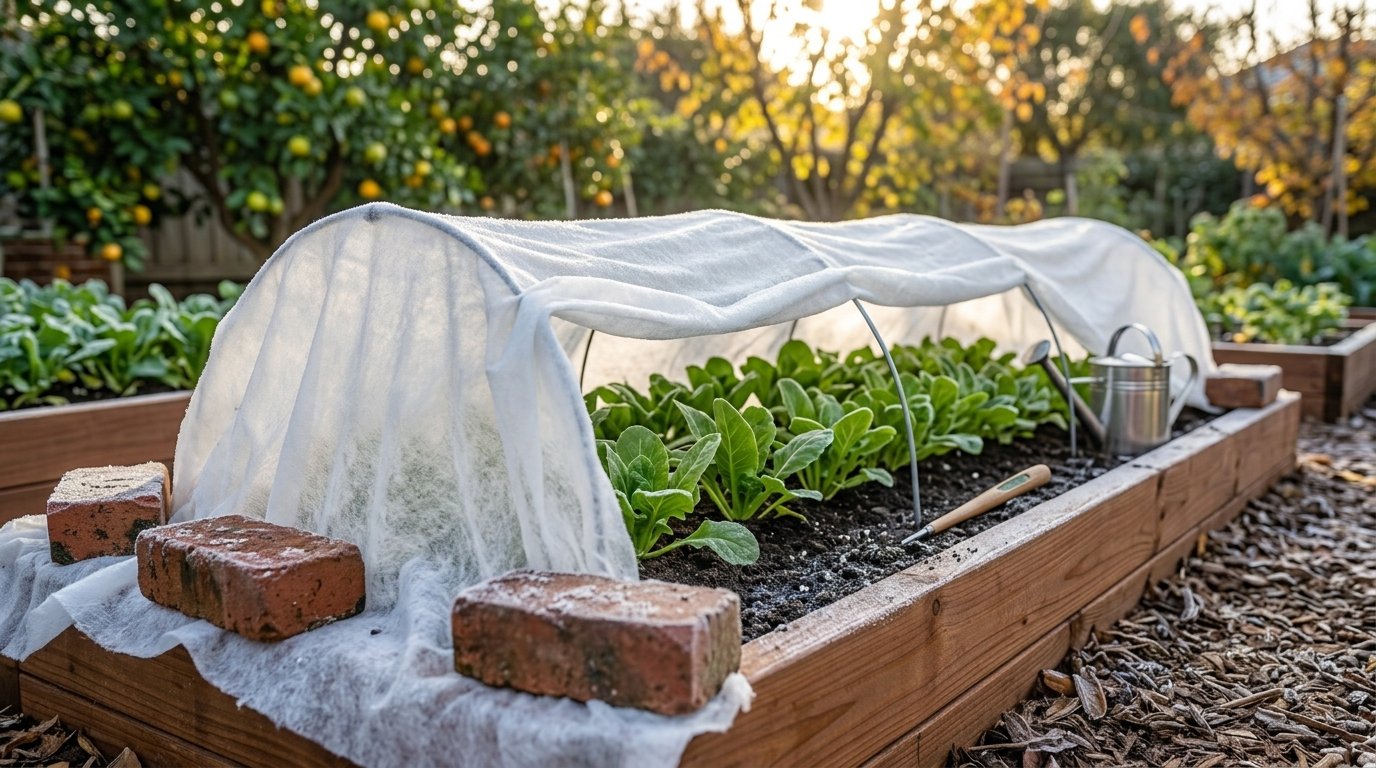
Physical barriers are your first line of defense against unexpected overnight temperature drops:
1. Floating Row Covers and Frost Cloth
Breathable spun-bond horticultural fabric allows sunlight and air circulation while trapping ground heat. Draped over plant hoops or garden beds, it raises temperatures beneath the fabric by 4 to 8 degrees.
2. Burlap Wraps for Young Trees and Shrubs
Young saplings and broadleaf evergreens benefit from burlap wraps tied with twine around their trunks. This protects fragile bark from frost cracks and windburn caused by cold winter winds.
3. Terracotta Pots and Cloches
For isolated perennial crowns or tender seedlings, placing an inverted terracotta pot or glass cloche directly over the plant creates a miniature greenhouse microclimate.
Soil Insulation and Watering Techniques
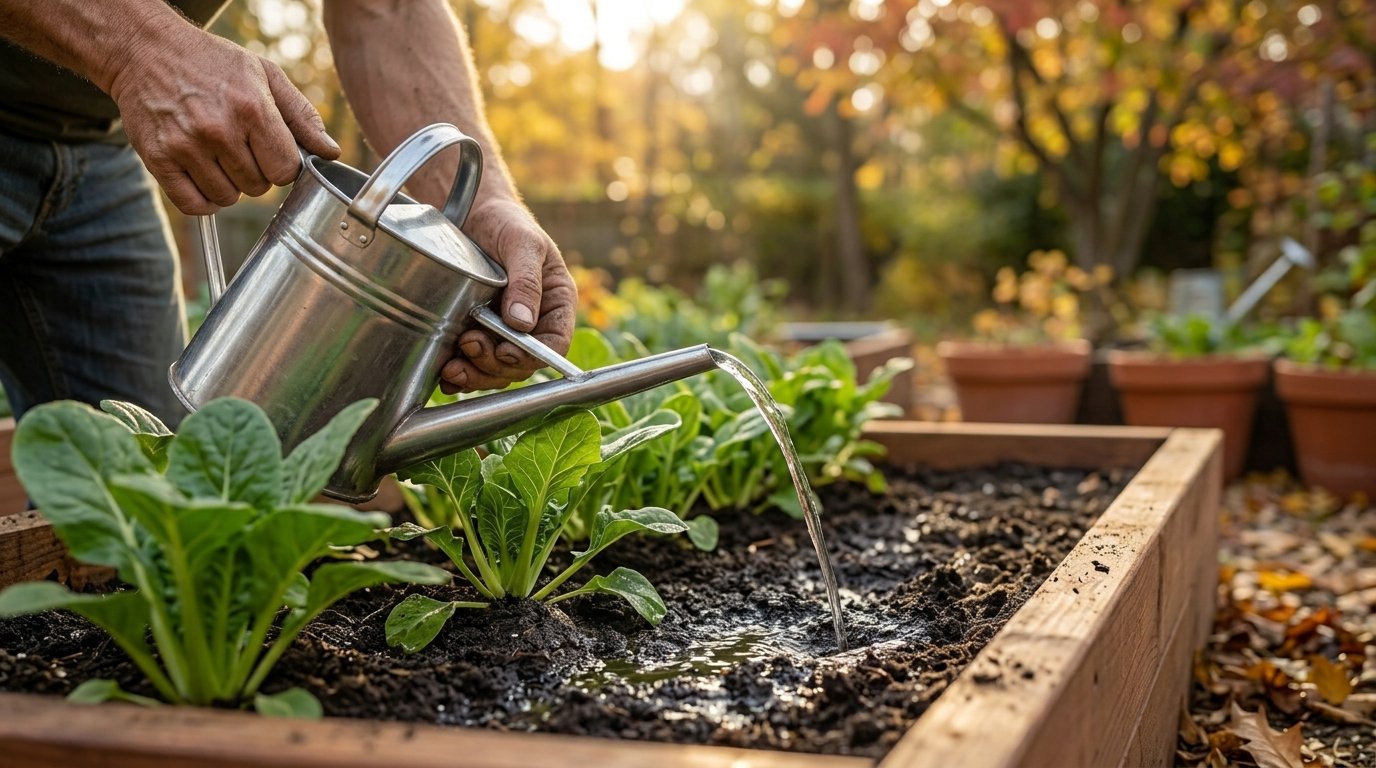
Watering and mulching work together to create thermal stability at the soil level:
- Pre-Freeze Deep Watering: Wet soil acts as a heat sink, absorbing daytime solar radiation and slowly releasing it upward overnight. Always water root zones 6 to 12 hours before an anticipated frost.
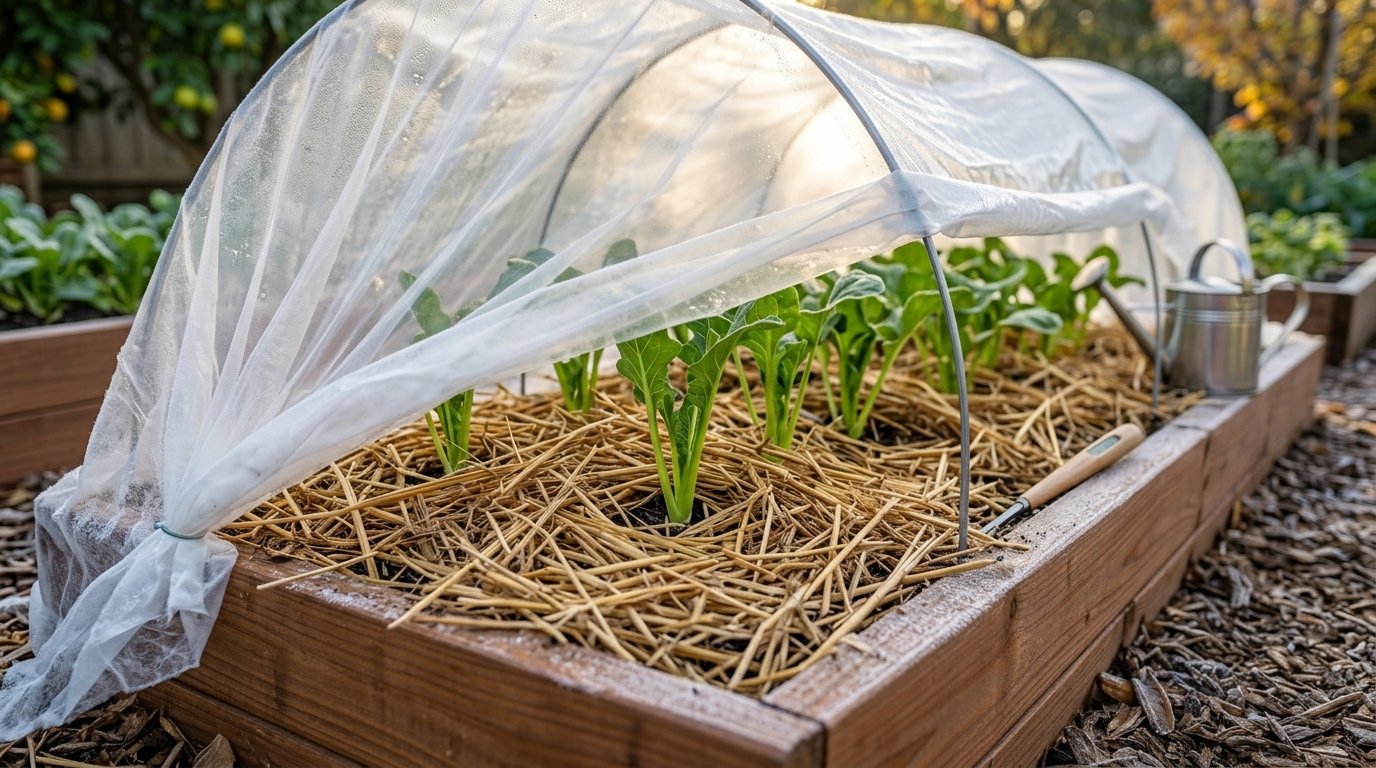
- Heavy Root Zone Mulching: Spread 3 to 4 inches of straw, wood chips, or shredded leaves around root zones. Mulch acts as an insulating blanket, keeping soil temperatures stable.
What to Do After a Hard Freeze Passes
- Remove Impermeable Covers Early: Take off plastic coverings once morning temperatures rise above freezing to avoid trapping excessive moisture and heat, which scorches leaves.
- Delay Pruning Damaged Stems: Resist the urge to prune away blackened leaves right away. Damaged foliage protects interior buds from future freezes until active growth resumes in spring.
Conclusion
Mastering plant frost protection methods for winter gives your garden the resilience it needs to withstand unpredictable freezing spells. By combining deep watering, root mulching, and proper physical coverings, you safeguard tender plants and ensure a vibrant return to growth when warm weather arrives.
Frequently Asked Questions
What are the best emergency plant frost protection methods for winter using household items?
Old bedsheets, lightweight cotton blankets, burlap sacks, and inverted plastic buckets make excellent emergency frost covers. Avoid letting plastic touch leaves directly to prevent cold transfer damage.
Can I leave frost cloth on plants all winter?
Lightweight, professional frost cloth (floating row cover) allows water, light, and air through, so it can stay on plants for extended periods during cold snaps. Heavy sheets or plastic covers should be removed during sunny daytime hours.
Does watering plants prevent frost damage?
Yes. Moist soil absorbs more heat during the day and releases thermal warmth slowly overnight compared to dry soil. Watering plant roots thoroughly before a freeze creates a warmer microclimate around the base of the plant.
1 thought on “Frost-Protection: Plant Frost Protection Methods for Winter”