
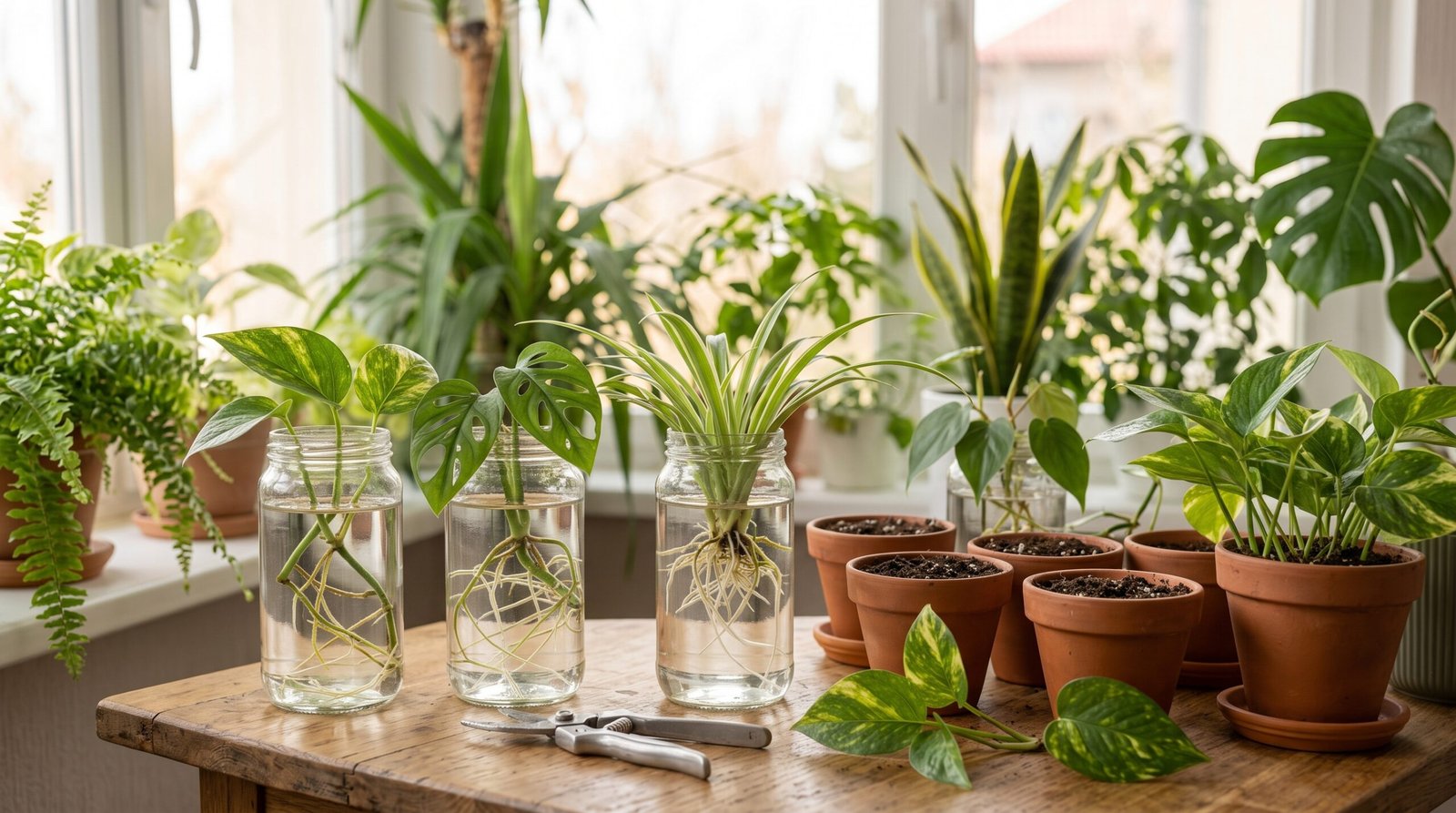
Expanding your houseplant collection or multiplying garden varieties does not require frequent trips to the nursery. Following a reliable plant propagation techniques guide gives you the knowledge to create healthy, genetically identical new plants from your existing foliage.
Propagation is both an art and a practical biological skill. By understanding how plants root from stems, leaves, or divisions, you can multiply your favorite species, rescue failing plants, and share green gifts with friends—all at zero cost.
Key Takeaways
- Method Versatility: Stem cuttings, water propagation, plant division, and air layering suit different plant species and growth habits.
- Node Placement: Successful stem cuttings require at least one exposed leaf node submerged in water or buried in a moist substrate to develop new roots.
- Tool Hygiene: Always use sterilized shears or razor blades to prevent fungal infections and bacterial decay on tender cut stems.
- Rooting Hormones: Applying synthetic or natural rooting powder accelerates root initiation in woody or stubborn cuttings.
- Environmental Balance: Cuttings need warm temperatures, high humidity, and bright, indirect sunlight to root without drying out.
Why Every Gardener Needs a Plant Propagation Techniques Guide
Understanding plant reproduction unlocks long-term success for indoor and outdoor gardeners alike. Propagation allows you to preserve rare plant varieties, refresh leggy or overgrown parent plants, and produce robust new stock adapted to your specific home environment.
By using a structured plant propagation techniques guide, you avoid common pitfalls like stem rot, desiccation, and poor root development, ensuring high success rates across different plant families.
The Top Plant Propagation Methods Explained
Different plant species respond best to specific propagation methods depending on their stem structure and tissue density.
1. Stem Cuttings in Water or Soil
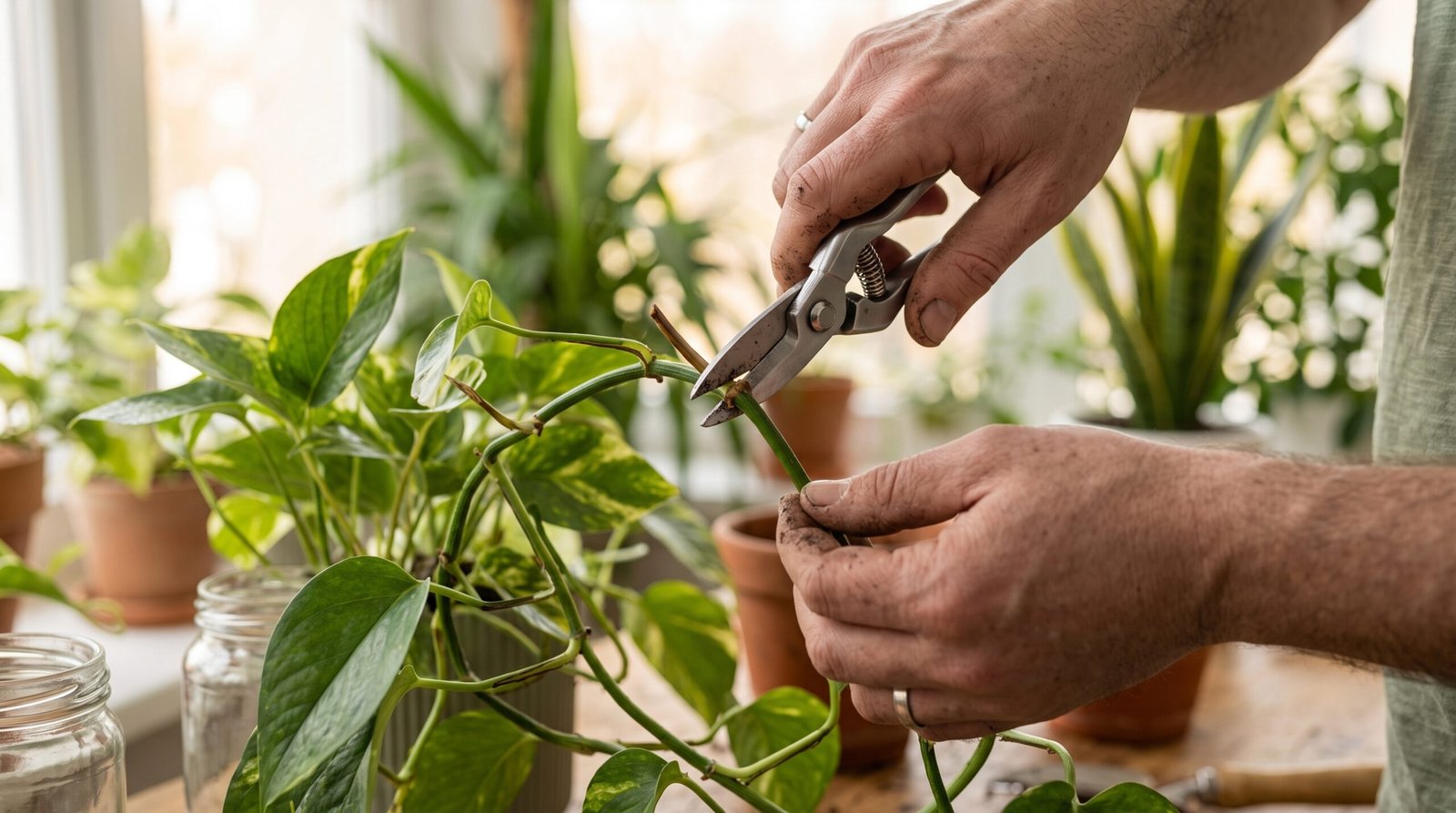
Stem cutting is the most popular method for soft-stemmed houseplants like pothos, philodendrons, monstera, and herbs.
- How It Works: Cut a 4-to-6-inch stem segment directly below a leaf node. Remove the lower leaves, exposing the node where root growth originates.
- Water vs. Soil: Placing cuttings in clear water allows you to monitor root progress visually, while direct soil propagation builds stronger root systems from the start.
2. Plant Division for Clumping Varieties
Ideal for plants that grow in multi-stem clumps, such as snake plants, peace lilies, calatheas, and ferns.
- How It Works: Remove the mother plant from its pot and gently tease apart the root crown into smaller sections, ensuring each new section retains healthy roots and active foliage stems.
3. Leaf Cuttings for Succulents and Begonias
Fleshy succulents, African violets, and Rex begonias can regenerate entirely new plants from a single healthy leaf.
- How It Works: Lay succulent leaves flat on dry potting mix until a callus forms, followed by small plantlets and adventitious roots.
Step-by-Step Guide to Stem Cutting Success
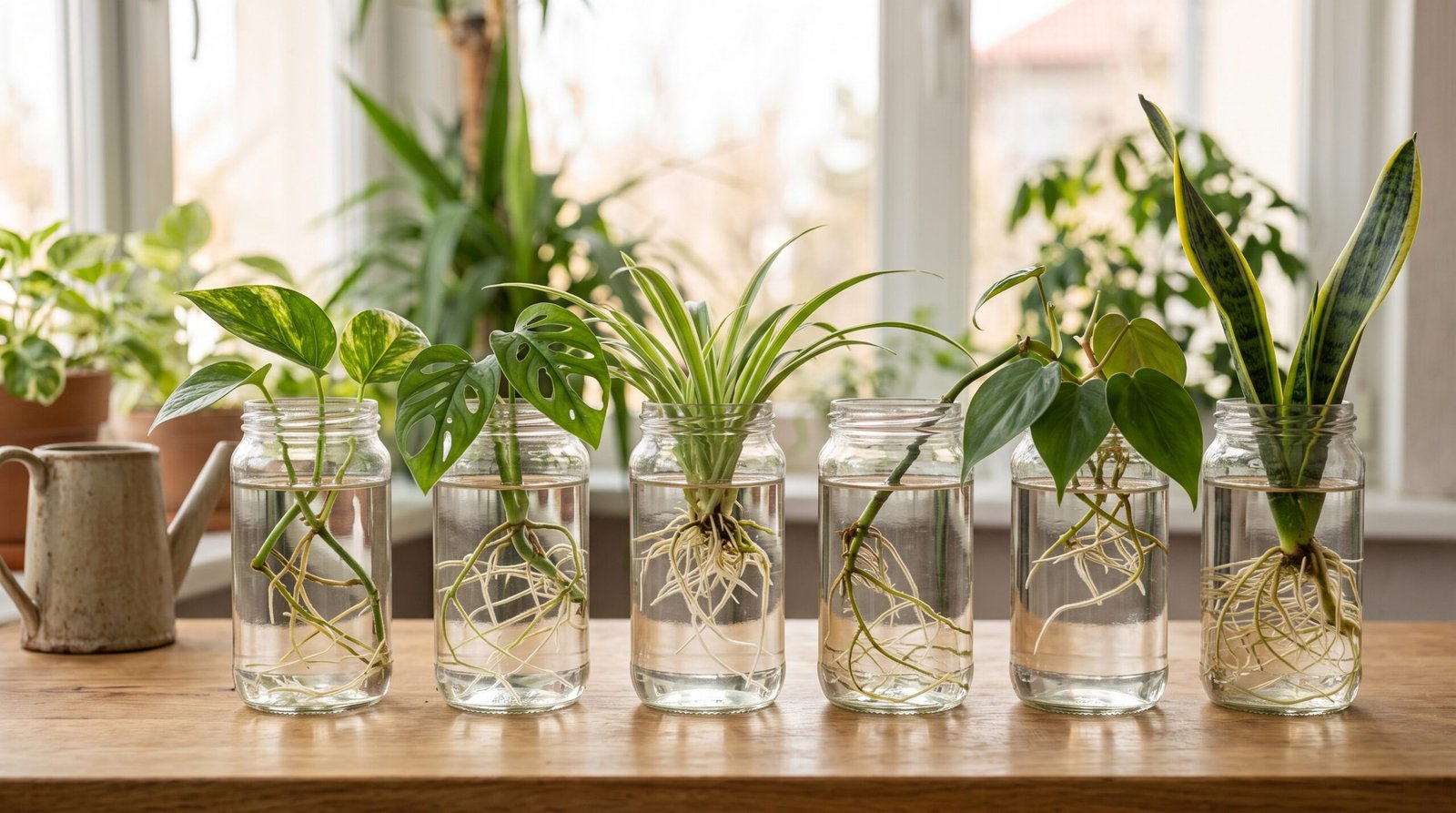
Follow this systematic process from our plant propagation techniques guide to achieve consistent rooting results:
Step 1: Select and Sanitize
Choose a healthy parent plant free of pests or disease. Wipe your cutting tool with rubbing alcohol to prevent transferring pathogens.
Step 2: Make the Cut
Identify a stem with fresh, active growth. Slice at a 45-degree angle approximately a quarter-inch below a leaf node. Strip away the bottom leaves to avoid submerging foliage in water or soil, which triggers decay.
Step 3: Apply Rooting Medium
Dip the cut end into rooting hormone powder if propagating woody stems. Submerge the exposed node in water or insert it into moist perlite or potting mix.
Step 4: Maintain Humidity and Light
Place your propagation setup in a warm area receiving bright, indirect sunlight. Cover soil cuttings with a clear plastic dome or bag to maintain high humidity around unrooted foliage.
Care and Transplanting for New Propagations
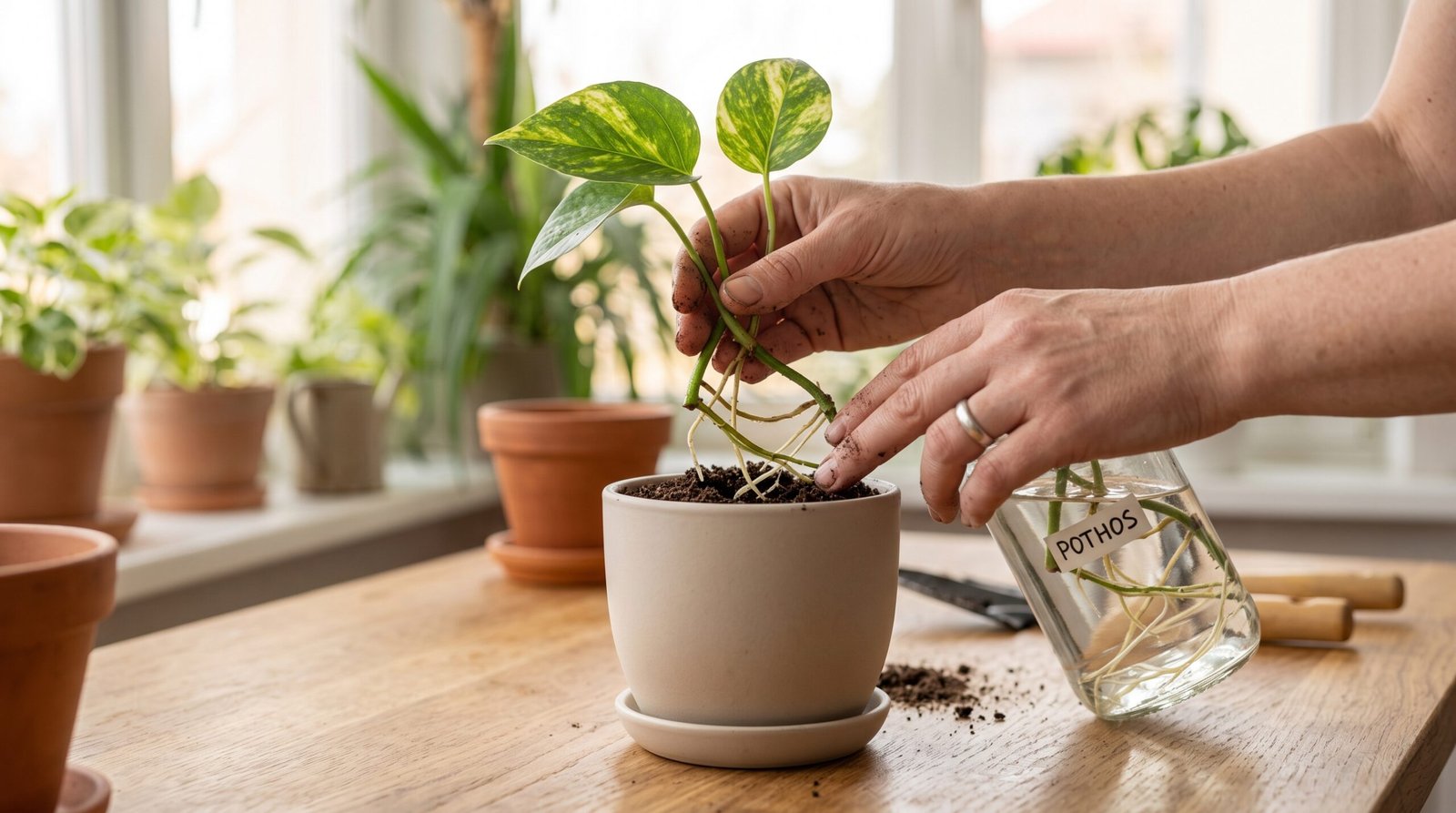
Knowing when to move cuttings from water or humidity chambers into soil is essential for long-term survival.
- Root Length Milestone: Move water cuttings into soil once secondary roots reach 1 to 2 inches long. Waiting too long makes water roots fragile and slow to adapt to soil environments.
- Moisture Transition: Keep newly potted soil propagation cuttings consistently moist for the first two weeks while root networks establish firmness in the substrate.
- Gradual Sunlight Adjustment: Avoid direct afternoon sun on fresh transplants until new top growth signals successful root establishment.
Conclusion
Mastering this plant propagation techniques guide transforms how you interact with your houseplant collection. Whether you choose simple water cuttings for vines, division for lush perennials, or leaf propagation for succulents, applying proper node selection, moisture control, and clean techniques guarantees a thriving indoor garden filled with homegrown green life.
Frequently Asked Questions
What is the easiest plant propagation technique for beginners?
Water propagation using stem cuttings is the easiest technique for beginners because it allows you to monitor root growth in real time and requires minimal equipment beyond water and a container.
How long does it take for cuttings to grow roots?
Rooting times vary by species and environmental conditions. Soft-stemmed houseplants usually show roots within 2 to 4 weeks, while woody or succulent cuttings can take 6 to 8 weeks.
Can you propagate plants without rooting hormone?
Yes, many soft-stemmed plants like pothos, mint, and tradescantia root easily in water or moist soil without synthetic rooting hormones. Rooting hormones are primarily helpful for slow-rooting or woody cuttings.
1 thought on “Propagation: Plant Propagation Techniques Guide”