
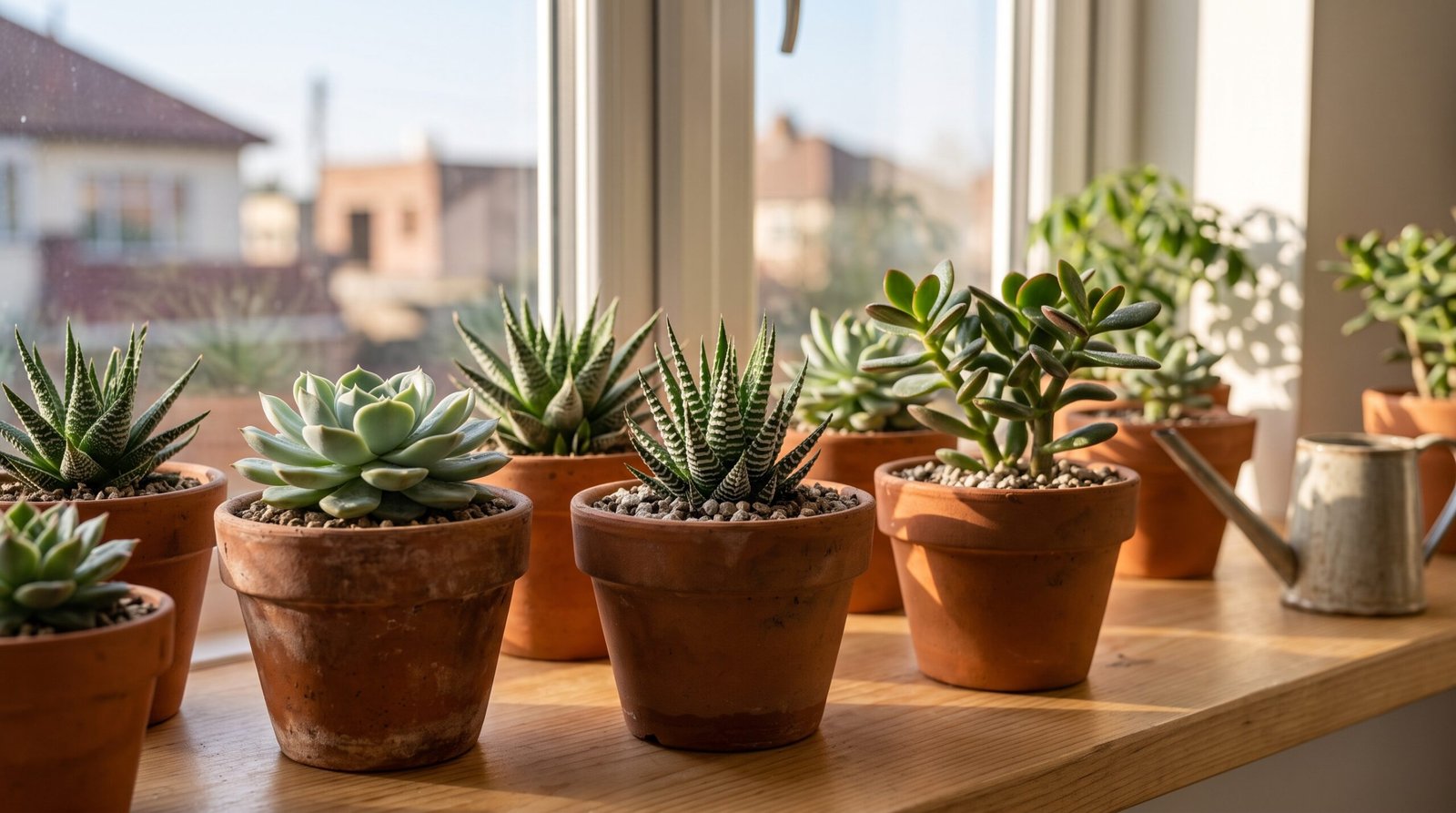
Succulents are among the most popular houseplants due to their striking geometric shapes, low water requirements, and diverse foliage styles. However, mastering indoor succulent care for beginners requires understanding a few core cultural needs. Because succulents store water in their fleshy leaves and stems, their care routine differs significantly from standard tropical houseplants.
Without proper lighting and drainage, these arid-adapted plants can easily suffer from root rot or weak, stretched stems. This guide breaks down the fundamental principles of watering, soil selection, lighting, and repotting so your indoor succulents remain healthy, compact, and colorful year-round.
Key Takeaways
- Sunlight Demand: Indoor succulents require at least 4 to 6 hours of bright, direct or strong indirect sunlight daily to maintain compact growth.
- Soak and Dry Method: Water deeply only when the potting soil is completely dry from top to bottom.
- Drainage is Essential: Always plant succulents in containers with drainage holes using a fast-draining cactus and succulent soil mix.
- Avoid Overwatering: Soft, mushy, or translucent leaves are signs of excess moisture, whereas wrinkled leaves indicate thirst.
- Air Circulation: Good airflow reduces moisture retention around foliage, preventing fungal growth and common pests like mealybugs.
Why Indoor Succulent Care for Beginners Requires a Unique Approach
Succulents originate primarily from arid, desert climates where rainfall is sparse but deep when it occurs. Understanding this natural environment is the key to successful home care.
Standard potting soils retain too much moisture for succulent root systems. By applying proper indoor succulent care for beginners, you replicate desert conditions at home—allowing roots to dry out fully between deep waterings and avoiding stagnant water around the root crown.
The Core Pillars of Indoor Succulent Care
Mastering a few fundamental environmental factors will guarantee your plants stay plump, colorful, and disease-free.
1. Sunlight Requirements (Bright Light Is Key)
Most succulents need 4 to 6 hours of bright, direct sunlight daily. A south- or west-facing windowsill provides ideal exposure. If your succulent begins stretching toward the light with long gaps between leaves (a process called etiolation), move it to a brighter location or supplement with an LED grow light.
2. The “Soak and Dry” Watering Method
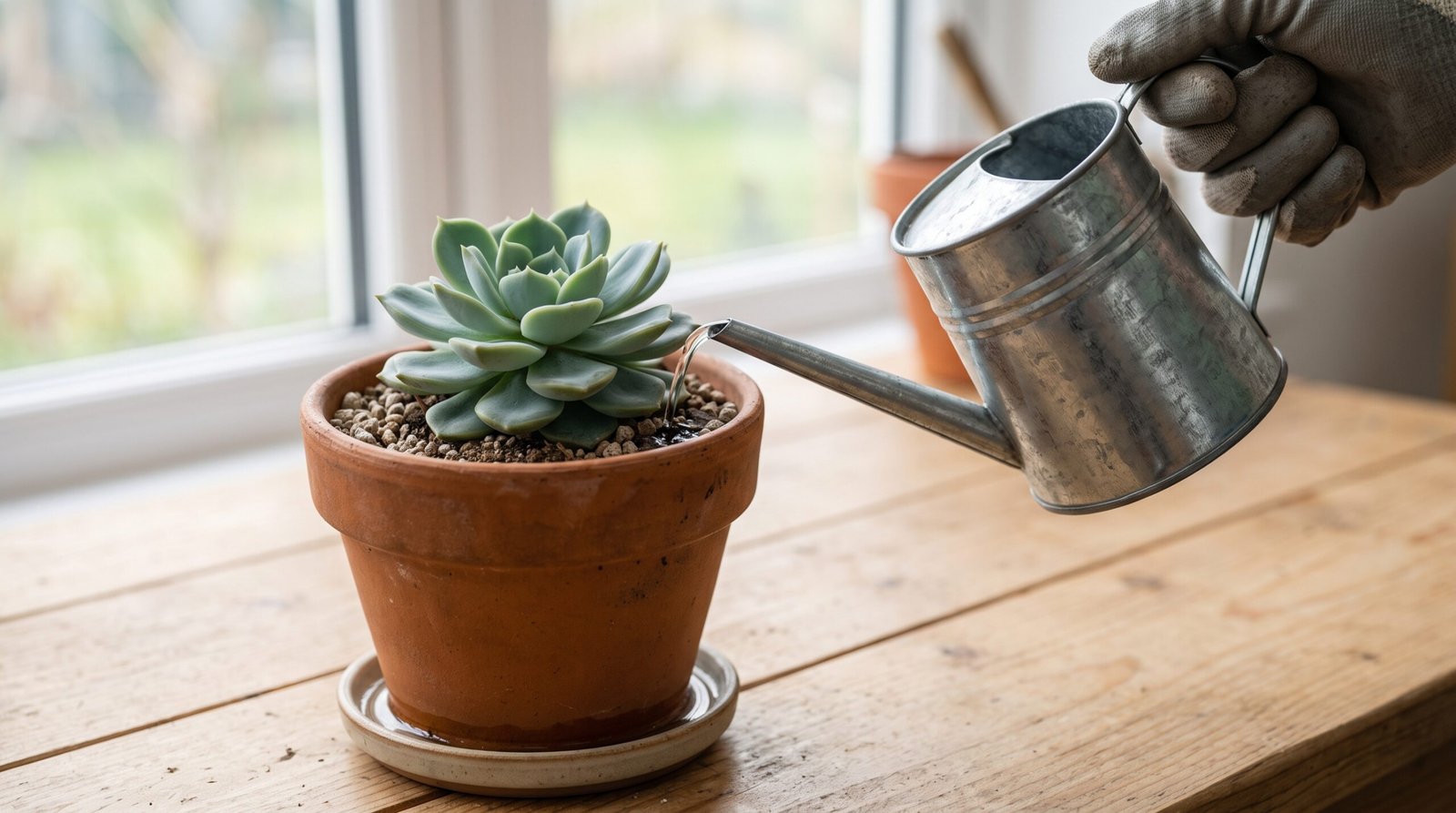
Overwatering is the number one cause of succulent mortality. Forget frequent light misting or shallow splashes. Instead:
- Pour water thoroughly until it drains out of the bottom holes.
- Allow the potting mix to dry completely before watering again.
- Reduce watering significantly during winter months when plants enter dormancy.
3. Fast-Draining Soil and Pot Materials
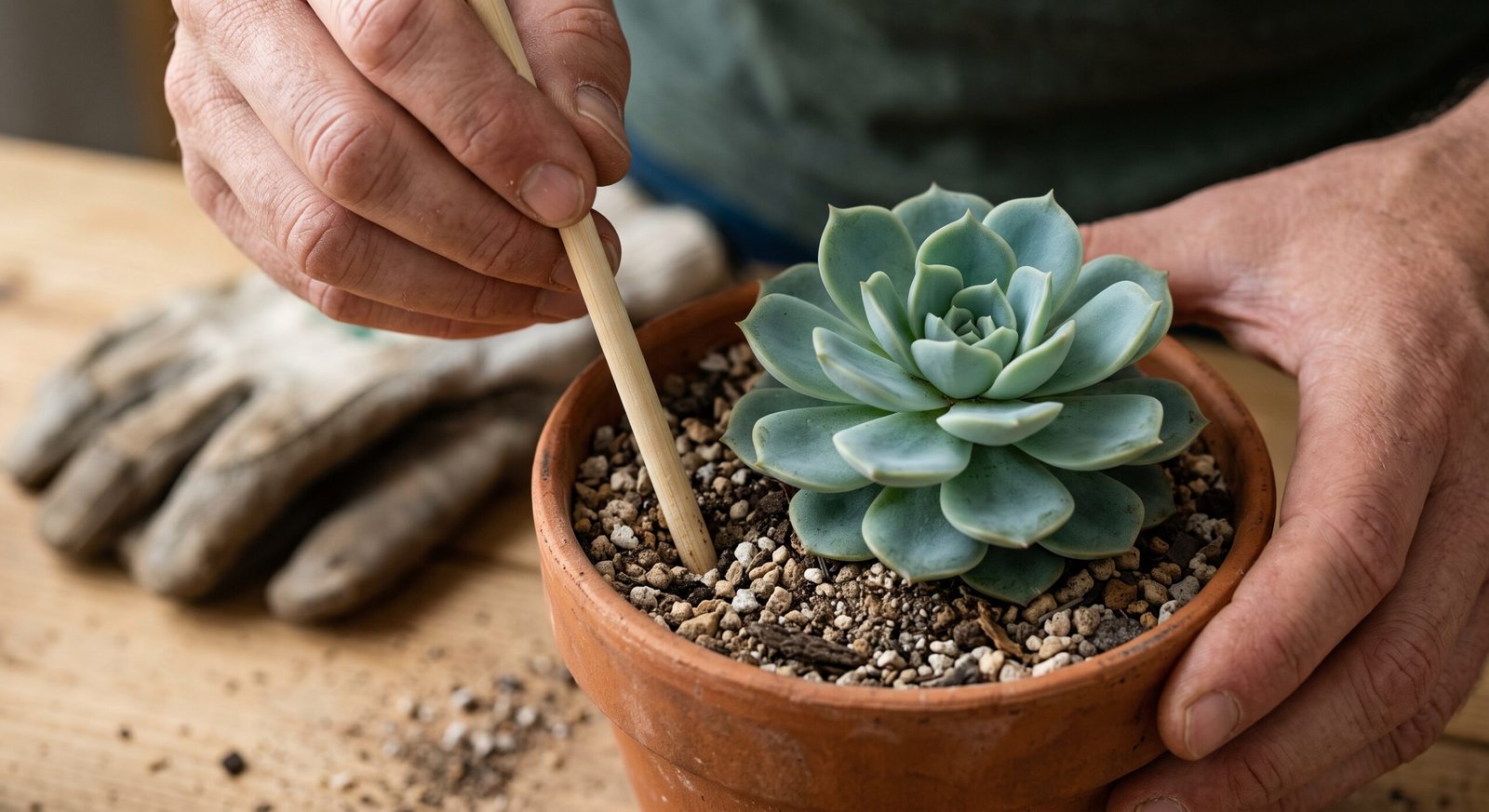
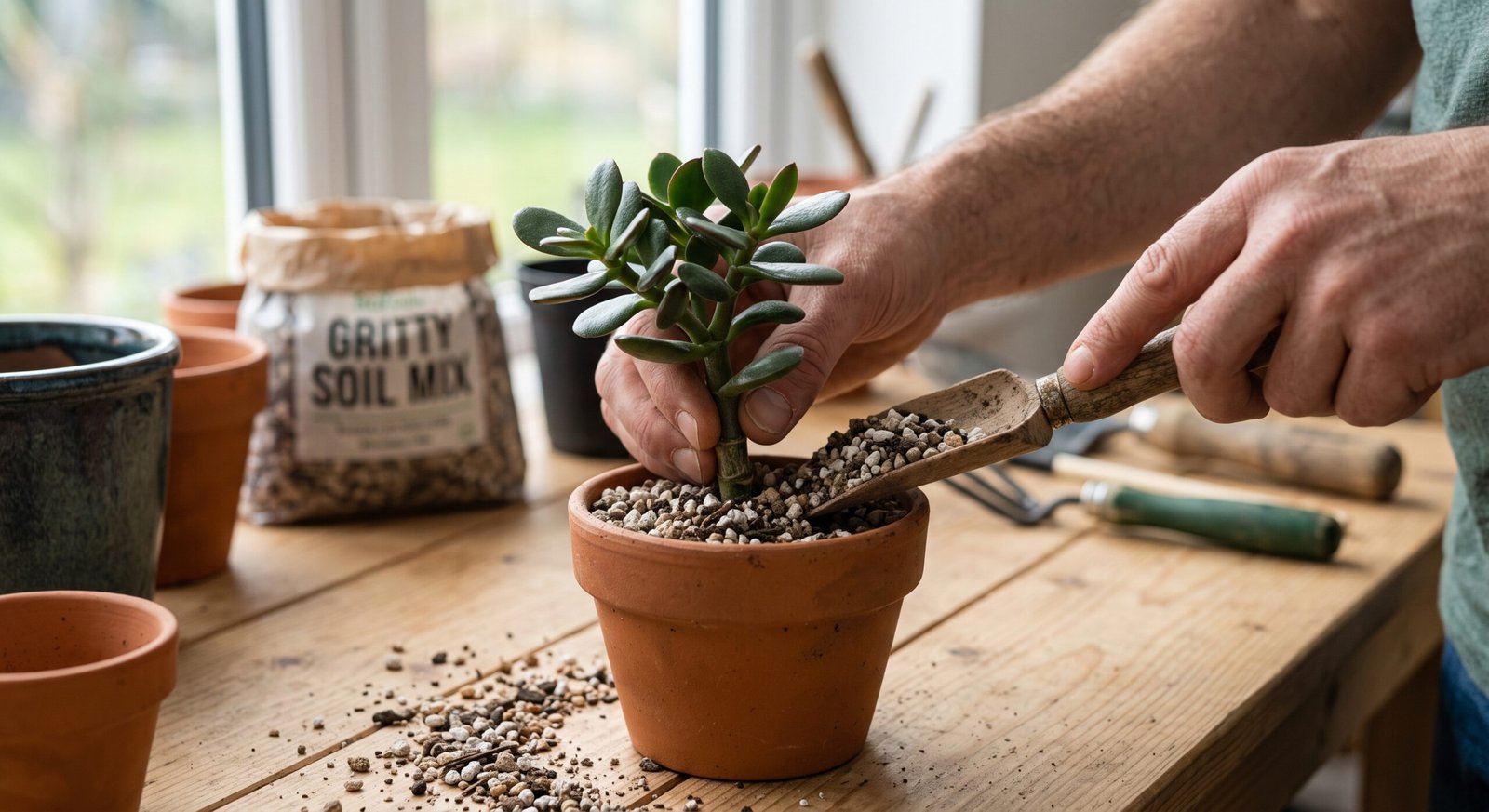
Never use standard potting soil alone. Mix commercial potting soil with equal parts perlite, coarse sand, or pumice to increase aeration. Unglazed terracotta pots are ideal because porous clay walls draw excess moisture out of the soil.
[External Link: Read the University of California Agriculture guide on succulent selection and cultural care]
Step-by-Step Maintenance and Seasonal Adjustments
Choosing the Right Pot
Always choose pots with functioning bottom drainage holes. A container that is 1 to 2 inches wider than the plant’s root ball provides sufficient space without holding excessive, waterlogged soil.
Repotting Young Succulents
Repot succulents every 1 to 2 years to refresh depleted soil and give expanding roots room to spread.
- Gently loosen the root ball from the old container.
- Shake off old, compacted soil.
- Place the plant in fresh succulent soil and wait 3 to 5 days before watering to let minor root abrasions heal.
Common Problems and Troubleshooting
- Mushy, Translucent Leaves: A classic symptom of overwatering. Stop watering immediately, remove damaged leaves, and inspect roots for rot.
- Wrinkled, Leathery Leaves: A clear sign of underwatering. Give the plant a thorough soak, and foliage will plump up within a day or two.
- Stretched, Pale Stems: Indicates insufficient sunlight. Gradually transition the plant into direct sun to avoid leaf scorch.
- White Webbing or Fuzzy Spots: Mealybugs often hide in leaf crevices. Dab affected areas with a cotton swab dipped in 70% isopropyl alcohol.
Conclusion
Mastering indoor succulent care for beginners comes down to balancing strong sunlight, gritty well-draining soil, and patient watering practices. By adopting the “soak and dry” method, selecting porous pots, and providing adequate daily light, you can cultivate a thriving collection of low-maintenance succulents that bring color and structure to your indoor space.
Frequently Asked Questions
How often should beginners water indoor succulents?
Indoor succulents typically require watering every 2 to 3 weeks in spring and summer, and every 3 to 4 weeks during winter dormancy. Always check that the soil is 100% dry before watering.
Can indoor succulents survive without direct sunlight?
Succulents can survive in bright indirect light, but species like Echeveria and Sedum may stretch over time. Low-light tolerant varieties like Haworthia, Snake Plants, and ZZ plants perform better in indirect sunlight.
Should you mist indoor succulents with a spray bottle?
No, misting succulents is not recommended. Misting leaves creates high humidity around foliage, which can cause leaf rot and soft roots. Always water the soil directly at the base of the plant.