
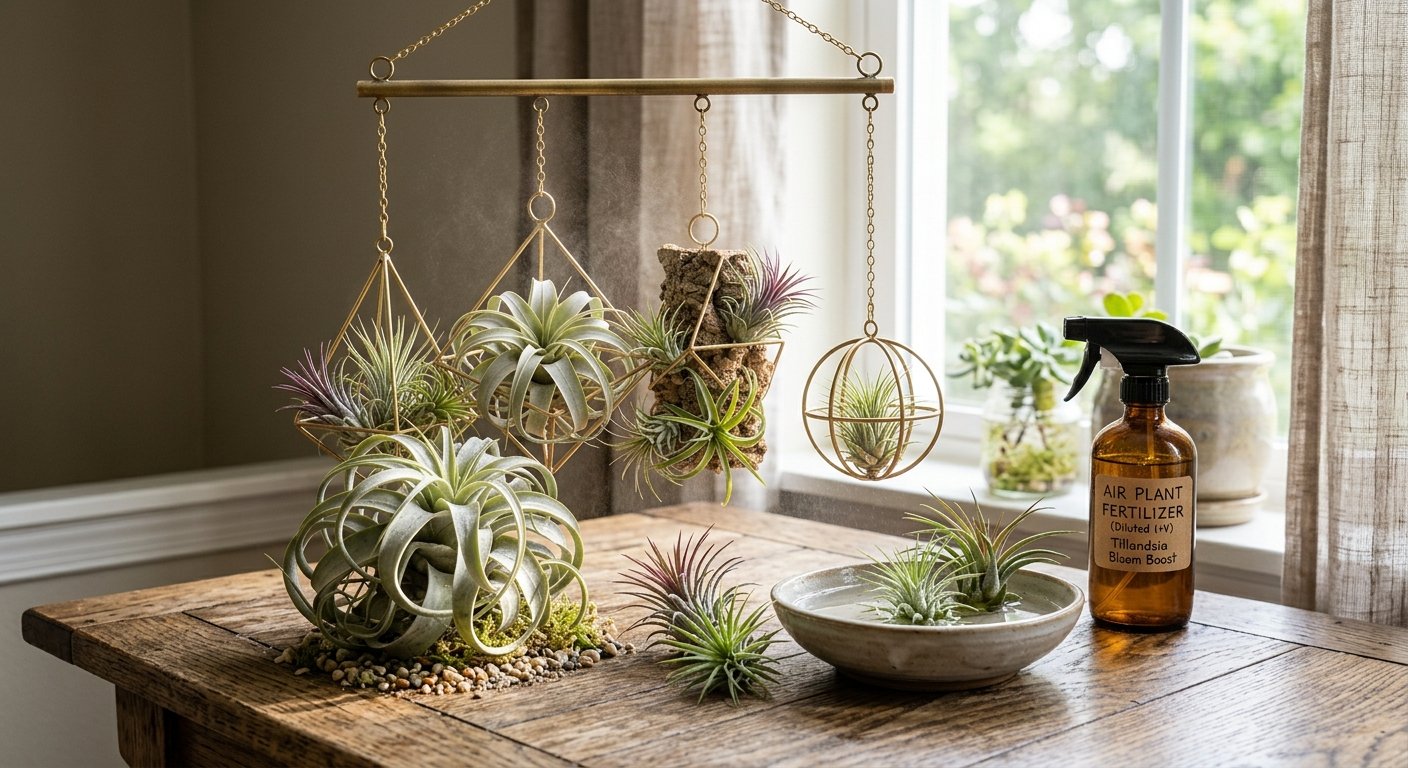
Mastering a practical tillandsia air plant care guide unlocks the ability to grow some of the most unique, soil-free plants in the botanical world. Belonging to the Bromeliaceae family, Tillandsia species are epiphytes—plants that absorb moisture and essential nutrients through tiny specialized scales on their leaves called trichomes rather than soil roots.
Because air plants do not require potting mix, they offer versatile design possibilities for terrariums, geometric hanging mounts, and tabletop displays. However, thriving without soil requires specific attention to soaking schedules, bright indirect light, and adequate air circulation. This guide walks you through every essential step to maintain healthy, vibrant Tillandsia indoors.
Key Takeaways
- Soak Weekly: Submerge your air plants in room-temperature water for 20 to 30 minutes once a week, followed by light misting in between waterings.
- Dry Completely Upside Down: Always shake excess water off and let plants dry upside down on a towel for 4 hours to prevent crown rot.
- Provide Bright, Indirect Light: Place Tillandsia within a few feet of a bright south- or east-facing window; avoid direct, scorching midday sun.
- Ensure Strong Air Circulation: Keep air plants in well-ventilated areas where leaves dry quickly after watering.
- Use Specialized Fertilizer: Feed monthly during spring and summer with a diluted bromeliad or air-plant-specific fertilizer spray.
Why Following a Tillandsia Air Plant Care Guide Is Essential
Following a comprehensive tillandsia air plant care guide prevents the most common mistake made by indoor growers: mistaking “air plant” to mean a plant that needs no care at all.
In their natural habitats across Central and South America, Tillandsia absorb frequent rain, fog, and morning dew while benefiting from steady tropical breezes. Recreating these environmental conditions inside your home requires a balance of hydration, ventilation, and proper light exposure.
Proper Watering and Drying Techniques
Hydration is the most critical aspect of air plant health:
1. The Weekly Soaking Method
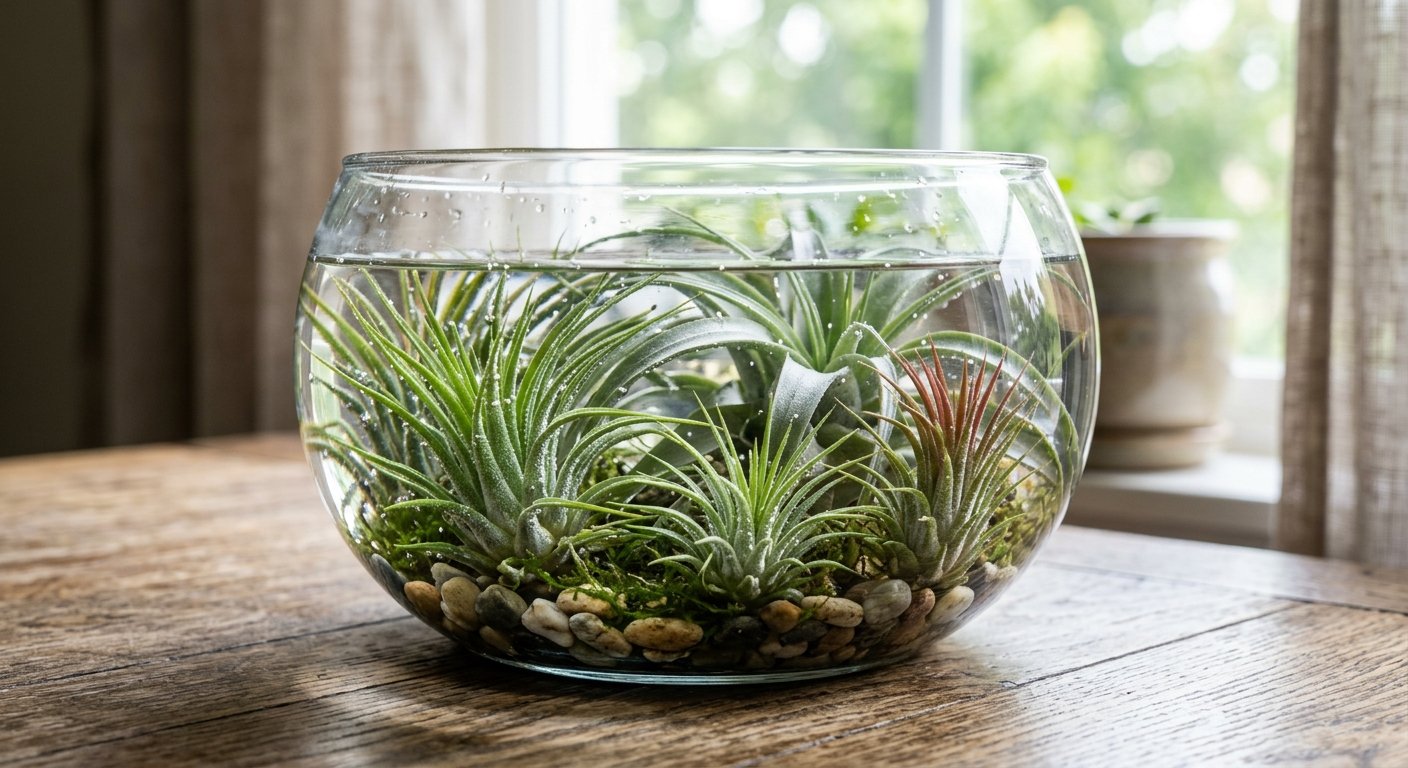
Fill a basin with room-temperature rainwater, filtered water, or pond water. Submerge your air plants completely for 20 to 30 minutes every 7 days. Avoid using chlorinated tap water or softened water high in sodium.
2. The Critical Drying Process
After soaking, gently shake each plant to dislodge water droplets trapped between the leaf bases. Place the plants upside down on a dry towel in a bright, ventilated room for at least 4 hours. Trapped moisture at the base causes fatal crown rot.
3. Misting Between Soaks
In dry indoor environments or hot summer months, mist your plants lightly 2 to 3 times per week to maintain humidity levels between full soakings.
Light Requirements and Ideal Placement
Understanding light requirements ensures healthy leaf pigmentation and blooming:
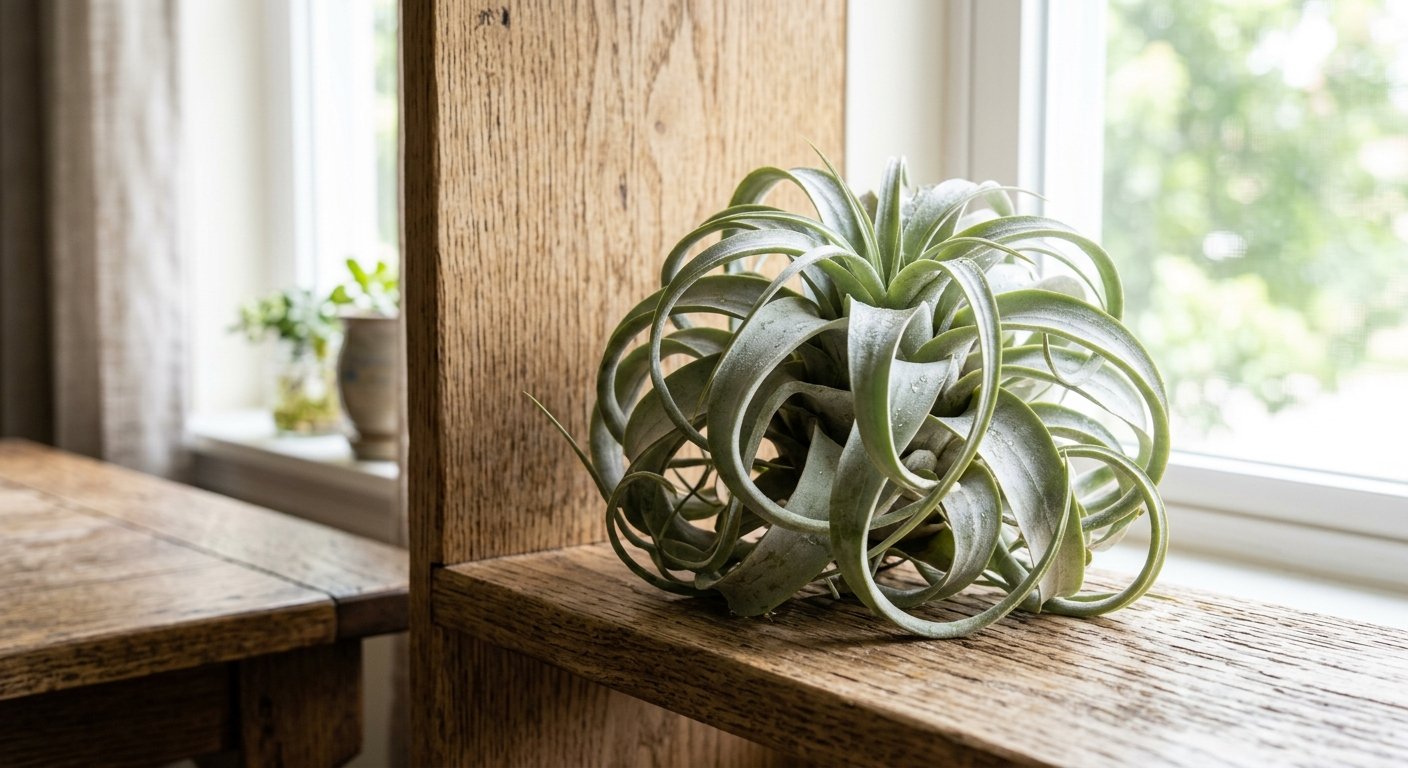
- Mesic vs. Xeric Types: Xeric Tillandsia (from dry climates) have fuzzy grey trichomes and tolerate brighter, direct light. Mesic Tillandsia (from rainforests) have smoother green leaves and prefer shaded, higher-humidity environments.
- Indoor Positioning: Place plants within 1 to 3 feet of an unshaded east-facing window or a few feet back from a south- or west-facing window with sheer curtains.
Fertilizing, Blooming, and Offsets (Pups)
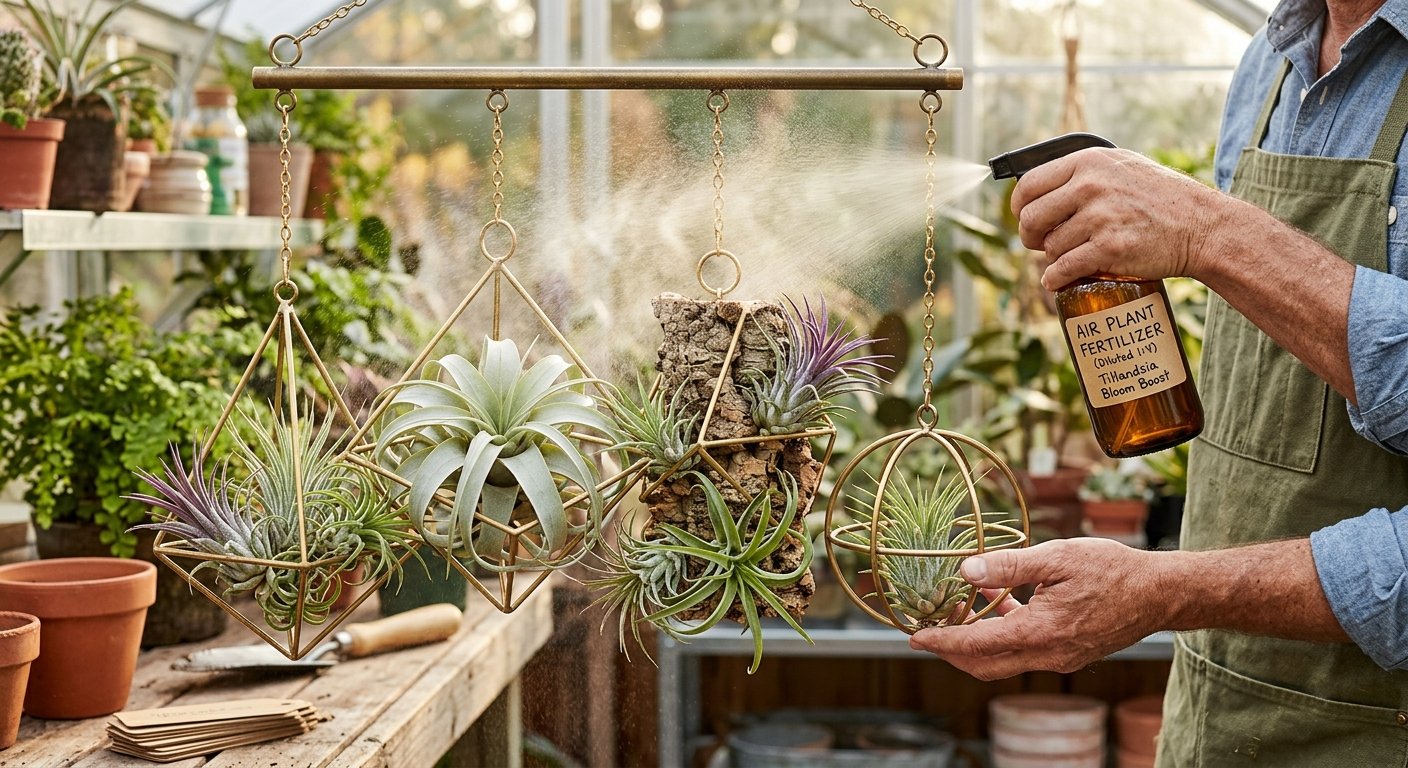
- Monthly Feeding: Spray your air plants once a month during spring and summer with a low-nitrogen, water-soluble bromeliad fertilizer diluted to quarter-strength.
- Managing Pups: After blooming, the mother plant will slowly decline while producing small baby plants (offsets or “pups”) at her base. Gently separate pups when they reach one-third the size of the mother plant.
Conclusion
Applying the steps in this tillandsia air plant care guide ensures your soil-free collection thrives for years to come. By prioritizing deep weekly soaking routines, thorough upside-down drying, and bright indirect light, you can display these unique epiphytes anywhere in your living space.
Frequently Asked Questions
How often should I water my plants using this tillandsia air plant care guide?
Soak your air plants for 20 to 30 minutes once per week. In hot or dry conditions, supplement with a light misting midway through the week.
How do I know if my air plant is under-watered or over-watered?
Under-watered air plants show soft, curling, or brown-tipped leaves. Over-watered plants develop dark, mushy bases, and leaves easily pop off at the center—a clear sign of crown rot.
Can air plants live in low light?
No. While they do not like scorching sun, air plants require medium-to-bright indirect light to photosynthesize effectively. If natural light is limited, supplement with a full-spectrum grow light placed 12 inches away for 12 hours a day.
1 thought on “Air-Plants: Tillandsia Air Plant Care Guide”