
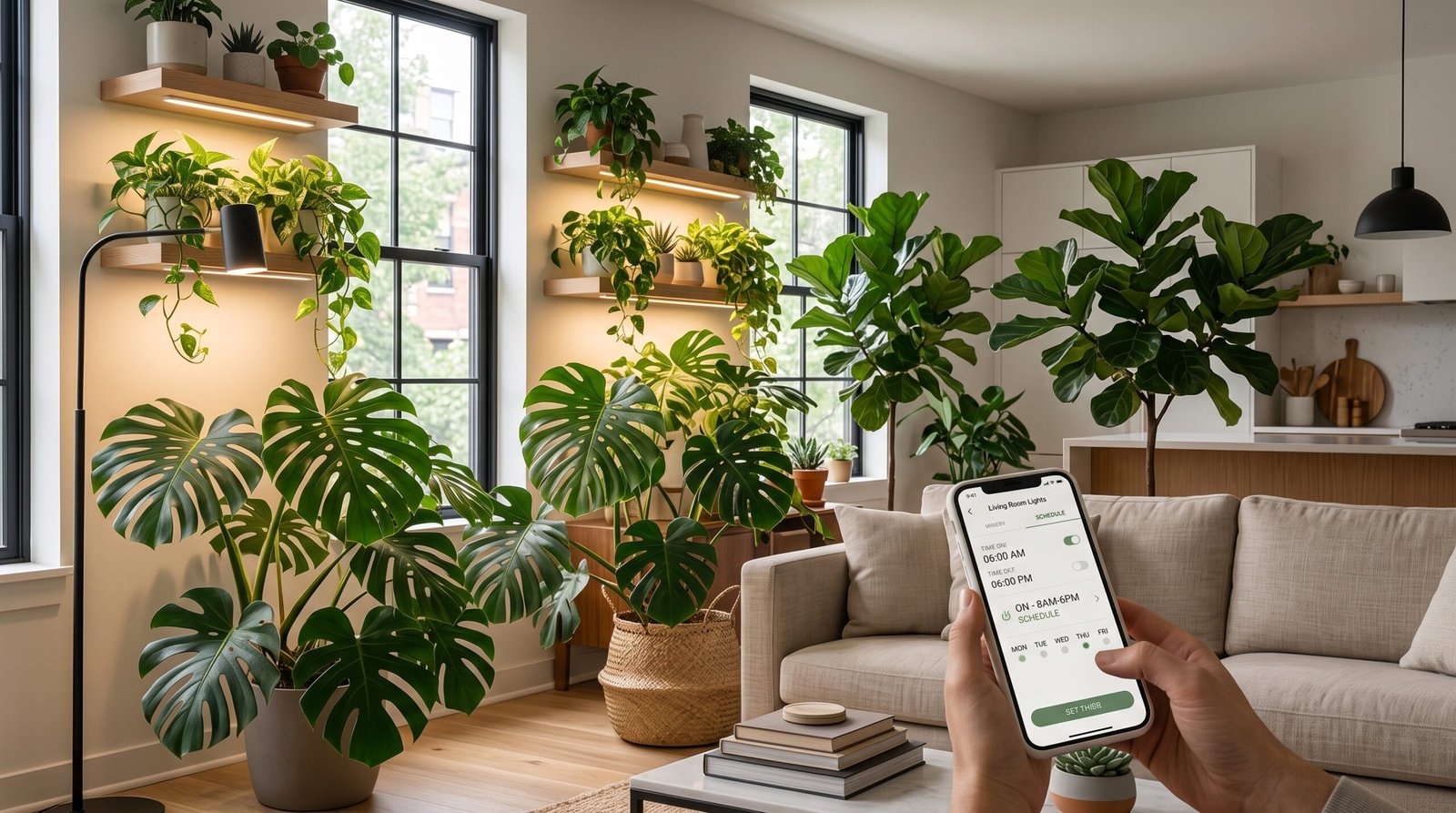
Bringing green life into interior spaces often comes with a major hurdle: adequate light exposure. Implementing the best indoor plant lighting ideas allows plant enthusiasts to maintain thriving houseplants, tropical foliage, and indoor herbs anywhere in the home—even in windowless basements or dim hallways.
Artificial plant lighting has evolved beyond harsh commercial fixtures. Modern grow lights blend seamlessly into stylish home decor while providing the precise light spectrums required for robust photosynthesis, sturdy root growth, and vibrant leaf foliage.
Key Takeaways
- Spectrum Precision: Full-spectrum white LEDs closely mirror natural sunlight, providing optimal balance for both plant health and aesthetic home decor.
- Duration Matters: Houseplants generally require 12 to 16 hours of artificial light daily to substitute for natural sunlight.
- Proximity Rules: Position lights between 6 to 24 inches above plant canopies, depending on light intensity and plant light tolerance.
- Integrated Fixtures: Modern grow lights incorporate into track lighting, pendant lamps, and under-cabinet LED strips for a clean aesthetic.
- Smart Timers: Utilizing smart plugs or built-in timers prevents light fatigue and maintains consistent day-night cycles for houseplants.
Why You Need the Best Indoor Plant Lighting Ideas
Indoor plants rely on light energy to synthesize chlorophyll and sustain structural growth. Natural light streaming through windows weakens significantly as distance increases, often falling short of what tropical or sun-loving plants require.
Incorporating intentional supplemental lighting eliminates seasonal growth stalls during winter months, prevents leggy or stretched stems, and unlocks new layout possibilities for displaying greenery across every room in your house.
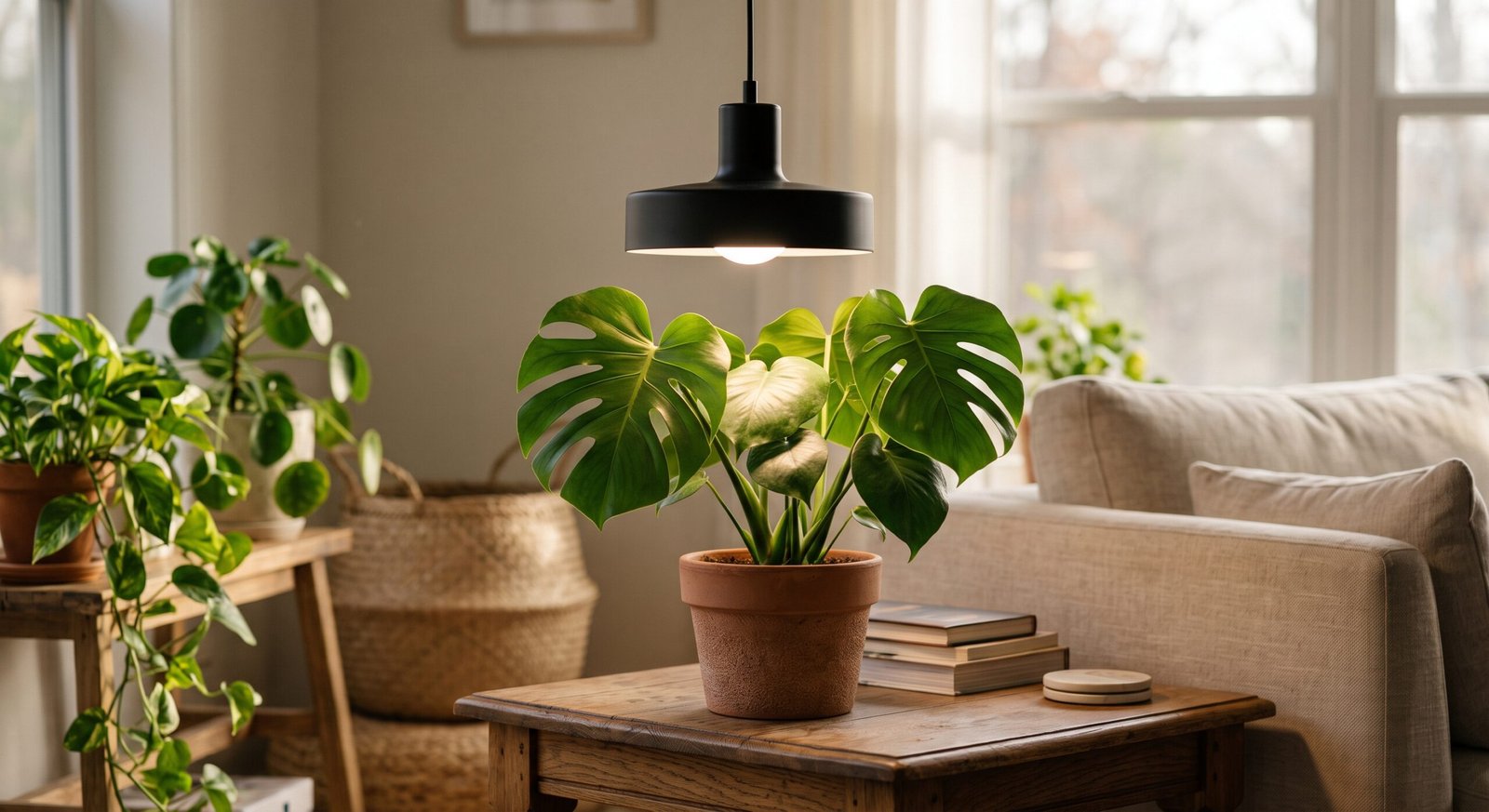
Core Types of Lighting for Indoor Houseplants
Selecting the right light source depends on your plant variety, room layout, and design goals.
1. Full-Spectrum LED Grow Lights (The Gold Standard)
LED technology dominates modern indoor plant cultivation. Full-spectrum LEDs emit light across the entire color spectrum—including crucial red and blue wavelengths—while displaying a soft, natural white hue that looks great in living areas. They are highly energy-efficient, cool to the touch, and long-lasting.
2. Fluorescent Lights (T5 & Compact Bulbs)
Fluorescent tubes and CFLs are effective options for propagation, seed starting, and compact plant arrangements. They generate low heat, making them safe to position close to delicate leaves, though they consume slightly more power than LEDs.
3. High-Intensity Discharge (HID) Lamps
Best suited for large indoor gardens or greenhouse setups, HID lights (Metal Halide and High-Pressure Sodium) deliver intense output. However, their high heat production and energy consumption make them less practical for standard living room decor.
Creative and Practical Indoor Light Design Ideas
Integrating supplemental plant lights into your home design keeps your living space visually appealing while supporting healthy growth.
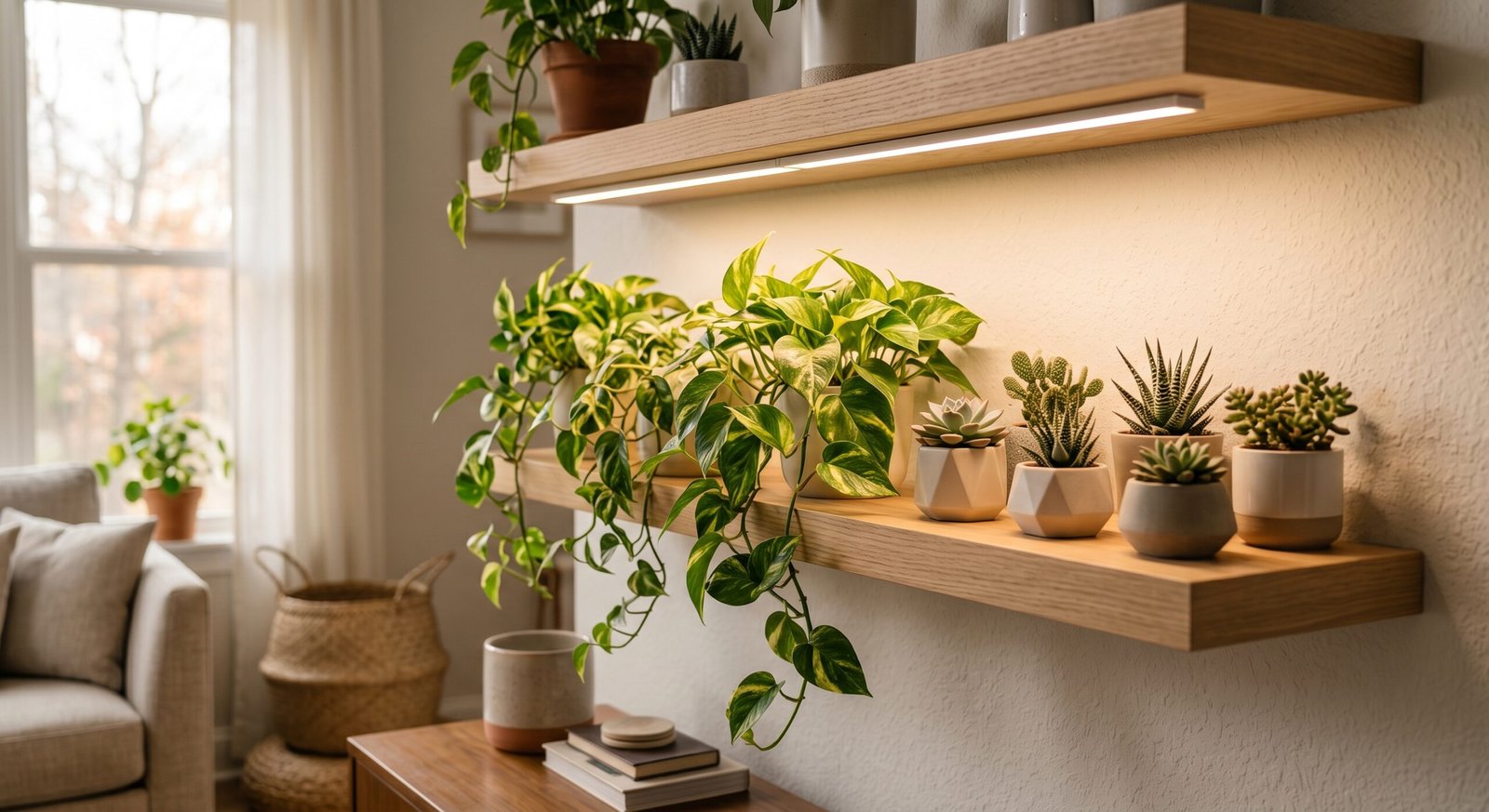
Under-Shelf LED Strip Lighting
Mounting slim LED light bars underneath floating shelves creates a sleek vertical garden display. This space-saving strategy is perfect for small succulents, peperomias, and trailing pothos vines on books or plant displays.
Pendant and Hanging Grow Lights
Pendant fixtures fitted with full-spectrum grow bulbs turn large floor plants into bold focal points. Suspending a stylish brass or matte-black pendant over a corner fiddle-leaf fig or rubber tree provides targeted top-down light while acting as accent lighting.
Track Light Fixtures for Plant Walls
Directional track lighting installed along ceilings lets you angle individual spotlights toward living plant walls or multi-tier plant stands. Adjusting the beam angles ensures even light distribution across various foliage heights.
Light Distance, Duration, and Smart Management
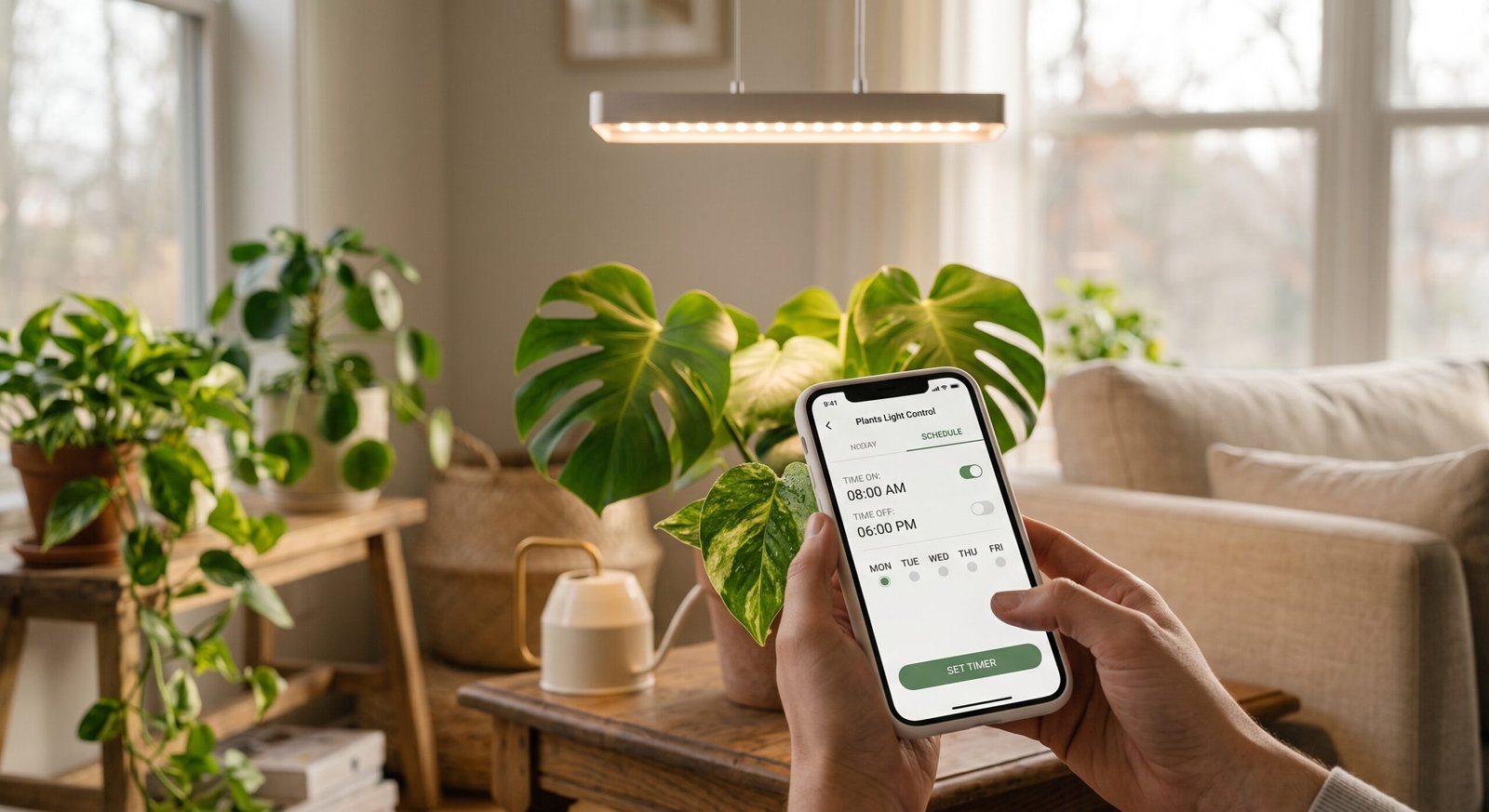
Setting Correct Light Distance
Placing lights too close can cause leaf burn, while positioning them too far away reduces light intensity.
- High-Light Plants (Succulents, Cacti, Citrus): Place intense LEDs 6–12 inches above the canopy.
- Medium-Light Plants (Monsteras, Philodendrons): Position lights 12–18 inches overhead.
- Low-Light Plants (Snake Plants, ZZ Plants): Maintain a clearance of 18–24 inches.
Managing Daily Light Duration
Houseplants need a dark rest period to complete natural respiration cycles. Set fixtures to run for 12 to 16 hours daily using digital timers or smart plugs to ensure regular, automated daily lighting routines.
Conclusion
Applying the best indoor plant lighting ideas allows you to transform dim corners into lush indoor oases. By choosing full-spectrum LED fixtures, matching light output to your plants’ needs, and integrating lights smoothly into your interior decor, your houseplant collection will thrive year-round.
Frequently Asked Questions
Can normal indoor lights help plants grow?
Standard household bulbs emit limited wavelengths necessary for photosynthesis and generally lack sufficient intensity to sustain healthy indoor plant growth long-term. Full-spectrum LED grow bulbs are engineered specifically to provide the necessary PAR (Photosynthetically Active Radiation).
How long should indoor grow lights stay on each day?
Most indoor plants require between 12 and 16 hours of artificial light per day when receiving little to no natural sunlight, followed by 8 hours of total darkness.
Do LED grow lights use a lot of electricity?
No. Modern full-spectrum LED grow lights are extremely energy-efficient, drawing minimal wattage while delivering optimal light output, making them cost-effective for everyday use.
1 thought on “Lighting: Best Indoor Plant Lighting Ideas”