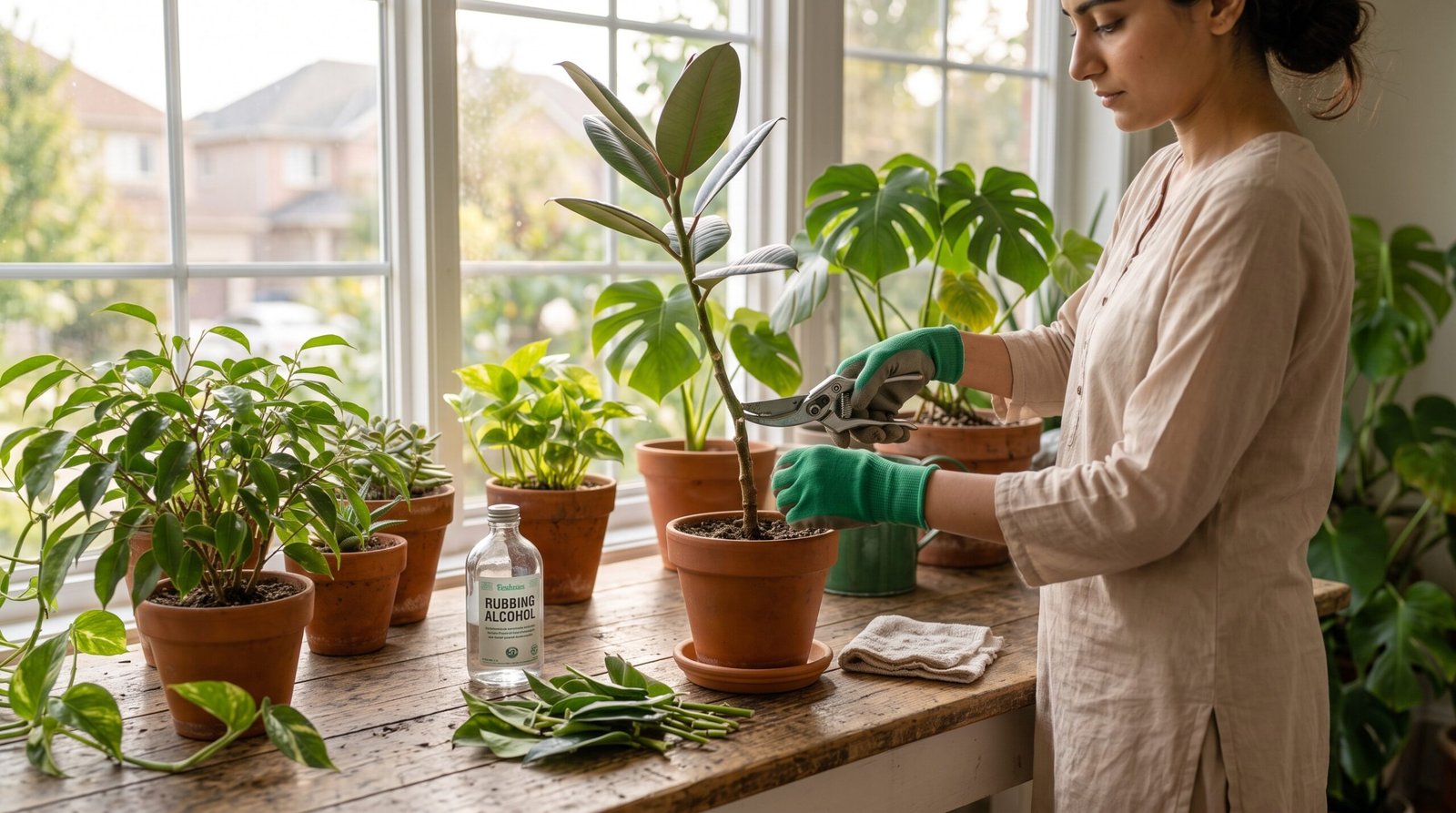
Pruning is one of the most effective yet misunderstood plant care practices. Learning how to prune houseplants correctly allows you to direct growth, redirect energy to healthy stems, and transform sparse, leggy foliage into lush, bushy indoor specimens.
Beyond aesthetic shaping, selective trimming removes dead or diseased tissue, improves air circulation within dense canopies, and prevents pest infestations. This guide covers the exact cuts, tools, and timing needed to prune your indoor collection safely without shocking your plants.
Key Takeaways
- Target Growth Nodes: Make clean cuts roughly 1/4 inch above an outward-facing leaf node or branch junction to stimulate fresh branching.
- Sterilize Equipment: Clean shear blades with 70% isopropyl alcohol before moving between plants to stop disease transmission.
- Observe the 25% Rule: Never trim away more than 20% to 25% of a plant’s total foliage mass during a single pruning session.
- Timing Matters: Perform major maintenance pruning in early spring or summer when active growth aids rapid recovery.
- Differentiate Cut Types: Use heading cuts to shorten long stems and thinning cuts to open dense interior foliage.
Why Proper Pruning Is Essential for Plant Health
Understanding how to prune houseplants correctly goes far beyond keeping indoor greenery tidy. Trimming acts as a physical growth signal. When you clip the terminal tip of a stem, you remove the apical bud that releases growth-inhibiting hormones (auxins). This signals lateral buds further down the stem to break dormancy, producing fuller growth.
Removing damaged, yellowing, or declining leaves also prevents sap-draining resources from being wasted on unsalvageable growth, allowing the root system to support vibrant new shoots.
Tool Prep and Safety Fundamentals
Using the wrong tools can crush tender plant tissue, leaving open wounds susceptible to fungal and bacterial infections.
Recommended Pruning Tools:
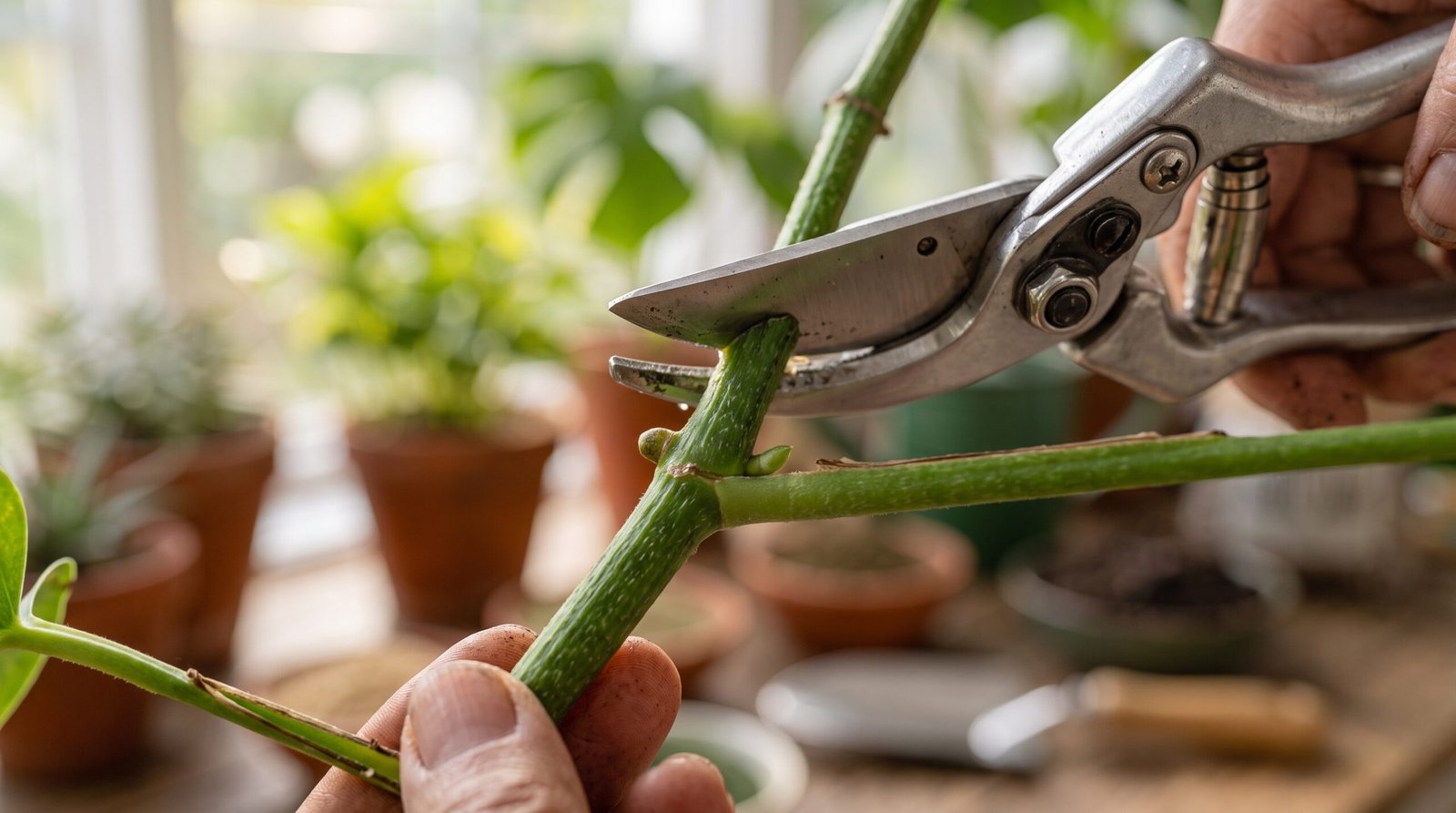
- Bypass Pruning Shears: Ideal for thicker, woody stems (like Ficus or Jade). The blades slide past each other like scissors, producing clean cuts.
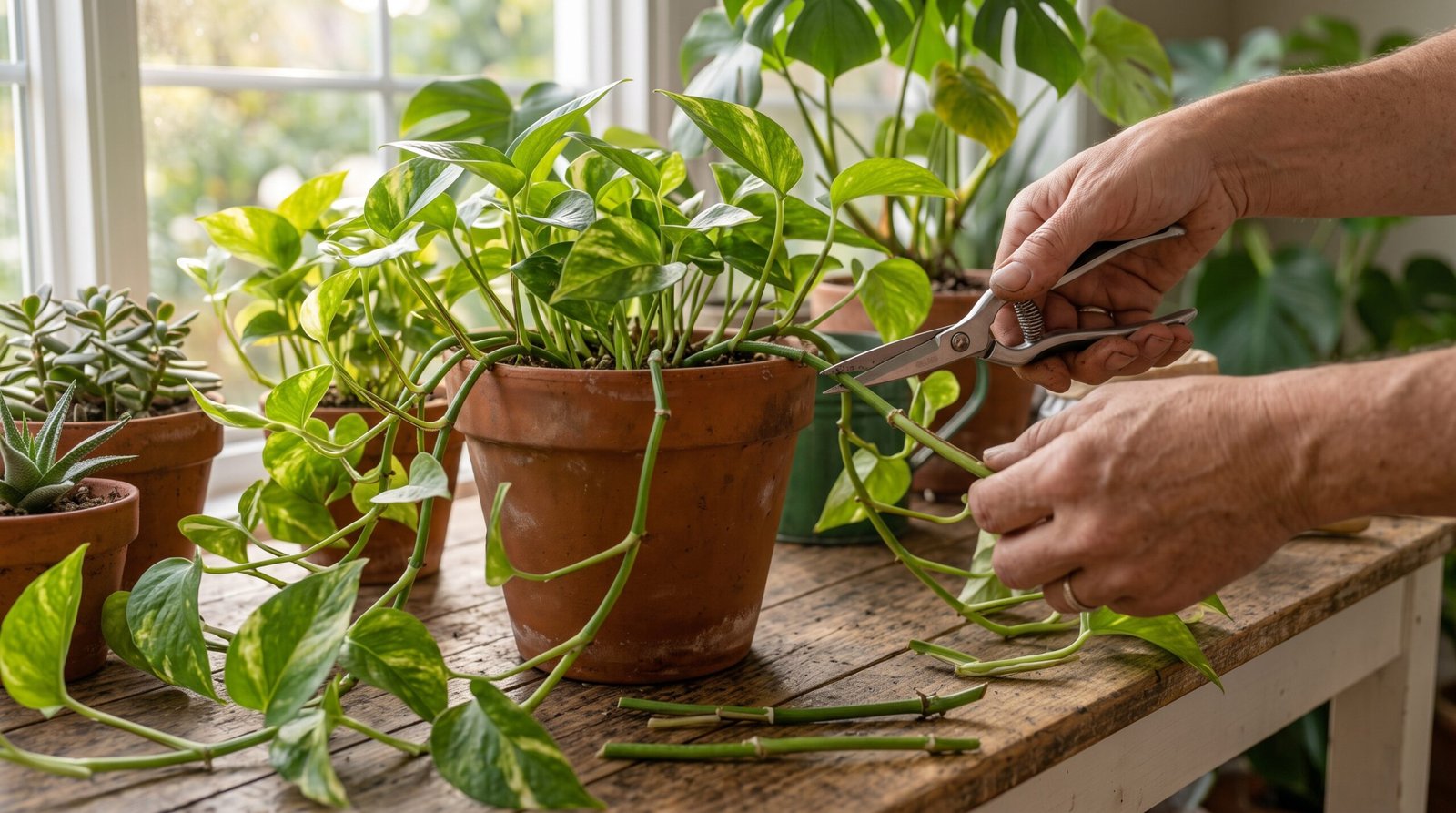
- Micro-tip Floral Snips: Perfect for delicate vines, soft-stemmed pothos, and deadheading spent blooms.
- 70% Isopropyl Alcohol: Essential for wiping down blades between every plant.
How to Prune Houseplants Correctly: Step-by-Step
Step 1: Assess and Plan Your Cuts
Step back and view your plant from all angles. Identify dead leaves, overcrowded interior branches, or excessively long stems that ruin the plant’s overall shape.
Step 2: Make Heading Cuts for Bushiness
To turn a single long stem into multiple branches:
- Locate a healthy leaf node (the small bump where a leaf meets the main stem).
- Angle your shears at 45 degrees, cutting about 1/4 inch above the node.
- Angle the cut away from the node so water sheds easily.
Step 3: Use Thinning Cuts to Improve Airflow
If a plant is dense in the center, remove selected branches entirely down to their main trunk or soil line. Thinning cuts improve interior light penetration and air movement without triggering explosive regrowth.
Post-Pruning Aftercare Tips
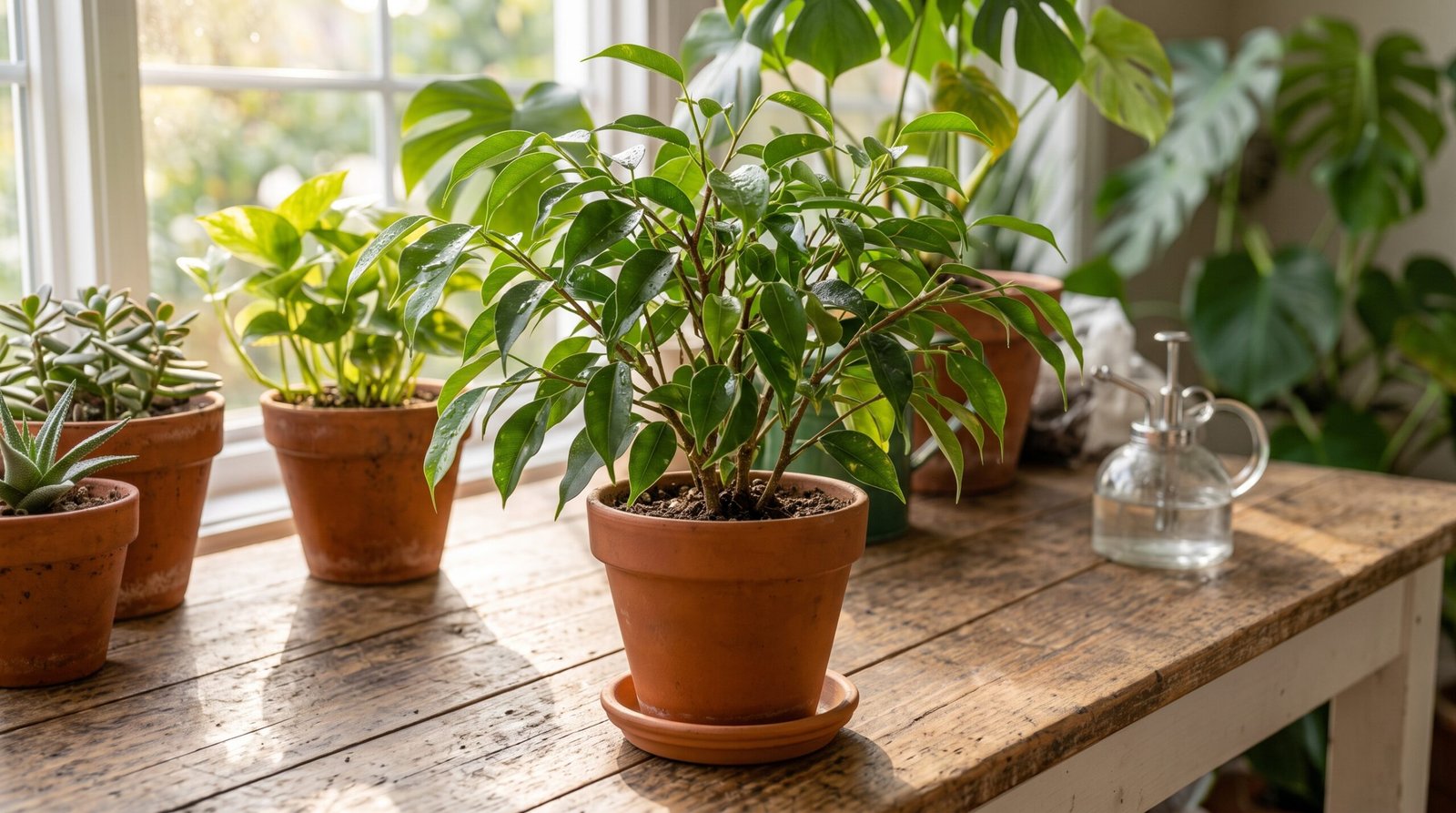
Applying proper aftercare ensures your plant recovers quickly without experiencing transplant or trimming shock:
- Provide Bright, Indirect Light: Place freshly pruned plants in optimal light conditions to fuel photo-synthesis and new shoot development.
- Water Appropriately: Because a pruned plant has fewer leaves transpiring moisture, it requires slightly less water until new foliage emerges.
- Delay Heavy Fertilization: Wait 2 to 3 weeks after severe pruning before applying liquid fertilizers to avoid burning delicate root systems.
Conclusion
Mastering how to prune houseplants correctly gives you complete control over the shape, size, and long-term health of your indoor garden. By using clean tools, making deliberate cuts just above nodes, and respecting seasonal growth cycles, you will keep your houseplants full, healthy, and growing strong season after season.
Frequently Asked Questions
What is the best season to prune houseplants correctly?
Spring and early summer are the best seasons for major structural pruning. Plants are actively growing during these months, allowing cuts to callus over quickly while rapidly producing new foliage.
Can you prune too much of a houseplant at once?
Yes. Trimming more than 25% of a plant’s total foliage mass at one time deprives it of the leaf surface needed for photosynthesis, causing severe stress or root dieback.
What should you do with healthy stems removed during pruning?
Healthy stem cuttings taken during pruning can often be propagated in water or soil to grow entirely new plants.
1 thought on “Pruning: How to Prune Houseplants Correctly”