
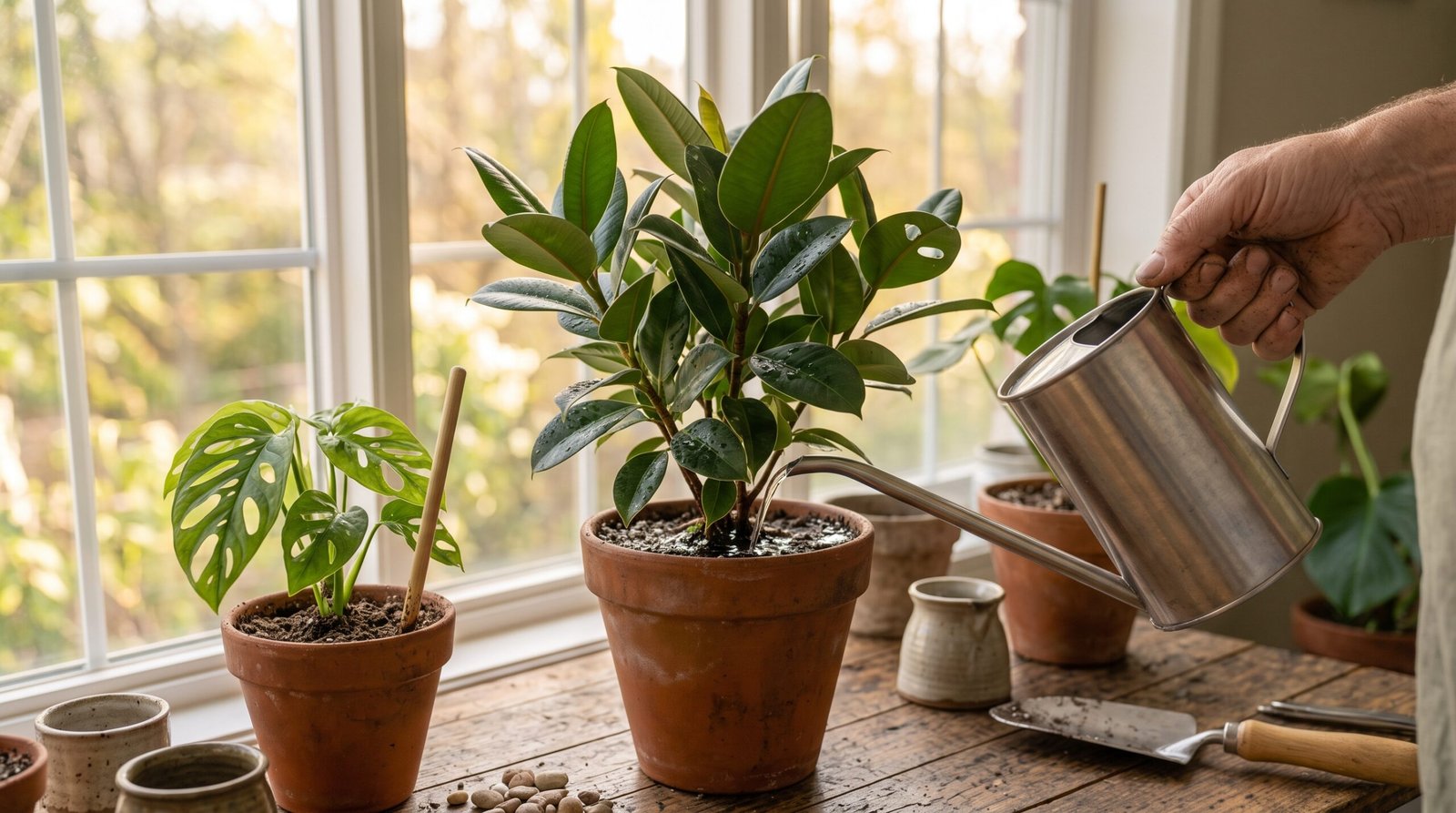
Watering seems straightforward, but rigid calendar schedules are the leading cause of houseplant decline. Establishing effective plant watering schedule rules means learning how to read your plants’ environment and moisture needs rather than watering on a fixed day every week.
Environmental factors like humidity, pot material, seasonal light changes, and ambient temperature directly dictate how quickly soil dries out. By replacing rigid routines with reactive watering habits, you protect root systems from hypoxia, fungal rots, and severe dehydration.
Key Takeaways
- Avoid Fixed Calendar Schedules: Water based on real-time soil moisture levels rather than a set day of the week.
- Test Before Watering: Check the top 1 to 2 inches of soil using a finger test, wooden probe, or moisture meter before adding water.
- Drainage is Non-Negotiable: Always use pots with bottom drainage holes and dump excess runoff standing in saucers within 30 minutes.
- Deep Soak Method: Pour water thoroughly until it trickles out of drainage holes to ensure the entire root zone receives moisture.
- Seasonal Adjustments: Reduce watering frequency during autumn and winter when plant growth slows and light levels drop.
Why Rigid Calendar Watering Fails
Understanding fundamental plant watering schedule rules begins with recognizing that plant water consumption shifts constantly.
A plant sitting next to a sunny south-facing window in July dries out in days, whereas that same plant in December may hold moisture for weeks. Relying on strict calendar routines ignores ambient humidity, seasonal dormancy, and soil aeration, frequently leading to saturated roots and leaf yellowing.
The Essential Plant Watering Schedule Rules
To develop an adaptable watering routine, follow these core principles for every houseplant in your collection.
1. The Soil Moisture Test Rule
Before picking up your watering can, verify soil moisture:
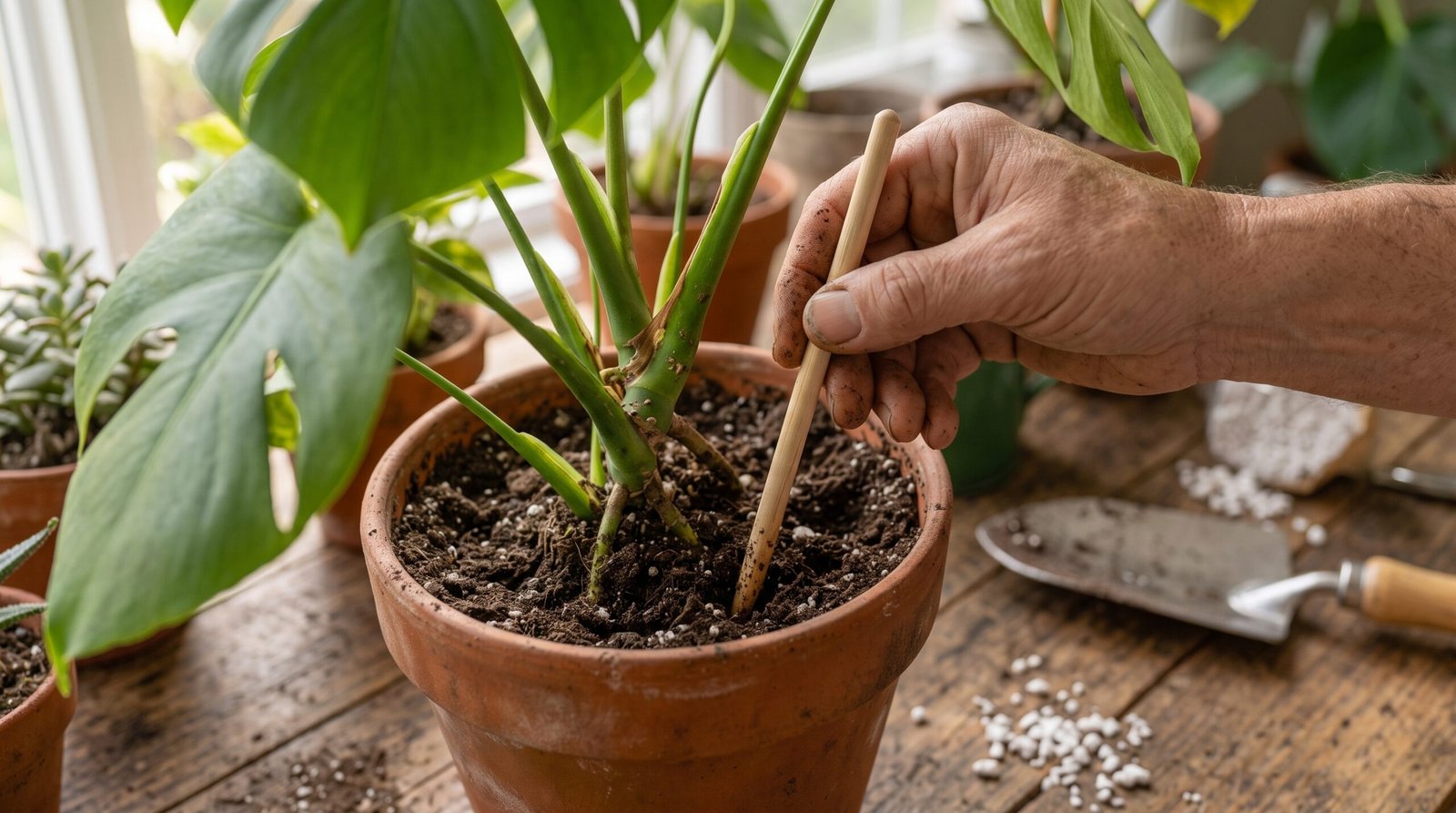
- Finger Test: Insert your index finger 1 to 2 inches into the soil. If it feels dry and cool, it is time to water. If soil clings to your skin and feels damp, wait a few days.
- Pot Weight Test: Lift the container. A dry pot feels significantly lighter than a fully saturated one.
2. The Deep Drenching Rule
Avoid shallow, frequent splashes. Water thoroughly around the entire root crown until water drains freely from the bottom container holes. This flushes out excess fertilizer salts and ensures bottom roots receive adequate moisture.
3. The Drainage and Evacuation Rule
Never leave potted plants sitting in standing water in decorative saucers or cachepots. Stagnant runoff starves roots of oxygen, creating ideal conditions for root-rot pathogens like Pythium.
Adjusting Your Routine by Plant Type and Season
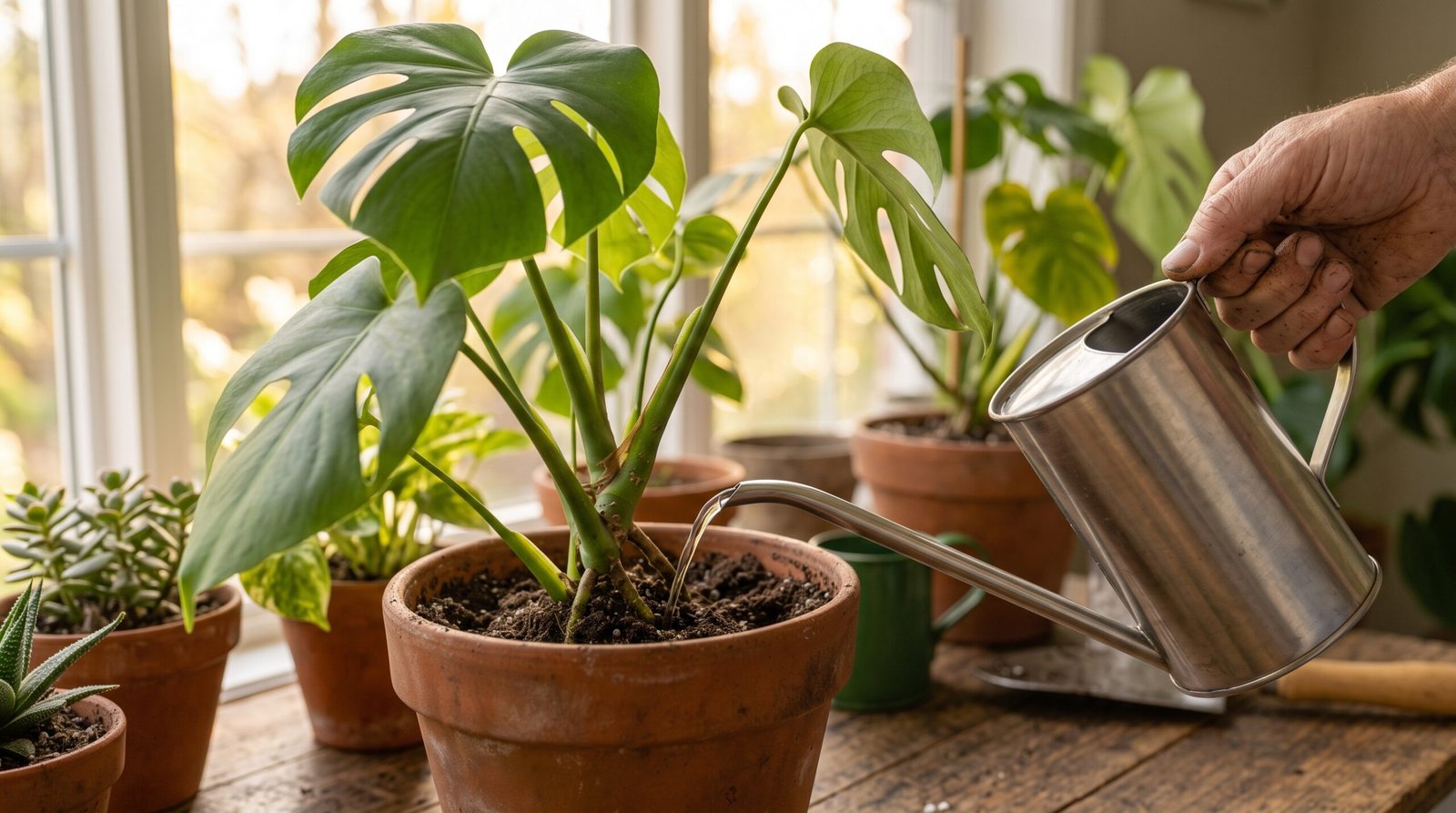
Different botanical families require distinct plant watering schedule rules:
- Tropical Foliage (Monstera, Pothos, Ferns): Prefer soil that stays consistently moist but never waterlogged. Water when the top 1 to 2 inches of soil feel dry.
- Succulents and Cacti: Require complete drying of the entire soil volume between deep soakings.
- Seasonal Shifts: During spring and summer active growth, plants transpire rapidly and require frequent checks. In winter, cooler temperatures and shorter daylight hours mean watering frequency should often be cut in half.
Troubleshooting Common Watering Mistakes
- Yellowing Lower Leaves & Mushy Stems: Classic indicators of overwatering and root decay. Pause watering immediately and allow the potting medium to dry out completely.
- Crispy Brown Leaf Tips & Wrinkled Stems: Signs of prolonged underwatering or low ambient humidity. Give the plant a thorough soak and check root density.
- Soil Repelling Water (Hydrophobic Soil): Peat-based soils that dry out completely can shrink and repel water. Submerge the entire pot in a bucket of tepid water for 15–20 minutes to rehydrate the soil mass (bottom watering).
Conclusion
Mastering plant watering schedule rules relies on observing environmental signals rather than following rigid calendar dates. By testing soil moisture before watering, soaking the root zone thoroughly, and allowing proper drainage, you ensure your indoor plants maintain healthy root systems and vibrant foliage through every season.
Frequently Asked Questions
What is the golden rule for plant watering schedule rules?
The golden rule is to test the soil before watering. Always check that the top 1 to 2 inches of soil have dried out rather than watering on a fixed calendar day.
Is it better to water houseplants in the morning or evening?
Morning is the ideal time to water houseplants. This allows foliage or stem splashes to evaporate during daylight hours and gives roots time to absorb moisture while photosynthesis is active.
How do you fix overwatered houseplants?
Stop watering immediately, move the plant to a well-ventilated area with bright indirect light, ensure all drainage holes are clear, and prune away any mushy, decayed roots before repotting in fresh soil.
1 thought on “Watering: Plant Watering Schedule Rules”