
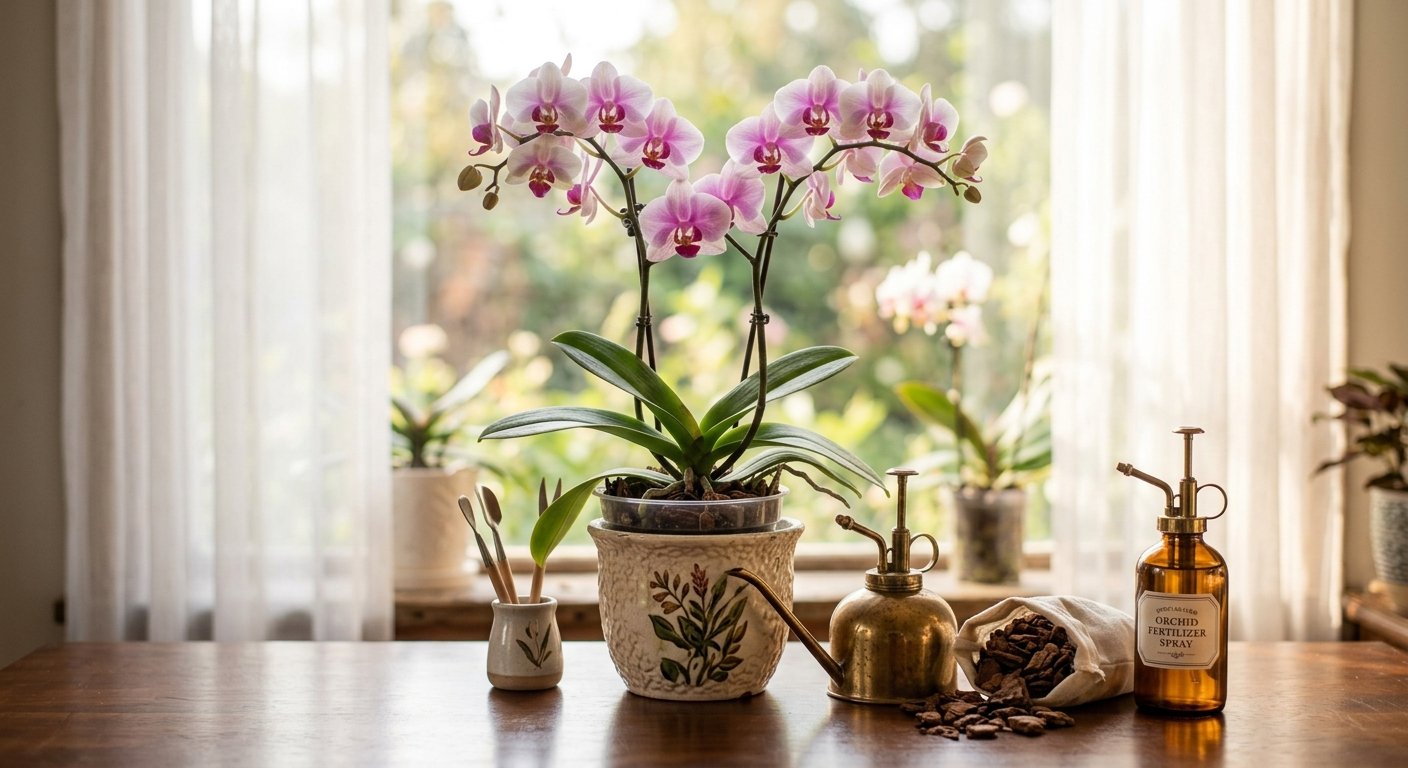
Mastering indoor orchid care for long lasting blooms unlocks the ability to keep elegant moth orchids (Phalaenopsis) and exotic orchid varieties flowering vibrant colors for months at a time. Native to tropical rainforest canopies, most popular indoor orchids are epiphytes—plants that attach themselves to tree bark in the wild and absorb hydration and nutrient minerals directly from humid tropical air and rainwater.
Because orchids do not grow in traditional garden soil, standard houseplant care techniques often lead to root rot or dropped flowers. Succeeding with orchids indoors relies on providing coarse bark aeration, deep soaking routines, bright diffused light, and post-bloom pruning. This guide details every step to keep your indoor orchids healthy and reblooming year after year.
Key Takeaways
- Avoid Overwatering: Water orchids only when the potting bark is nearly dry and clear plastic inner pots show silvery grey roots rather than plump green roots.
- Provide Bright, Indirect Light: Place orchids near an east-facing or shaded south-facing window; direct sunlight burns delicate orchid leaves and flowers.
- Use Coarse Orchid Bark: Plant exclusively in specialized orchid bark or sphagnum moss mixtures that allow maximum root aeration and rapid water drainage.
- Feed Weakly, Weekly: Apply a quarter-strength, balanced liquid orchid fertilizer during active vegetative growth to build energy for future blooms.
- Trigger Reblooming with Temperature Drops: Expose orchids to a slight 10°F nighttime temperature drop in autumn to initiate new flower spike development.
Why Indoor Orchid Care for Long Lasting Blooms Is Essential
Following proper indoor orchid care for long lasting blooms prevents premature flower loss and encourages continuous annual flowering cycles.
When orchids receive improper hydration or insufficient light, they sacrifice flower buds to conserve energy for basic survival. Recreating their native canopy microclimate indoors protects aerial root systems, maintains active photosynthesis, and extends bloom duration from a few short weeks to three months or longer.
Proper Watering Techniques and Aerated Media
Watering mistakes are the leading cause of orchid decline:
1. The Soaking Method for Orchid Bark
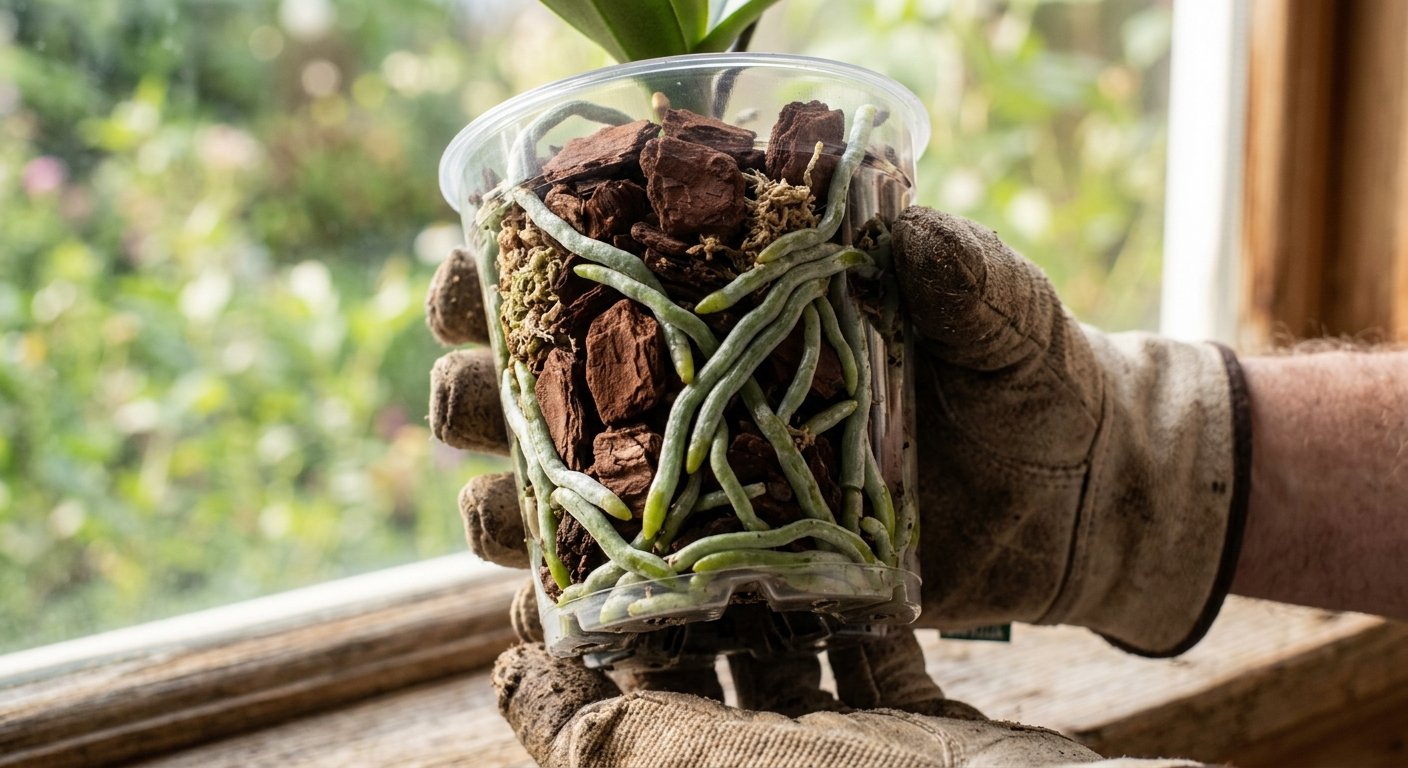
Rather than pouring small amounts of water over the top, submerge the inner plastic orchid pot in room-temperature water for 10 to 15 minutes. Allow the chunky bark mix to saturate completely, then drain all excess water thoroughly before returning the pot to its decorative outer sleeve.
2. Reading Aerial Root Color Clues
Inspect the roots visible through clear plastic pots. Plump, bright green roots indicate sufficient hydration. Silvery grey or white roots signal that the plant is thirsty and ready for a deep soak. Mushy brown or black roots are signs of root rot caused by stagnant water.
3. Avoiding the Ice Cube Method
Do not use ice cubes to water tropical orchids. Ice drops the root zone temperature drastically, causing cold shock and tissue degradation in tropical plant species.
Light Exposure and Temperature Control
Balancing light and temperature regulates flowering spikes:
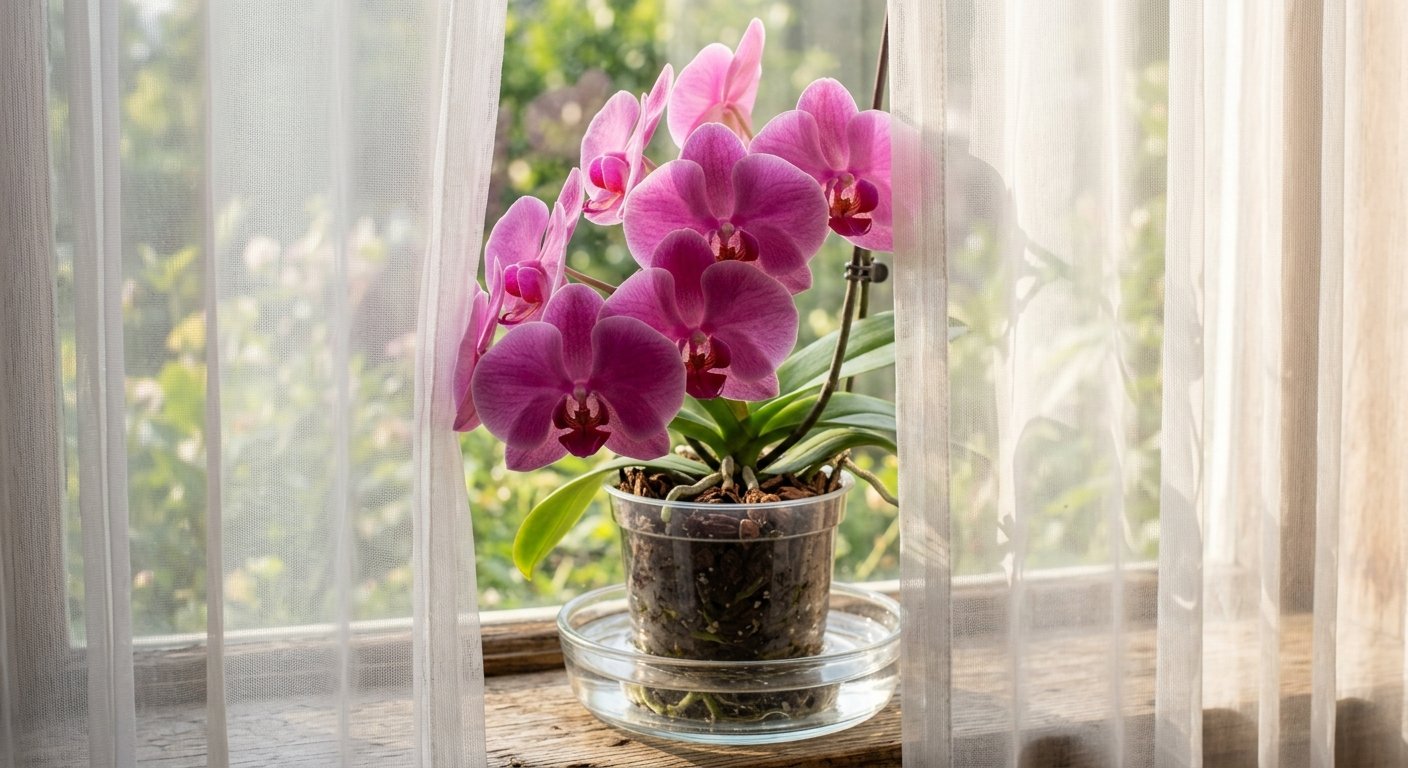
- Ideal Light Conditions: Bright, indirect light is crucial. Dark green leaves often indicate light starvation, while yellowing or reddish-purple leaves signal scorching sunburn. Healthy leaves should maintain a light lime-green hue.
- Nighttime Temperature Fluctuations: To trigger new flower spikes in late autumn, place your orchid in a room that drops to 55°F–65°F (13°C–18°C) at night for two to three weeks.
Post-Bloom Pruning and Fertilizer Routines
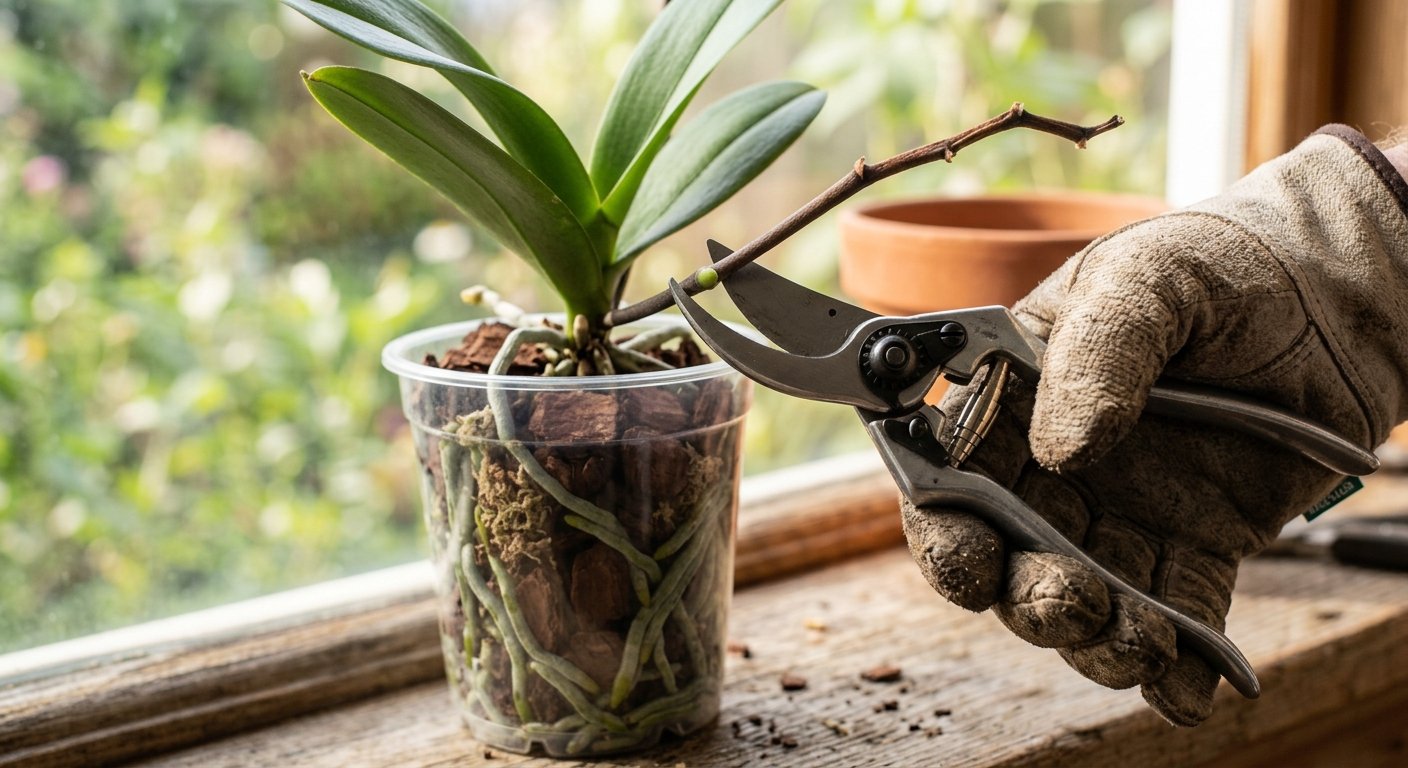
- Pruning Spent Flower Spikes: Once flowers drop, examine the spike. If the stem remains green, cut it back just above a node to encourage a secondary branch spike. If the stem turns yellow or brown, cut it off clean at the base.
- Nutrient Feeding Routine: Use a 20-20-20 urea-free orchid fertilizer diluted to quarter-strength every three weeks during active spring and summer growth. Flush the pot with pure water on the fourth week to remove accumulated mineral salts.
Conclusion
By applying the principles in this indoor orchid care for long lasting blooms guide, you build a healthy growing environment that keeps your orchids flowering for months. Focus on deep weekly soaking, coarse bark aeration, filtered sunlight, and autumn temperature dips to enjoy recurring displays of gorgeous orchid blooms.
Frequently Asked Questions
How often should I water my orchid using this indoor orchid care for long lasting blooms guide?
Water approximately once every 7 to 10 days during active growth, and every 10 to 14 days during winter. Always confirm that the potting bark has dried out and the root color has turned silvery before watering.
Why are my orchid’s flower buds falling off before opening?
Bud blast (premature bud drop) occurs due to sudden environmental shifts, such as dry drafty air from heating vents, severe under-watering, cold room drafts, or insufficient light.
How do I get my orchid to rebloom after flowers drop?
Keep the plant in bright indirect light, apply diluted fertilizer during summer, and expose it to cooler night temperatures (55°F–60°F) for two to three weeks in autumn to stimulate a new flower spike.