
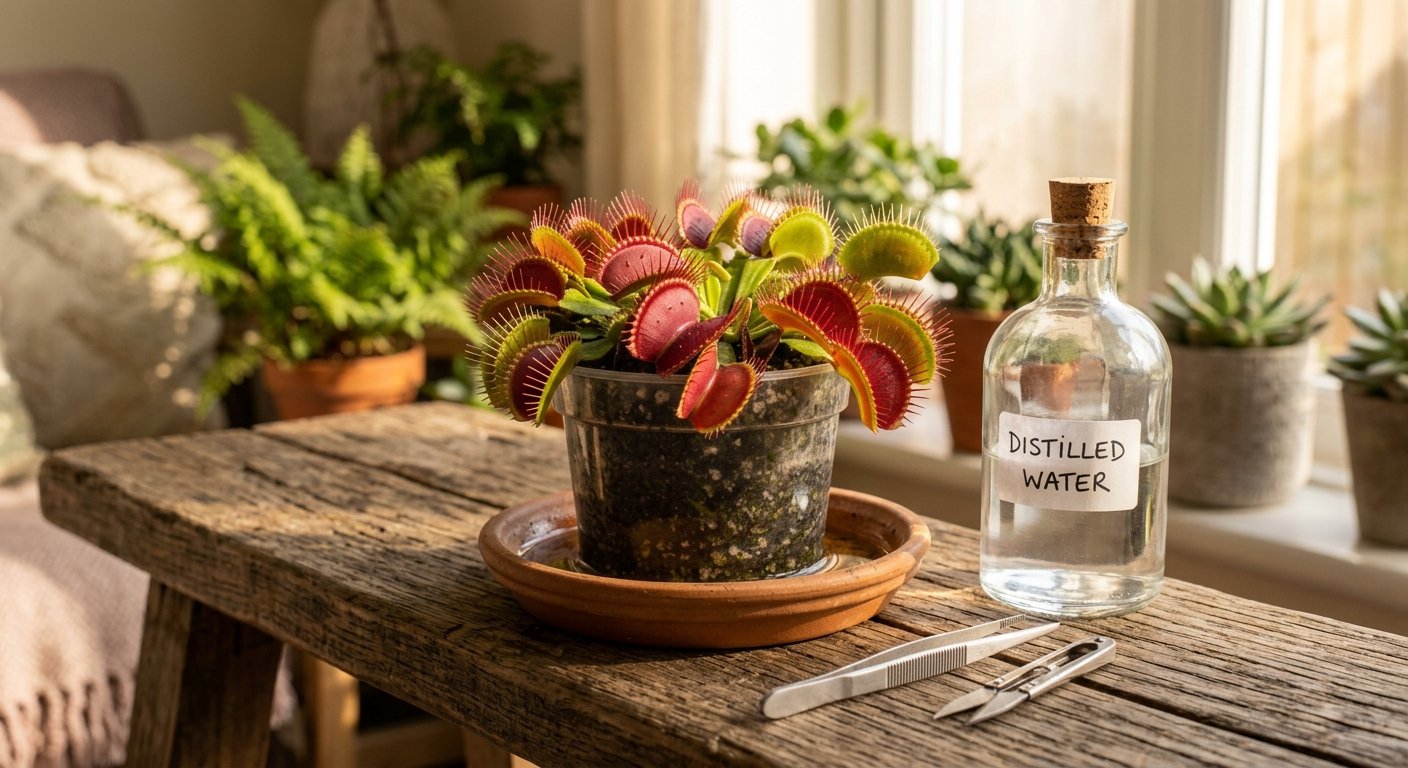
Mastering a practical Venus flytrap care guide for beginners unlocks the secrets to growing one of the most fascinating plants in the world. Native exclusively to the coastal bogs of North and South Carolina, the Venus flytrap (Dionaea muscipula) is a carnivorous plant that has adapted to thrive in nutrient-poor, acidic soils by capturing insects for mineral supplementation.
While Venus flytraps have a reputation for being delicate, their care is straightforward once you understand their specialized native environment. Standard houseplant rules—like using tap water or standard potting soil—will quickly harm these unique plants. This comprehensive guide details every essential growing requirement—from selecting pure water sources to managing winter dormancy—to keep your Venus flytrap healthy and active.
Key Takeaways
- Use Pure Water Only: Irrigate exclusively with distilled water, reverse osmosis water, or clean rainwater; minerals in tap water cause fatal root burn.
- Provide Full Sunlight: Place your plant where it receives 4 to 6+ hours of direct sunlight daily to keep traps colorful and energetic.
- Plant in Mineral-Free Soil: Use a nutrient-free potting mix of equal parts unenriched peat moss and perlite or silica sand; never use fertilised potting soil.
- Keep Soil Consistently Damp: Utilize the tray method by keeping the pot sitting in a shallow tray filled with 1/2 inch of pure water during active growth.
- Respect Winter Dormancy: Allow the plant to rest in cool temperatures (35°F to 55°F) for 3 to 4 months every winter to ensure long-term survival.
Why Following a Venus Flytrap Care Guide for Beginners Is Critical
Following an accurate Venus flytrap care guide for beginners protects your plant from common household plant care mistakes.
Because Venus flytraps originate in nutrient-devoid bog conditions, their root systems cannot process dissolved solids, mineral salts, or added nitrogen found in regular fertilizers. Recreating their native bog environment ensures strong trap development and prevents premature dieback.
Water Quality and Moisture Management
Water choice is the single most important factor in carnivorous plant survival:
1. The Strict Pure Water Rule
Tap water, bottled spring water, and filtered pitcher water contain dissolved minerals (calcium, sodium, magnesium) that accumulate in the soil and destroy delicate root systems. Only use water with Total Dissolved Solids (TDS) measuring below 50 PPM, such as:
- Distilled Water
- Rainwater
- Reverse Osmosis (RO) Water
2. The Tray Method for Moisture
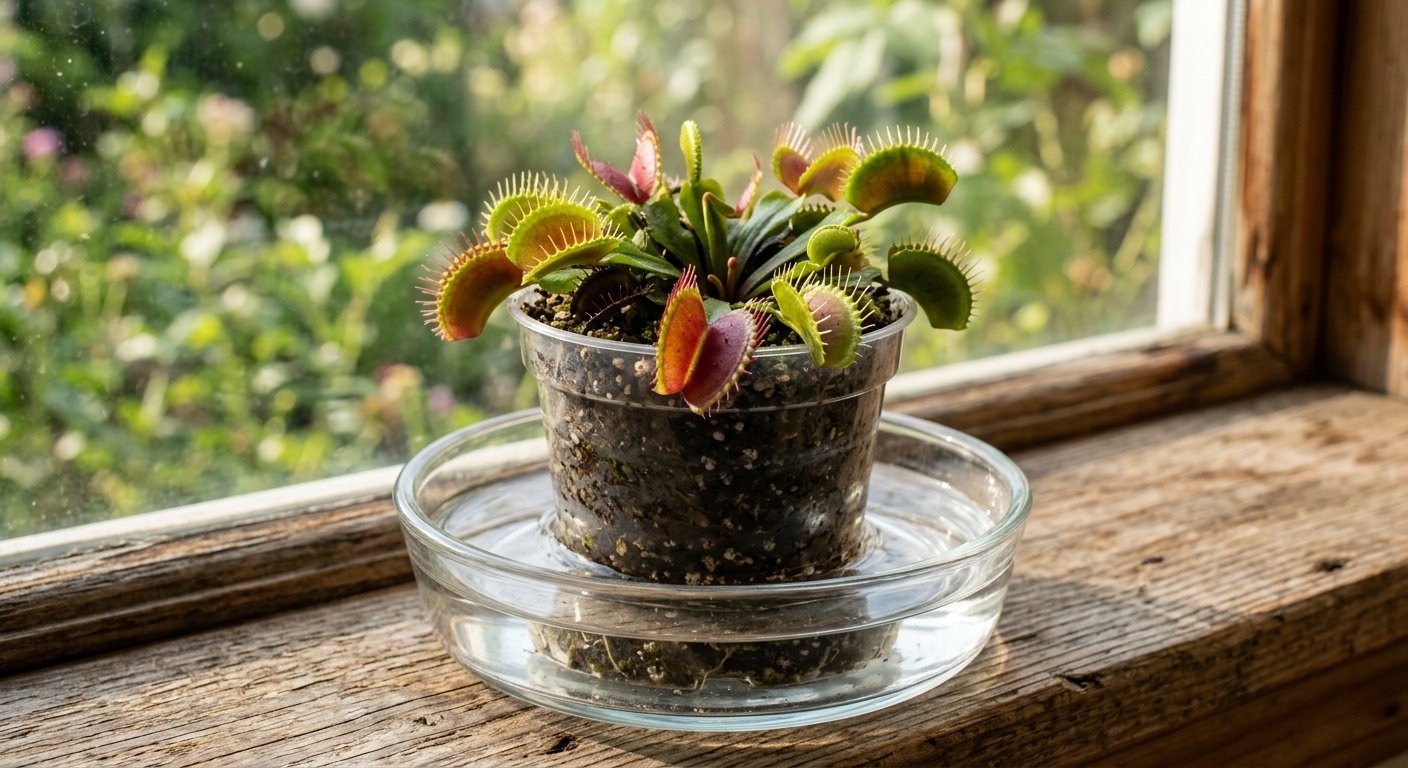
During spring and summer, place your plastic or glazed ceramic pot into a tray holding 1/2 to 1 inch of pure water. This mimics natural bog hydrology, keeping the soil damp without suffocating roots.
Light Requirements and Soil Substrate
Sufficient sunlight and correct potting media fuel healthy growth:
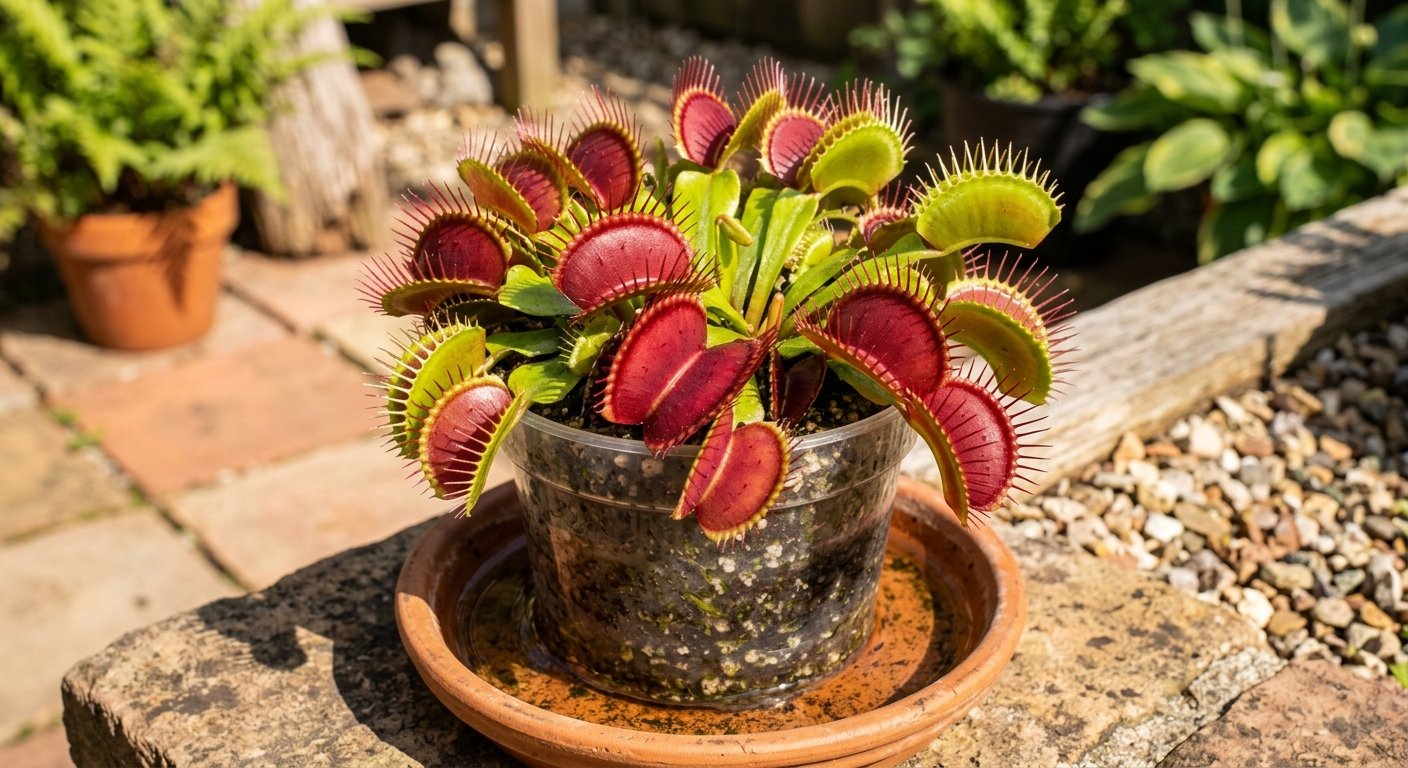
- Direct Sun Exposure: Venus flytraps require 4 to 6 hours of direct sun daily. Full sun triggers bright red pigmentation inside the traps and strengthens snap mechanisms. If growing indoors, use high-output LED grow lights placed 6 to 8 inches above the plant for 12 to 14 hours daily.
- Nutrient-Free Soil Mix: Standard potting soils contain added fertilizers that kill flytraps. Mix 50% peat moss (without added nutrients or lime) with 50% perlite or coarse silica sand.
Feeding Habits and Winter Dormancy
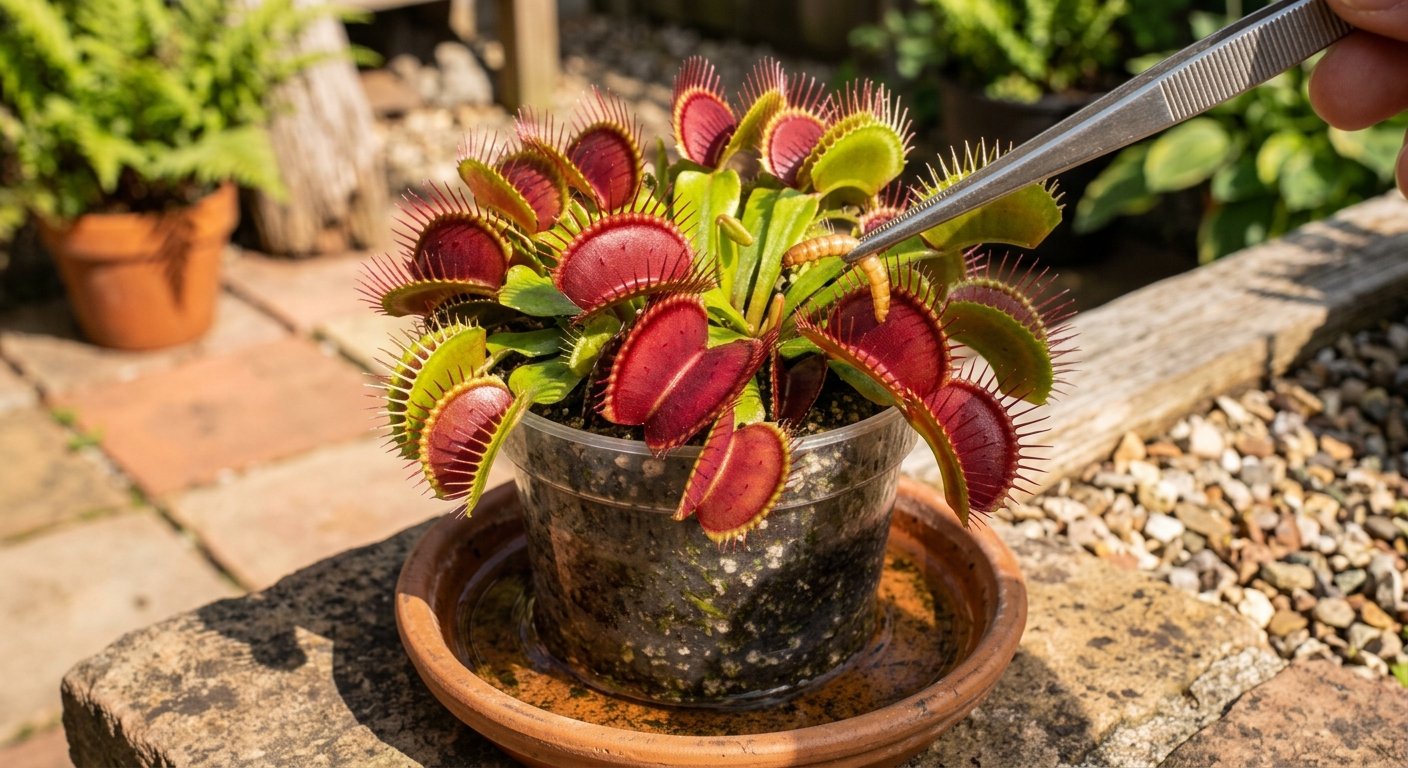
- Natural vs. Manual Feeding: Outdoor plants catch plenty of flies, gnats, and spiders on their own. For indoor plants, feed 1 or 2 active traps a live insect once every two to three weeks. Never trigger traps empty or feed human food, raw meat, or dead insects without manually stimulating the interior trigger hairs.
- Essential Winter Dormancy: From November through February, flytraps enter winter dormancy triggered by shorter days and cooler temperatures (35°F to 55°F / 2°C to 13°C). Traps will turn black and die back while the subterranean bulb stores energy for spring. Reduce watering during this time, keeping the soil barely damp.
Conclusion
By implementing the steps in this Venus flytrap care guide for beginners, you can successfully grow these fascinating carnivorous plants for years. Prioritize pure mineral-free water, intense sunlight, unfertilized peat mixtures, and winter dormancy rest periods to keep your Venus flytrap producing energetic, colorful snap traps season after season.
Frequently Asked Questions
How often should I feed my plant using this Venus flytrap care guide for beginners?
If grown outdoors, your plant will catch all the food it needs naturally. If kept indoors, feed a single trap one live insect (like a small mealworm or cricket) every 2 to 3 weeks during active spring and summer growth.
Can I use tap water if I boil it first?
No. Boiling water evaporates pure H2O and actually concentrates dissolved minerals, making it even more harmful to your Venus flytrap. Stick strictly to distilled, reverse osmosis, or rainwater.
Why are my Venus flytrap’s traps turning black and dying?
Individual traps naturally die after snapping closed 3 to 5 times or after digesting a large meal. Black traps should be trimmed off at the base with clean shears. If all traps turn black at once in late autumn, your plant is likely entering its natural winter dormancy period.
1 thought on “Carnivorous: Venus Flytrap Care Guide for Beginners”