
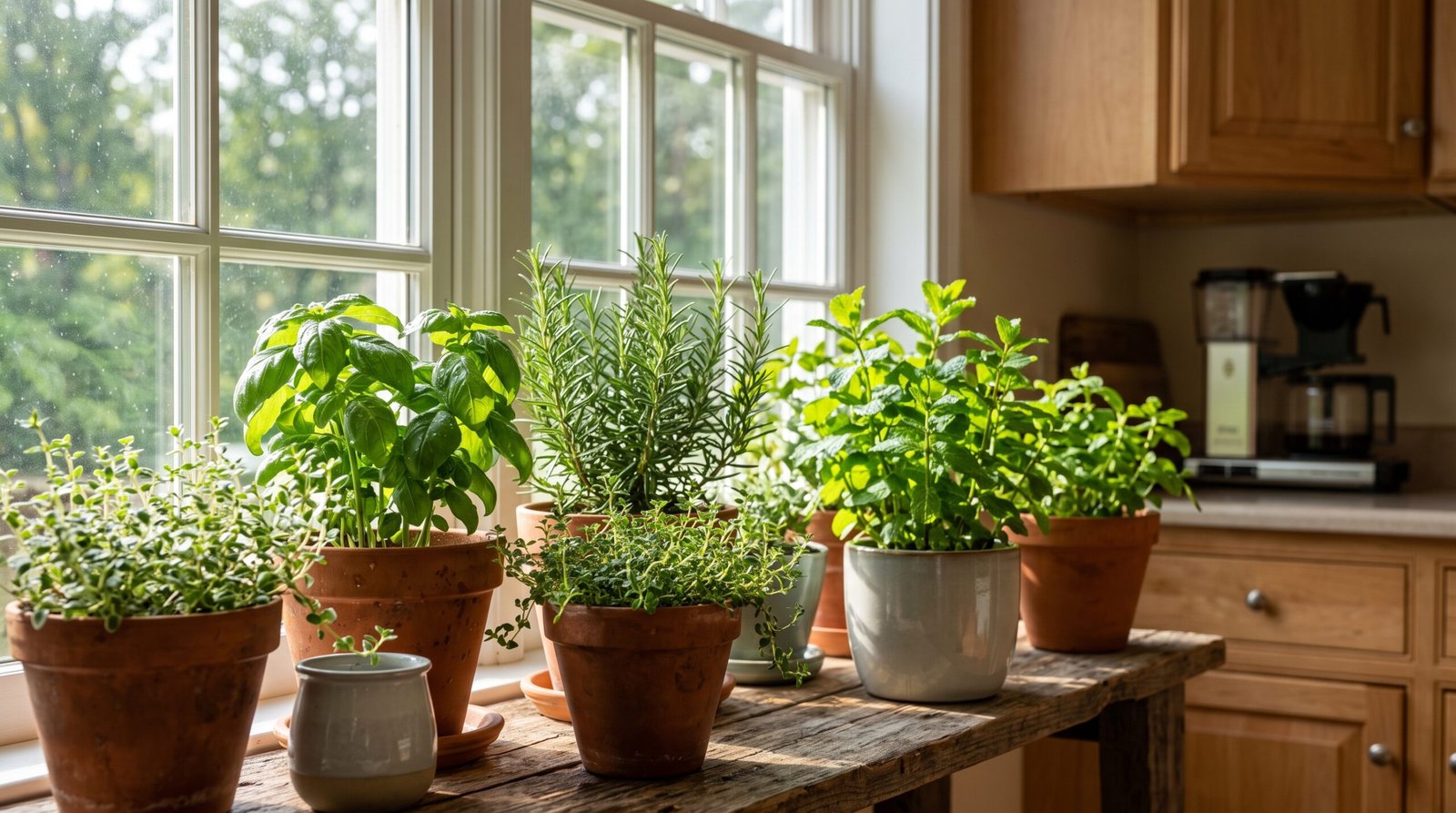
There is nothing quite like the experience of plucking fresh, aromatic leaves from your own plants to elevate a home-cooked meal. Whether you have a spacious kitchen or a compact apartment, creating an indoor herb garden for beginners is a rewarding, accessible way to bring nature and flavor into your living space.
This complete guide will walk you through everything you need to know to establish a flourishing culinary oasis. From choosing the easiest herbs to avoiding common beginner mistakes, you will learn how to cultivate healthy plants and enjoy homegrown garnishes every day, regardless of your previous gardening experience.
Key Takeaways
- Light is Everything: A lack of sufficient sunlight is the #1 reason indoor herbs fail. Plan for 6+ hours of strong light or invest in a grow light.
- Start Simple: Begin with popular, forgiving culinary herbs like basil, mint, and thyme rather than demanding varieties.
- Don’t Overwater: Proper drainage and letting the soil dry out slightly between waterings is essential for root health.
- Harvest Correctly: Regular harvesting actually encourages growth, provided you never remove more than one-third of the plant at once.
- Observe and Adapt: Every home environment is different. Pay attention to your plants’ signals and adjust their care accordingly.
Why Every Home Chef Needs an Indoor Herb Garden
Beyond the simple aesthetic appeal, cultivating an indoor herb garden for beginners offers significant, practical benefits. Having a living pantry means you always have fresh flavors at your fingertips, eliminating the waste and cost of buying pre-packaged supermarket herbs that wilt quickly.
Fresh herbs are packed with essential vitamins and powerful antioxidants, providing an easy and natural health boost to your daily diet. Caring for these living things can also be a surprisingly effective stress reliever, adding a sense of accomplishment and calm to your routine. For any aspiring cook or health-conscious individual, a thriving windowsill garden is an essential kitchen component.
Choosing the Easiest Varieties for Your First Indoor Herb Garden
Success with an indoor herb garden for beginners starts with selecting the right plants. Some herbs are naturally more adaptable to typical home conditions—including varied light and lower humidity—making them ideal starting points.
The Most Forgiving Culinary Herbs:
- Basil: This warm-weather favorite is versatile and grows quickly. Just make sure it receives ample sun and consistent, but not excessive, moisture.
- Mint: Known for its vigorous (even invasive) nature, mint is nearly impossible to kill. It handles less-than-perfect light better than most. However, always plant it in its own container to prevent it from outcompeting other herbs.
- Thyme: A resilient Mediterranean herb that loves sun but is highly drought-tolerant. It appreciates well-drained soil and minimal fuss.
- Rosemary: This woody perennial is tough and flavorful. Similar to thyme, it prefers slightly drier conditions and lots of light. Look for upright varieties that don’t sprawl.
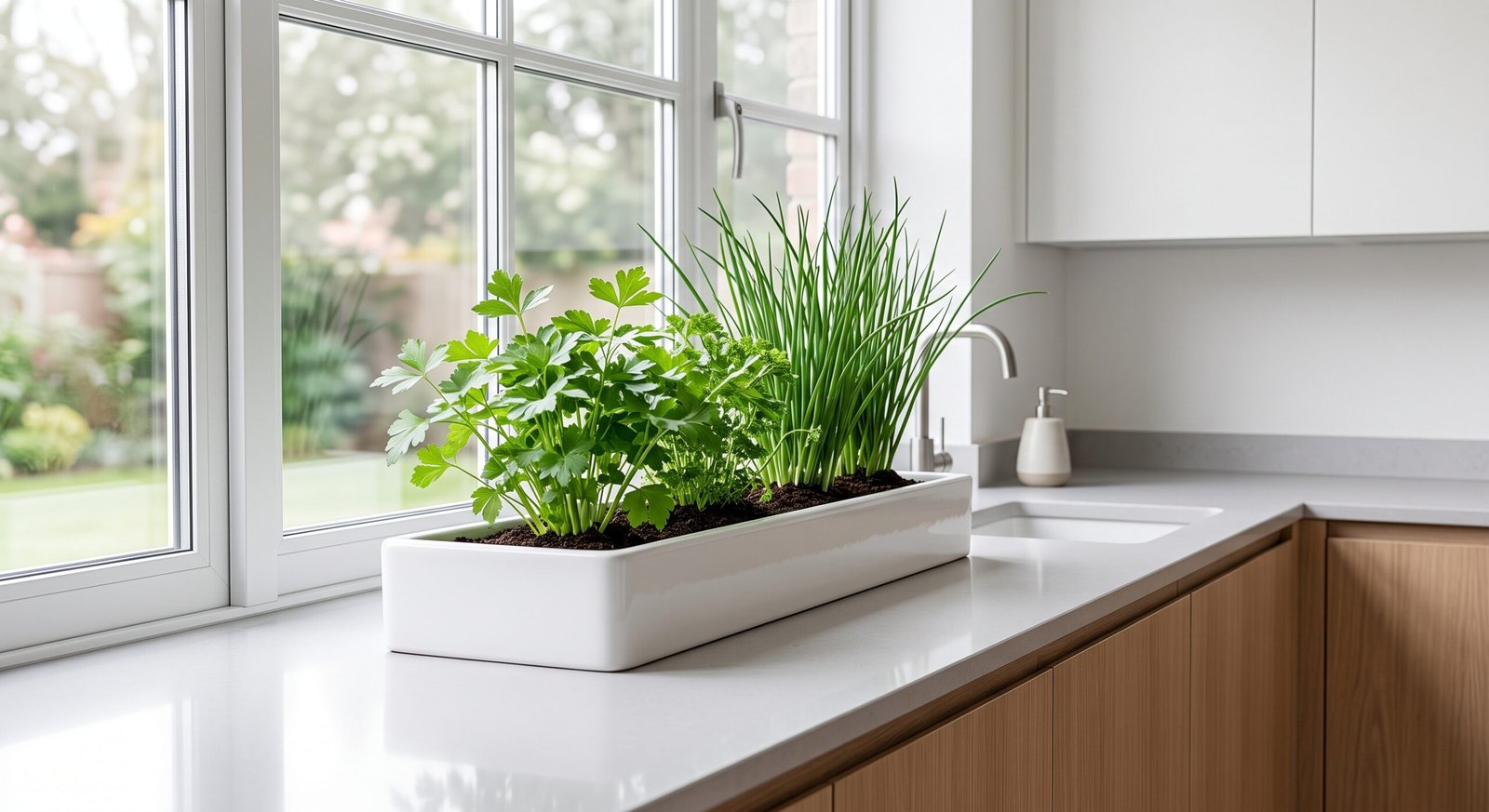
- Chives: Offering a mild onion flavor, chives are extremely low-maintenance. They can withstand lower temperatures and are easily propagated by dividing the bulbs.
Mastering the Essentials: Light, Water, and Soil
Once you’ve selected your herbs, providing the correct environment is critical for longevity and production. Don’t be discouraged; these core pillars are easy to manage once you understand them.
Sunlight: The Foundation of Growth
Light is the most critical element for a healthy indoor herb garden for beginners. Most culinary herbs thrive on a minimum of 6 to 8 hours of direct sunlight. A south-facing window is usually the best location, followed by east- or west-facing spots.
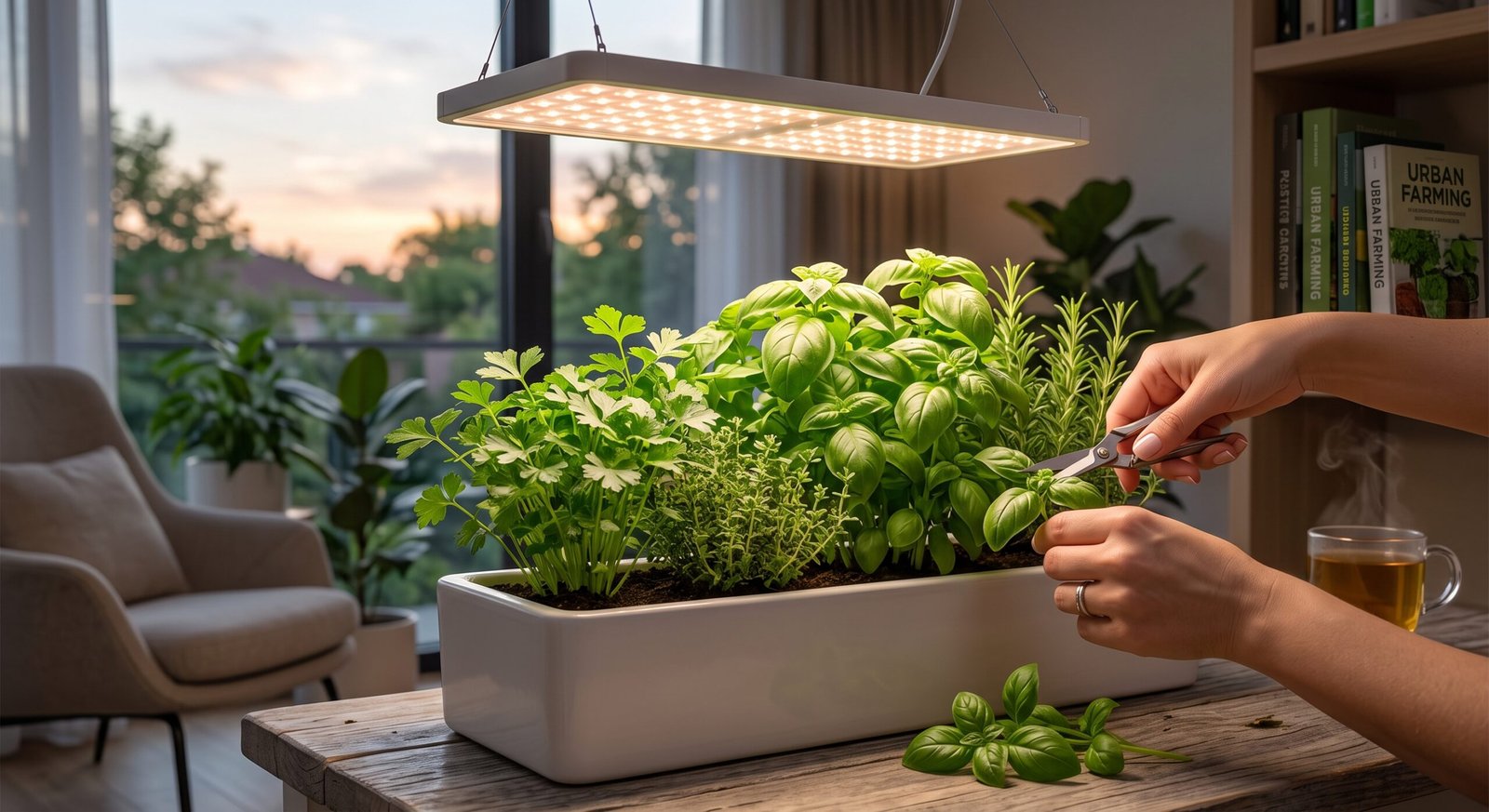
If your home lacks natural light, don’t worry. Compact, energy-efficient LED grow lights can provide the perfect spectrum for your plants, allowing you to grow herbs successfully even in a windowless kitchen.
Watering: The Delicate Balance
Overwatering is the single biggest mistake people make with their indoor herb garden for beginners. It leads to root rot, a silent and often fatal condition. Instead of watering on a rigid schedule, get in the habit of checking the soil moisture.
For most herbs, insert your finger about an inch into the potting mix. If it feels dry, it’s time to water. Water thoroughly until it drains freely from the bottom of the container. Never let your pots sit in standing water.
Soil and Drainage: Crucial Components
Always use a high-quality organic potting mix specifically formulated for containers or herbs. This ensures a lighter texture that provides excellent drainage and airflow for roots. Never use dense garden soil from outside, which will compact in a pot and drown roots.
Container Selection and Smart Placement Tips
While any container with a drainage hole can work, choosing the right pot will make your indoor herb garden for beginners experience much smoother. Consider:
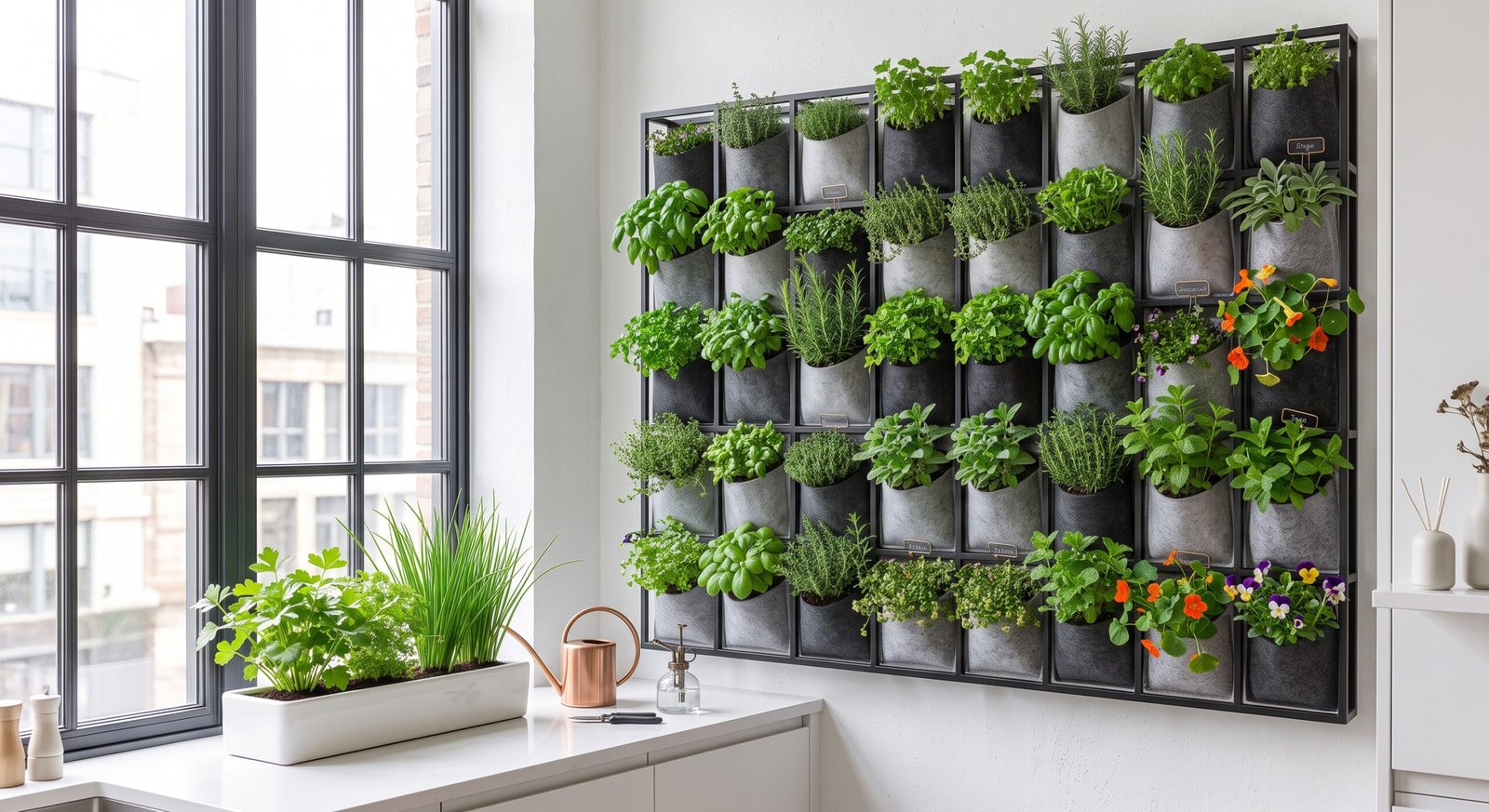
- Drainage is Non-Negotiable: Ensure every pot has at least one (preferably more) drainage hole. Root rot is the enemy, and proper drainage is the antidote.
- Pot Material: Traditional terracotta is porous, allowing for excellent root aeration but requiring more frequent watering. Glazed ceramic and plastic retain moisture longer, so you’ll water less often.
- Size Matters: Don’t crowd your plants. While they look charming clustered on a windowsill, mature herbs need space for air circulation and root development. Group herbs with similar care needs (e.g., rosemary and thyme love drier conditions) to make care simpler.
Correct Harvesting and Ongoing Maintenance
Pruning for Abundance
Many people are afraid to harvest, but regular pruning is essential for a productive indoor herb garden for beginners. Snipping leaves actually stimulates the plant to push out new, bushier growth.
The primary rule: never remove more than one-third of the plant’s total foliage at once. Use sharp, clean scissors or snips to make clean cuts just above a set of leaves, encouraging branching.
Simple Upkeep
Beyond harvesting and regular watering checks, indoor herbs appreciate minimal upkeep:
- Rotate Plants: Every few days, give your pots a quarter-turn to ensure all sides of the plant receive equal sunlight, preventing leggy, lopsided growth.
- Watch for Pests: Indoor plants are less susceptible than outdoor ones, but keep an eye out for common pests like spider mites or aphids. If spotted, a gentle spray of water or natural insecticidal soap can usually resolve the issue.
Conclusion: Start Your Indoor Herb Oasis Today
Establishing an indoor herb garden for beginners is a simple yet transformative addition to your home. It’s a journey that connects you with nature, enhances your culinary creations, and offers a daily dose of wellbeing. By following these straightforward principles—focusing on adequate light, mindful watering, and proper soil—you can cultivate a vibrant, sustainable source of fresh flavors, bringing the joy of homegrown herbs straight to your kitchen table. Don’t wait; choose your favorite varieties and start growing today.
Frequently Asked Questions
What are the best herbs to grow indoors for beginners?
Basil, mint, thyme, rosemary, and chives are widely considered the most adaptable and straightforward herbs for beginning indoor gardeners.
How much sunlight does an indoor herb garden need?
Most culinary herbs require substantial light, ideally a minimum of 6 to 8 hours of direct daily sunlight. A south-facing window is usually optimal.
Do indoor herbs need fertilizer?
Yes, but sparingly. Use a diluted, balanced liquid organic fertilizer once or twice during the active growing season (spring and summer). Over-fertilizing can negatively impact flavor and aroma.